IndianSanskriti
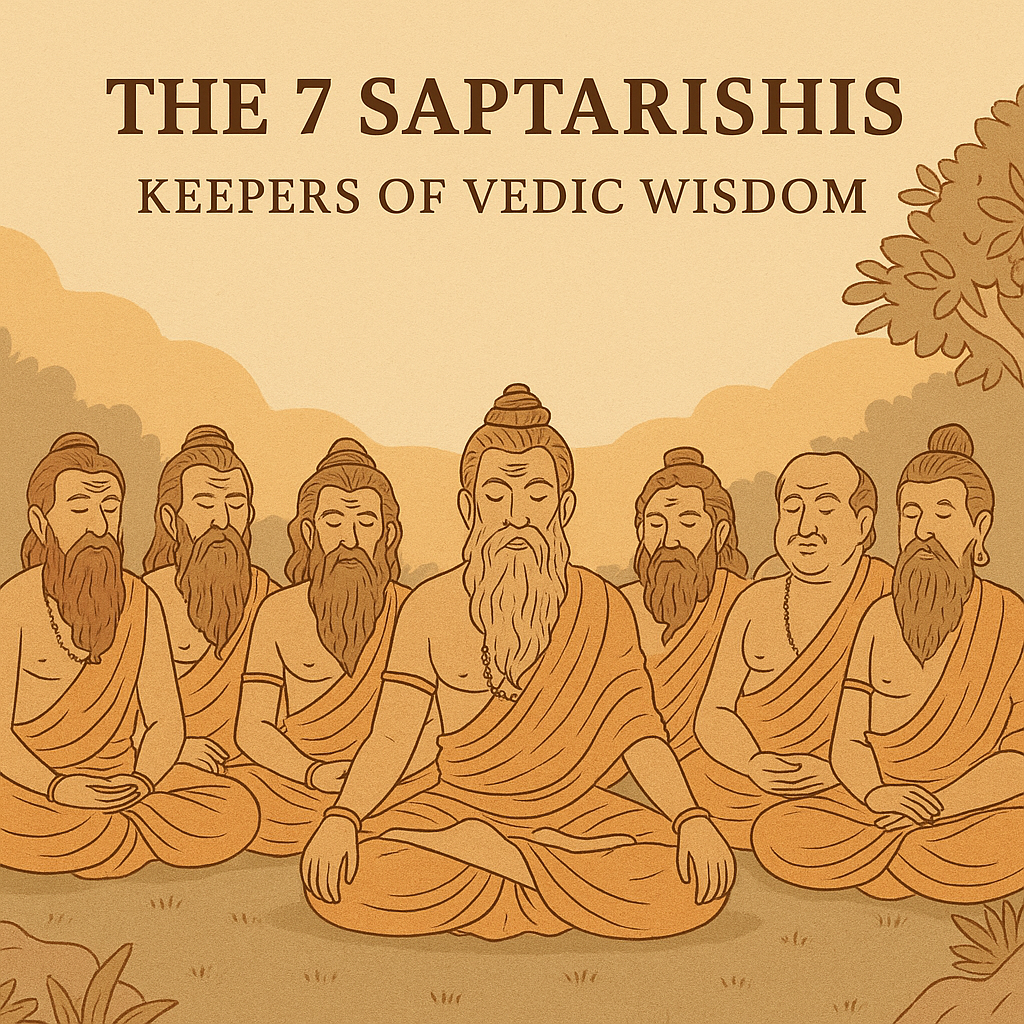
Illustration of the seven Saptarishis seated in meditation under a forest canopy, symbolizing the guardians of Vedic wisdom in ancient Indian tradition, drawn in warm earthy tones.

The 7 Saptarishis: Keepers of Vedic Wisdom

In the vast spiritual landscape of ancient India, few figures shine as brightly as the Saptarishis โ€” the Seven Great Seers. Revered across Vedic texts and epics, they are seen as the original transmitters of knowledge, guiding humanity through wisdom, discipline, and divine insight.


💛 Who Are the Saptarishis?

The Saptarishis are mentioned in the Rigveda and later texts as sages chosen by the creator Brahma to carry forward Vedic knowledge.

The most widely accepted list includes:

  • Atri
  • Bharadvaja
  • Gautama
  • Jamadagni
  • Kashyapa
  • Vashistha
  • Vishwamitra

These sages are said to have attained the highest spiritual realization and were entrusted with preserving and spreading dharma.


✨ Their Role in Vedic Civilization

  • Composers of Hymns: Many hymns in the Vedas are attributed to them or their lineages.
  • Founders of Gotras: Several Hindu lineages trace their ancestry to these rishis.
  • Spiritual Mentors: They guided kings, rishis, and even deities in moral and spiritual matters.
  • Cosmic Guides: Symbolically associated with the seven stars of the Great Bear constellation (Ursa Major), they are seen as eternal luminaries.

🔬 Saptarishis in Astronomy

In ancient Indian astronomy, the Saptarishi Mandal refers to the seven stars of Ursa Major. Each star was linked to a specific sage, reinforcing the blend of science and spirituality in Indian thought.


✨ The Legacy Today

  • Their teachings continue through oral traditions, scriptures, and family lineages.
  • Ceremonies like the Saptarishi Puja honor their role in preserving the Vedas.
  • They symbolize timeless wisdom, reminding us that knowledge must serve both the soul and society.

The Saptarishis are not just historical figures โ€” they are eternal beacons of light in the Indian spiritual tradition. Their lives remind us that true wisdom transcends time, and that guidance is always available to those who seek it with humility and devotion.


Explore more such spiritual insights at www.sanskritimagazine.com

You may also like

Search the website

Like us on Facebook

Get daily updates via Email

Enter your email address:

Recent Posts

Yogini Ekadashi 2026 โ€” The Yaksha Who Missed the Morning Flowers, and the Ekadashi That Undid His Curse

On Friday, July 10, 2026, the rare Krishna Paksha Ekadashi of Nija Ashadha arrives. The Padma Purana tells the story of Hemamali โ€” the Yaksha gardener of Bhagavan Kubera in Alaka, whose single morning of distraction with his wife Vishalakshi cost him his form, his wife, and his celestial city. Cursed to wander the earth of Bharata as a leper for a long time, he was at last shown the way back by Sage Markandeya โ€” a single sincere keeping of Yogini Ekadashi.

Jamai Shashthi 2026 โ€” The Story of Maa Shashthi, the Cat, and the Wife Who Was Forgiven

Jamai Shashthi 2026 โ€” The Story of Maa Shashthi, the Cat, and the Wife Who Was Forgiven

On Saturday, June 20, 2026, Bengali households across Bharata will welcome their married daughters and sons-in-law home for the legendary jamai-aador feast and perform the Shashthi Vrata. But behind the warmth lies a story most Bengalis know by heart and most non-Bengalis have never heard โ€” the wife who stole the hilsa, blamed the cat, lost six sons to Maa Shashthi’s wrath, and was finally forgiven. The Vrat Katha, the vidhi, the mantras, and the deeper teaching.

Vat Purnima 2026 โ€” The Wife Who Argued Yama Into Returning Her Husband’s Life

On Monday, June 29, 2026, women across Maharashtra, Gujarat, and southern Bharata will tie red thread around banyan trees and hear the story of Savitri โ€” the wife who walked behind Yamaraja Himself when He came for her husband, and out-argued the Lord of Dharma into returning Satyavan’s life. The Mahabharata’s Pativrata Mahatmya Parva, the vrat vidhi, and why the banyan witnessed everything.

Nija Jyeshtha 2026 โ€” The Real Jyeshtha Begins, and the Calendar Resumes

Nija Jyeshtha 2026 โ€” The Real Jyeshtha Begins, and the Calendar Resumes

With Adhik Maas now closed on the Somvati Amavasya of June 15, the long-postponed festivals of Jyeshtha return โ€” Vat Purnima (June 29, the Savitri-Yamaraja katha), Jamai Shashthi (June 20, the Bengali festival of Maa Shashthi), Sankashti Chaturthi (June 28), Yogini Ekadashi (July 10), and Devshayani Ekadashi (July 16, opening the four-month Chaturmas of Bhagavan Vishnu’s yoga-nidra). A guide to what the next four weeks hold and what the household that kept Purushottam Maas now carries forward.

The Closing of Purushottam Maas 2026 โ€” Adhik Amavasya and the Sealing of the Month-Long Vrat

On Monday, June 15, 2026 โ€” a rare Somvati Amavasya โ€” the intercalary month that bears Bhagavan Vishnu’s own name comes to its close. The Acharyas teach that a vrat is not measured by its duration but by its closing. Here are the Padma Purana’s instructions for sealing the month-long Purushottam Maas vrat: the morning snan, the closing puja with the Vishnu Sahasranama, the day of dana, the Somvati Amavasya gift, and the final sarva-arpana โ€” the offering of all merit at the feet of the Lord.

css.php