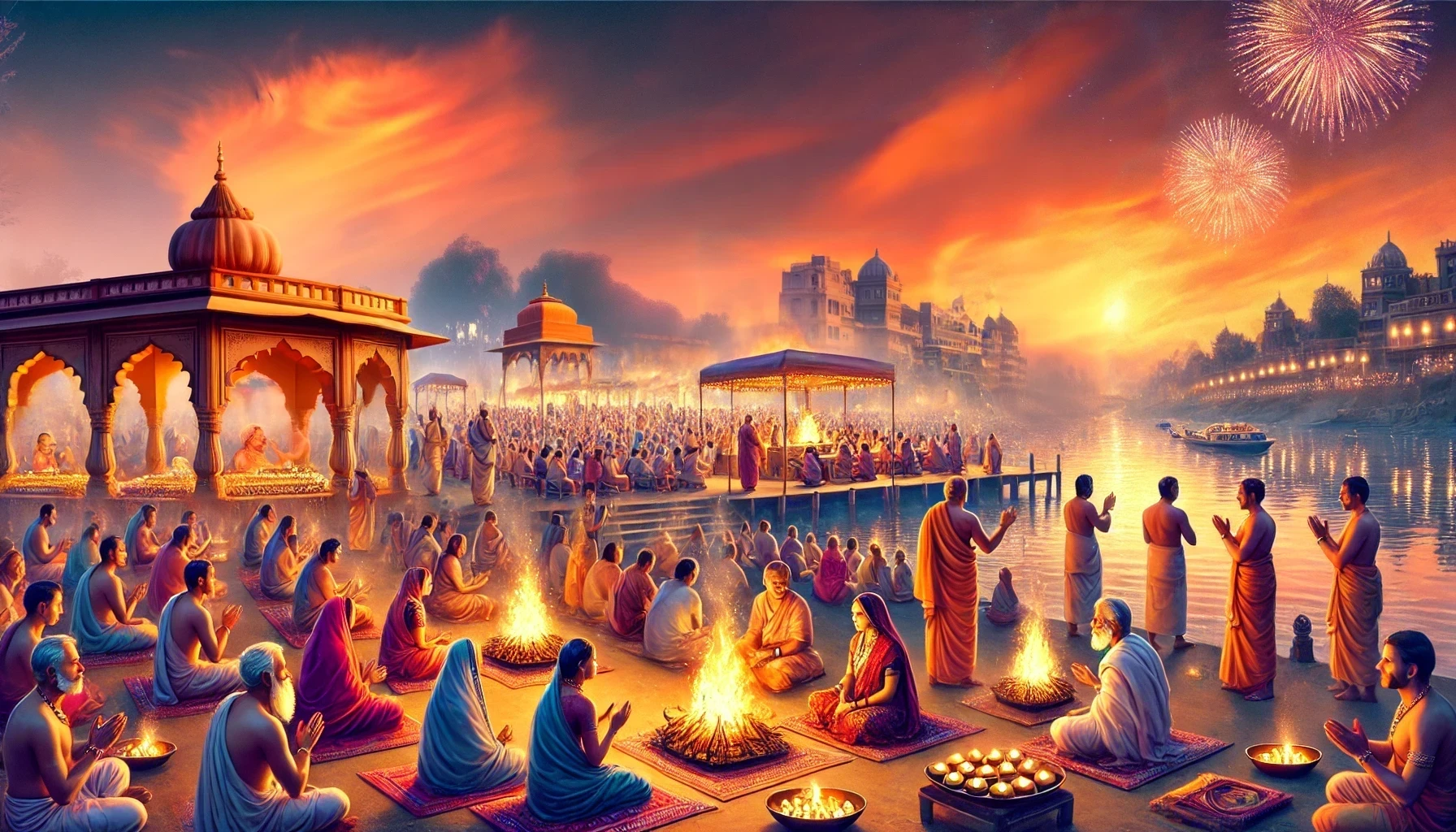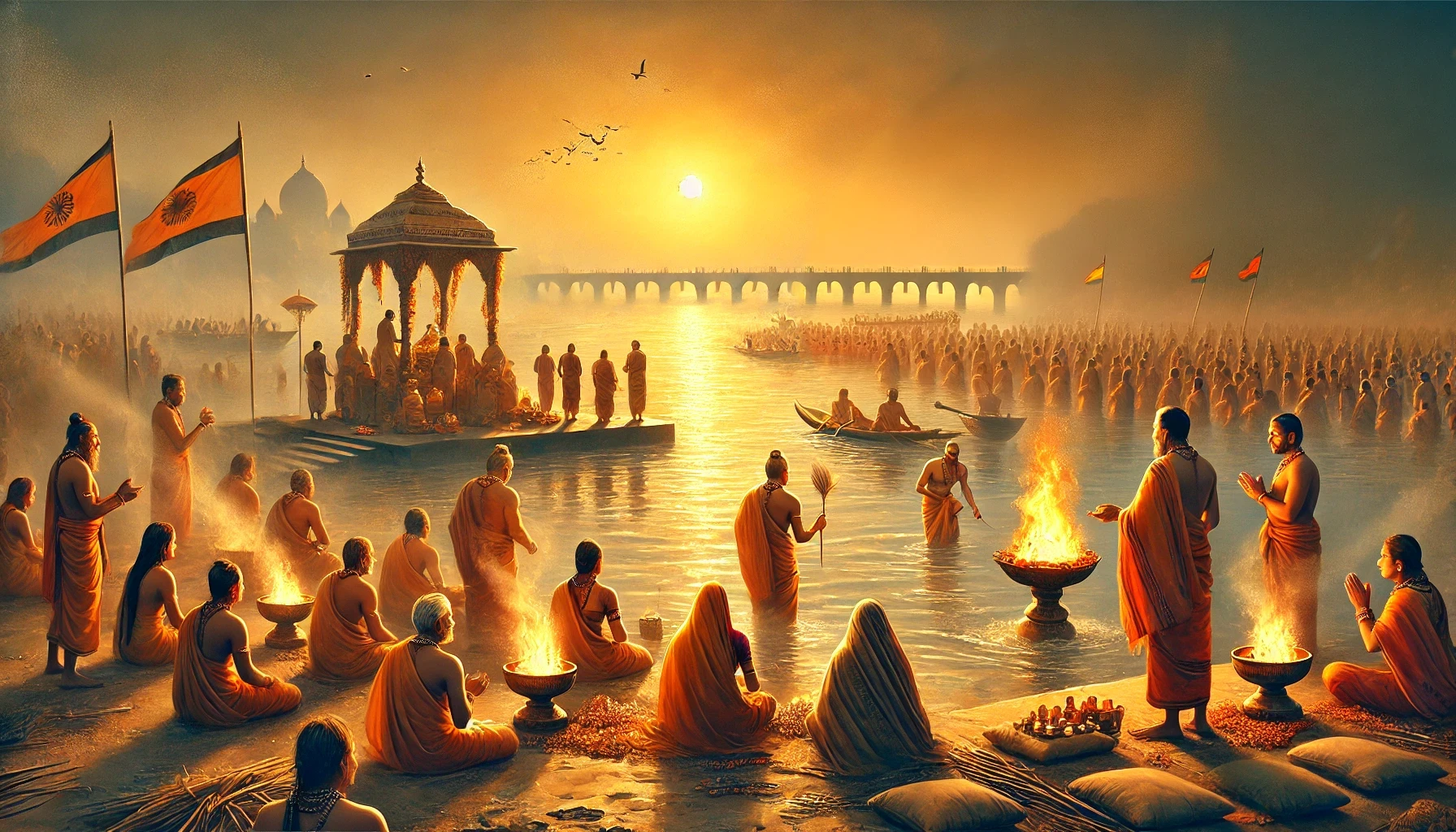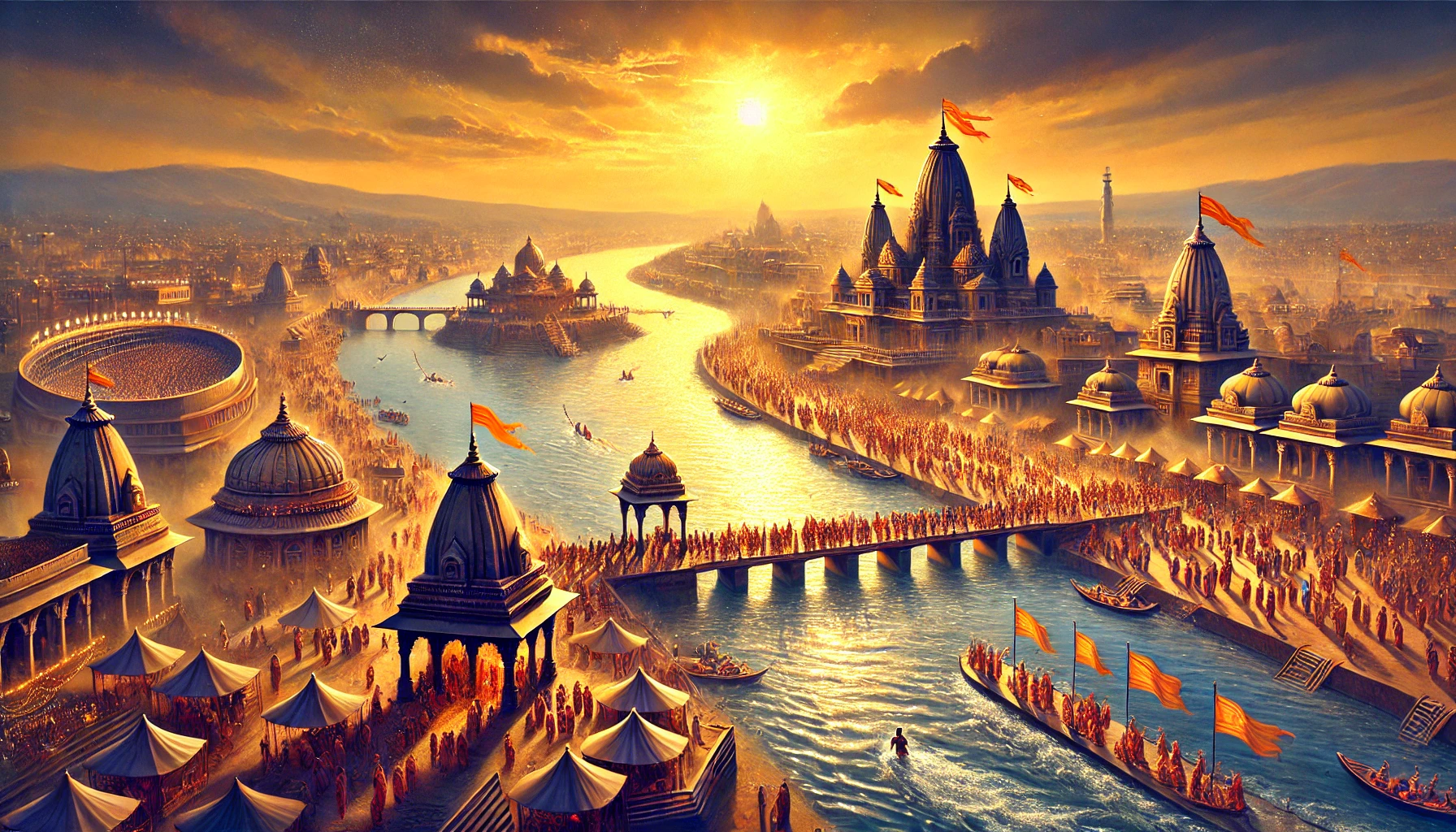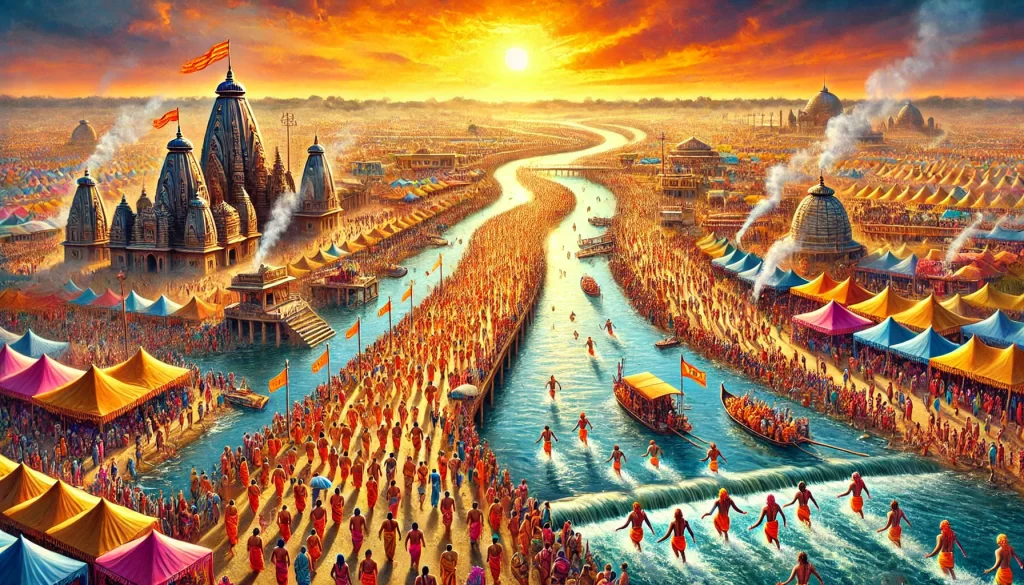
The Kumbh Mela is the world’s largest religious gathering, bringing together millions of devotees, saints, and spiritual seekers in pursuit of divine blessings and spiritual purification. Rooted in ancient history, this sacred festival is deeply woven into the cultural and spiritual fabric of India. The Maha Kumbh Mela 2025 in Prayagraj is particularly significant, as it marks a once-in-144-year celestial event.
But what makes the Kumbh Mela so special? What are its origins, and why does it hold such immense spiritual importance? Let’s explore the historical accounts, sacred texts, and traditions associated with this grand festival.
The Historical Origins of Kumbh Mela
The history of the Kumbh Mela can be traced back thousands of years, with its origins deeply embedded in Vedic and Puranic texts. The most well-known historical reference to Kumbh Mela comes from the legend of the Samudra Manthan (Churning of the Ocean), a divine event described in the Bhagavata Purana, Vishnu Purana, and Mahabharata.
The Legend of Samudra Manthan
According to history, the gods (Devas) and demons (Asuras) joined forces to churn the celestial ocean (Ksheer Sagar) to extract the Amrit (nectar of immortality). As the pot (Kumbh) of nectar emerged, a battle ensued between the Devas and Asuras for its possession.
In this cosmic struggle, drops of the Amrit fell at four sacred locations:
- Prayagraj (Allahabad) – Triveni Sangam (confluence of Ganga, Yamuna, and Saraswati)
- Haridwar – The banks of the Ganga
- Ujjain – The banks of the Shipra River
- Nashik – The banks of the Godavari River
These places became the four Kumbh Mela sites, where devotees gather to bathe in the holy rivers, believing that it cleanses their sins and grants them moksha (liberation from the cycle of birth and death).
Historical Accounts of Kumbh Mela
Ancient Mentions in Texts and Literature
The earliest recorded evidence of Kumbh Mela dates back to the accounts of Chinese traveler Xuanzang (Hiuen Tsang) in the 7th century CE, who visited India during the reign of King Harsha (606–647 CE). He documented a massive religious gathering at Prayag, where thousands of devotees and ascetics assembled for spiritual practices.
Additionally, the Mahabharata refers to Prayag as the holiest of pilgrimage sites, describing the practice of ritual bathing and religious congregation during auspicious planetary alignments.
The Evolution of Kumbh Mela
Over the centuries, the Kumbh Mela evolved into a grand festival, attracting saints, sadhus, and pilgrims from across the subcontinent. The tradition of Shahi Snan (royal bathing), where different Akhadas (monastic sects) lead the bathing procession, became a defining feature of the festival.
The Kumbh Mela also gained royal patronage from various Indian rulers, including the Mughals, Rajputs, and Marathas, who recognized its spiritual and cultural significance.
The Spiritual Significance of Kumbh Mela
The Power of the Holy Dip (Snan)
The primary ritual of Kumbh Mela is the Shahi Snan (sacred bath) in the holy rivers. It is believed that during the Kumbh, the rivers are charged with divine energy, and a single dip in their waters can purify the soul, erase past sins, and accelerate spiritual progress.
Confluence of Saints and Spiritual Discourses
Kumbh Mela serves as a platform for spiritual learning, discourse, and enlightenment. Great saints, gurus, and scholars gather to share their wisdom, conduct rituals, and guide devotees on the path of righteousness.
Key spiritual activities include:
- Pravachan (spiritual discourses) by renowned sages
- Yajnas (fire rituals) to invoke divine blessings
- Satsangs (congregational prayers and hymns)
- Darshan of Akharas and saints
The Gathering of Akharas
Kumbh Mela is also significant for the gathering of Akhadas (monastic sects of saints and warriors), who play a crucial role in preserving and spreading the teachings of Sanatana Dharma. The procession of Naga Sadhus (naked ascetics covered in ash) during the Shahi Snan is one of the most awe-inspiring spectacles of the event.
The Relevance of Kumbh Mela in the Modern World
Despite being an ancient tradition, the Kumbh Mela remains highly relevant in the modern world. It serves as a reminder of India’s spiritual heritage, bringing together millions in a peaceful celebration of faith, devotion, and unity.
With the advent of technology, Kumbh Mela 2025 has embraced digital tools, including live streaming, mobile apps, and AI-driven crowd management, ensuring a smooth and enriching experience for devotees.
The Maha Kumbh Mela 2025 is more than just a religious gathering—it is a celebration of history, faith, and timeless traditions. Whether you are a seeker of spirituality or an admirer of India’s rich cultural heritage, the Kumbh Mela offers a once-in-a-lifetime opportunity to witness the divine confluence of devotion and history.
As the sacred waters of the Triveni Sangam welcome millions for purification and blessings, the Kumbh Mela continues to be a beacon of spiritual enlightenment, cultural vibrancy, and historical grandeur.