https://youtu.be/0eZK58lsQMk
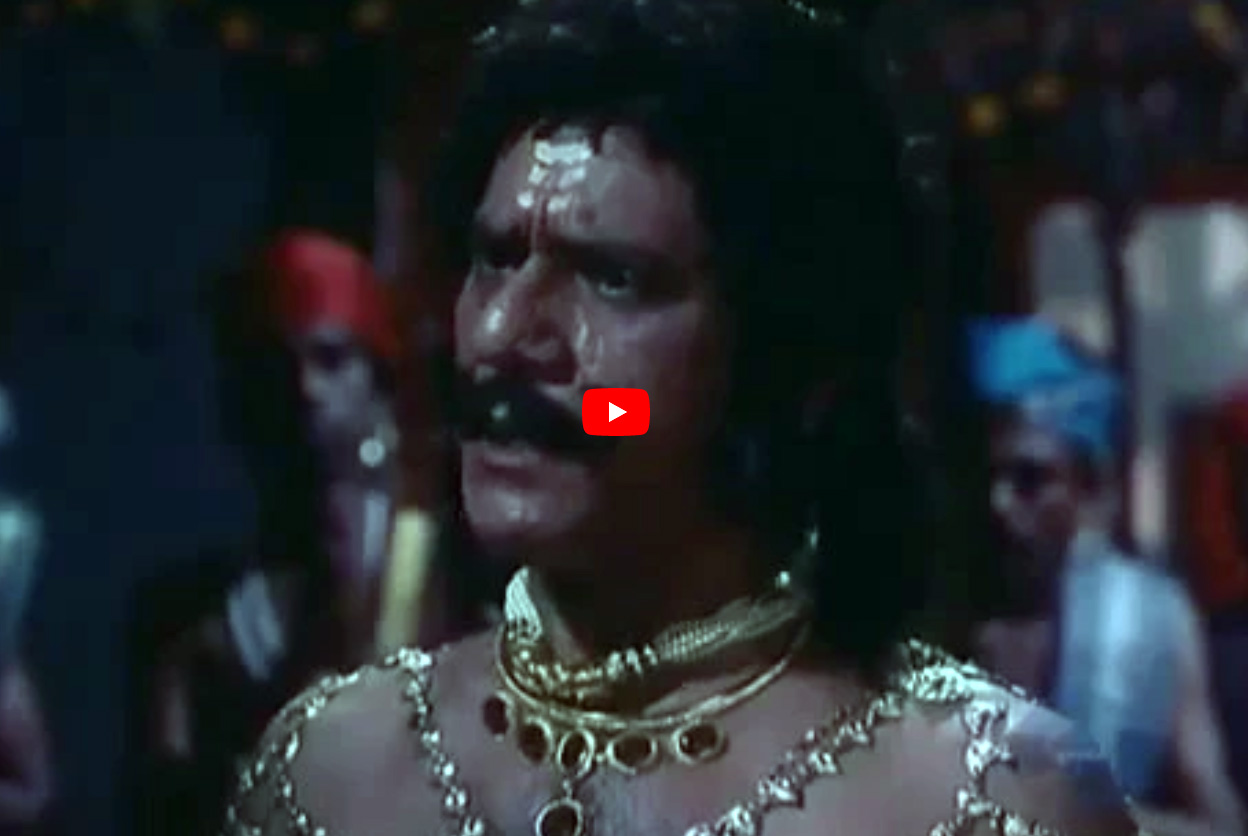
With Vijay Kashyap as Mahendra Varman, Rajesh Vivek as Kapalik, Meeta Vashishth as Devsoma, Harish Patel as Buddhist Monk, Surendra Sharma as Unmattak, Anang Desai as Appar, Ashish Kotwal as Pashupat, and Akhil Mishra as Jain sage. Playback by S.R. Venkatesh, Rajan Easwaran, Sharad Jamhbekar, jolly Mukherjee, Hemant Kulkarni, and V. Saraswati
The celebrated statue of Nataraja (dancing Shiva) is panned lovingly: his feet, arms, benign face and the evil figure firmly under his foot. Nehru gives the significance of the cosmic dance in Epstein’s words: Shiva dances, creating the world and destroying it, his large rhythms conjure up vast aeons of time and his movements have a relentless magical power of incantation … The accompanying Bhajan seeking direct communion with God is by Shankara, the great saint of the south, whom Nehru described as a man of amazing energy and vast activities – a combination of a philosopher and a scholar; an agnostic and a mystic; a poet and a saint; in addition, a practical reformer and an able organiser building up four great Maths (monasteries) at four far corners of India.
By the 7th century, the devotional movement of Bhakti militating against the straitjacket of priesthood swayed through the south. We hear popular songs from Pathu-paattu (Ten Poems) addressed to Murugan (Kartikeya). We also witness the rise of the Bhakti poetry by Alvars, who compose, on Vishnu, large number of Prabandham (verses) that bridge the literary language of court and spoken language of common man.
We see the powerful Pallava King Mahendravikram Varman being customarily eulogised in court. The king is a playwright too and his farcical play Mattavilasam is enacted, after a prologue, in his presence. Pouring scorn over the internecine quarrels among the orthodox Brahmins, Buddhists, Jains, Shaivites, Kapaliks (Shakti-worshippers) and Pashupats (sect of Shiva worshippers), the scene shows a burgeoning altercation between a drunkard Kapalik along with female ‘Shakti’ Devasoma and a capricious Buddhist monk, over the former’s lost begging-bowl and the appeal to a Brahmin to solve the dispute. They meet a madcap Pashupat on the way and the scene ends in a confused melee. The amused king consoles some of the indignant viewers that God is above all these sectarian divisions!
By the 8th century, the major Nayanar Bhakti-poet Appar is seen singing devotional songs on Shiva, telling followers to always look within for one’s own God. The priests, who feels threatened, prevail upon the king Mahendra Varman to put Appar on a raft in the high seas. But the people rescue him and, when brought to the king, the saint-poet’s words and songs induce the king to follow his path. By the 12th century, the Shaivite reformist movement is seen spearheaded by the Karnataka poet Basavanna and there emerges Lingayat Sampradaya (community) carrying forward a great lyrical—philosophical tradition.
By the 13th century, the momentum spreads to Maharashtra and saint jnaneshvar translates Bhagavata Gita into Marathi and people are seen singing in their own language: Adopt the religion of humanity and sing God’s name as you like. Then comes the great saint-poet Tukaram and his devotional Abhangs which are still sung echoing from village to village.