
IndianSanskriti
chola empire

The Chola Empire, Part I – Bharat Ek Khoj

https://youtu.be/gC-2TxEaETM

Bharat Ek Khoj—The Discovery of India A Production of Doordarshan, the Government of India’s Public Service Broadcaster Episode 22: The Chola Empire, Part I

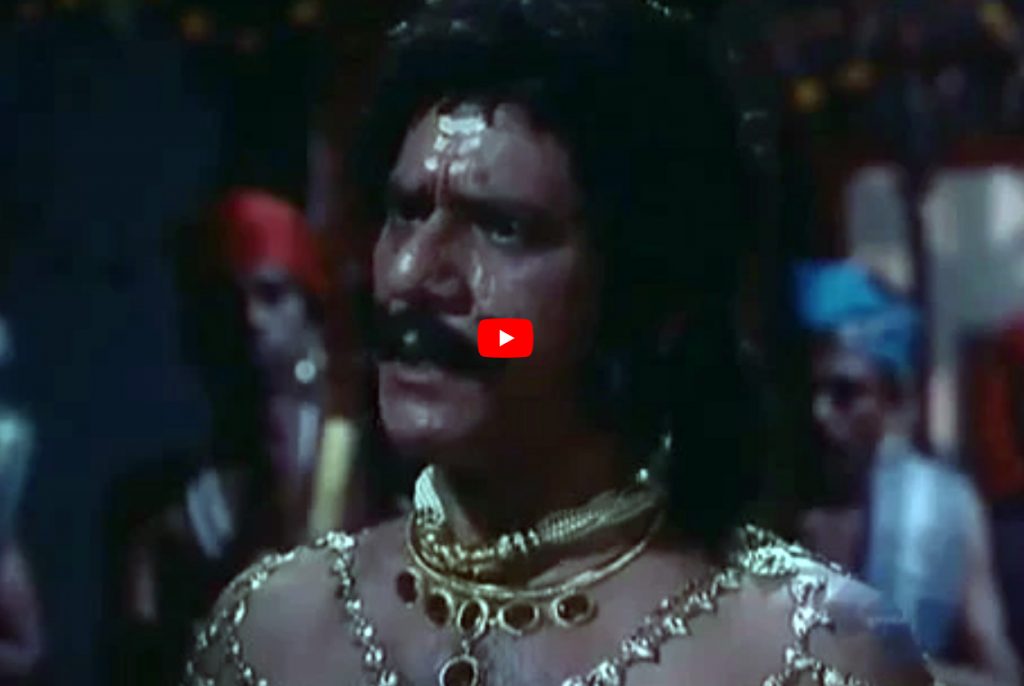
With Om Puri as Raja Raja Chola, Devendra Malhotra as Ishanashiva, Sunila Pradhan as Mahadevi Lalit Tiwari as Architect, Shantanu Chaparia as Tirumala, Mahendra Raghuvanshi as Kirukadikilan, Preeta Mathur as Umadevi, Murari Sharma as Singer, and Vijay Chibbar and Mohan Kant as the Traders. Playback by S.R. Venkatesh, Rajan Easwaran, Sharad Jambhekar, jolly Mukherjee, Hemant Kulkarni, V. Saraswathi, and T. Raghu.

Nehru observes that in South India, after a lapse of 1000 years after the Mauryan empire collapsed, there were great states like the Chalukya Empire in the west followed by the Rashtrakutas. Further south were the Pallavas who were mainly responsible for the colonising expeditions from India in the eastern seas. Later came the Chola Empire that spread right across the peninsula and conquered Sri Lanka and Southern Burma. King Mahendra Varman of the Pallava dynasty adopted the Vedic religion and promoted religious consciousness by building temples and settling Brahmins with gifts of land. Trade and commerce flourished with more than 500 businessmen allowed to form a guild. Of the Chola dynasty Raja Raja Chola was contemporaneous with the Turk invasions in the north but was buffered by the Rashtrakutas. The Chola dynasty continued their sway over the eastern seas and their ships carried merchandise to distant countries.

The story of building the mighty Brihadisvara temple is presented, albeit based on scant historical information. Raja Raja Chola has ruled in Tamil Nadu for sixteen years, yet the mystery of the murder of his uncle and predecessor, Uttam Chola, has not been solved. Blame is laid on his cousin Sundara Chola, who has taken refuge in the neighbourhood kingdom of Chera. The king, after his death, confiscates his family property within the Tamil territory. Throughout all this, ‘Rajmata’, the arch aunt-queen, strongly suspects Raja Raja to be guilty of uncle’s murder and usurping the throne. To get rid of this suspicion the king offers to build a temple to commemorate Uttam Chola at a site of Rajmata’s choice.

An unexpected gift arrives from the far-away king of the Shailendra dynasty of Kamboj (Cambodia), with a model of a temple that commemorates the king himself. The idea germinates in Raja Raja’s mind: why not build a temple, unparalleled in history, which would carry his own name? A secret plan is hatched away from the knowledge of ‘Rajmata’ to employ the best of architects and sculptors and even to bring in the finest of singers and dancers for performing in the temple. He would also build a flourishing city of Tanjavur all around the temple. The project is pressed on, regardless of all opposition, including an incipient rebellion.


You may also like

Search the website

Like us on Facebook

Get daily updates via Email

Enter your email address:

Recent Posts

Yogini Ekadashi 2026 — The Yaksha Who Missed the Morning Flowers, and the Ekadashi That Undid His Curse

On Friday, July 10, 2026, the rare Krishna Paksha Ekadashi of Nija Ashadha arrives. The Padma Purana tells the story of Hemamali — the Yaksha gardener of Bhagavan Kubera in Alaka, whose single morning of distraction with his wife Vishalakshi cost him his form, his wife, and his celestial city. Cursed to wander the earth of Bharata as a leper for a long time, he was at last shown the way back by Sage Markandeya — a single sincere keeping of Yogini Ekadashi.

Jamai Shashthi 2026 — The Story of Maa Shashthi, the Cat, and the Wife Who Was Forgiven

Jamai Shashthi 2026 — The Story of Maa Shashthi, the Cat, and the Wife Who Was Forgiven

On Saturday, June 20, 2026, Bengali households across Bharata will welcome their married daughters and sons-in-law home for the legendary jamai-aador feast and perform the Shashthi Vrata. But behind the warmth lies a story most Bengalis know by heart and most non-Bengalis have never heard — the wife who stole the hilsa, blamed the cat, lost six sons to Maa Shashthi’s wrath, and was finally forgiven. The Vrat Katha, the vidhi, the mantras, and the deeper teaching.

Vat Purnima 2026 — The Wife Who Argued Yama Into Returning Her Husband’s Life

On Monday, June 29, 2026, women across Maharashtra, Gujarat, and southern Bharata will tie red thread around banyan trees and hear the story of Savitri — the wife who walked behind Yamaraja Himself when He came for her husband, and out-argued the Lord of Dharma into returning Satyavan’s life. The Mahabharata’s Pativrata Mahatmya Parva, the vrat vidhi, and why the banyan witnessed everything.

Nija Jyeshtha 2026 — The Real Jyeshtha Begins, and the Calendar Resumes

Nija Jyeshtha 2026 — The Real Jyeshtha Begins, and the Calendar Resumes

With Adhik Maas now closed on the Somvati Amavasya of June 15, the long-postponed festivals of Jyeshtha return — Vat Purnima (June 29, the Savitri-Yamaraja katha), Jamai Shashthi (June 20, the Bengali festival of Maa Shashthi), Sankashti Chaturthi (June 28), Yogini Ekadashi (July 10), and Devshayani Ekadashi (July 16, opening the four-month Chaturmas of Bhagavan Vishnu’s yoga-nidra). A guide to what the next four weeks hold and what the household that kept Purushottam Maas now carries forward.

The Closing of Purushottam Maas 2026 — Adhik Amavasya and the Sealing of the Month-Long Vrat

On Monday, June 15, 2026 — a rare Somvati Amavasya — the intercalary month that bears Bhagavan Vishnu’s own name comes to its close. The Acharyas teach that a vrat is not measured by its duration but by its closing. Here are the Padma Purana’s instructions for sealing the month-long Purushottam Maas vrat: the morning snan, the closing puja with the Vishnu Sahasranama, the day of dana, the Somvati Amavasya gift, and the final sarva-arpana — the offering of all merit at the feet of the Lord.

css.php




