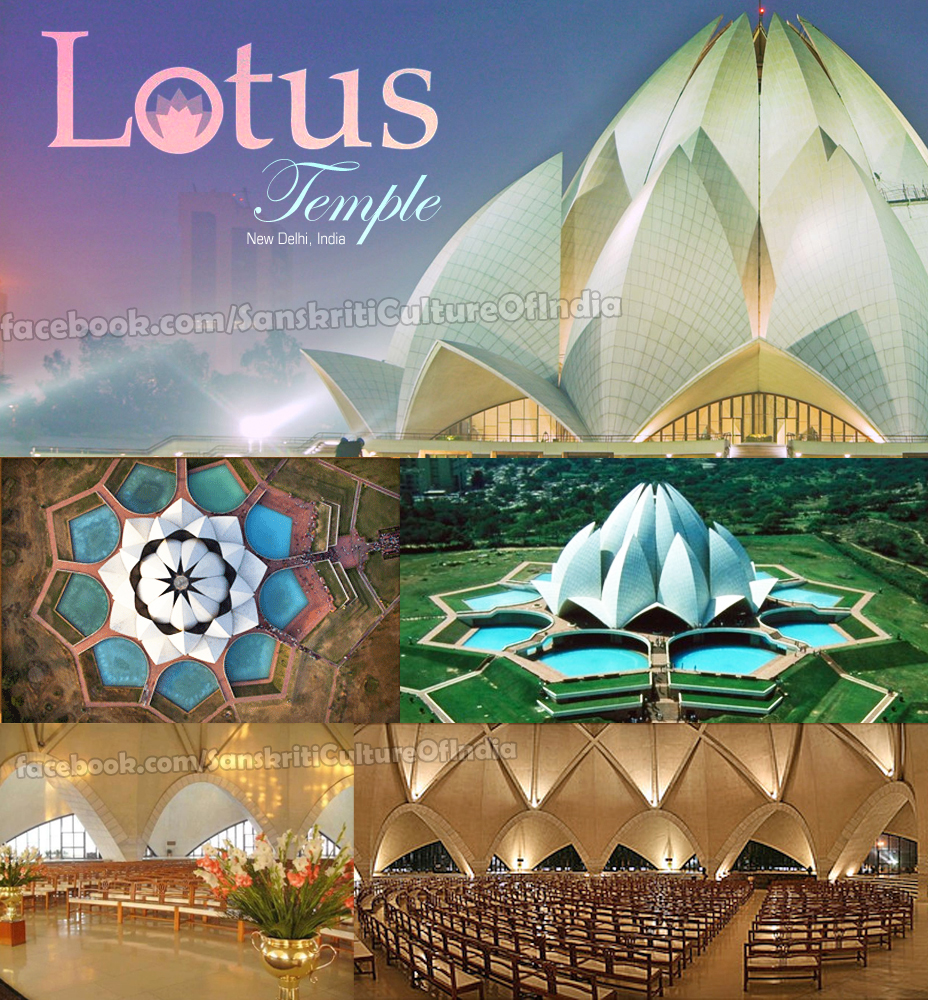
Located in New Delhi, India, Lotus Temple is one of the remarkable architectures of Bahai faith. The temple looks like a lotus flower and is made of marble, cement, dolomite and sand. The temple has no restrictions for visitors and is open to people from all religions and provides an immaculate environment for meditation, peace and wisdom.The Bahai temple was completed in 1986. Since then the temple has received recognition from all over the world for its splendid architecture and design. Lotus Temple is among the most visited monuments in India. The credit for building this beautiful structure goes to the Persian architect Fariborz Sahba from Canada.Personifying Lotus in the temple does not merely mean giving a lotus shape to the edifice but it has a message to the people of India in the form of a manifestation from the almighty. Lotus is a symbol of peace, purity, love and immortality. It is this particular specialty of Lotus flower which makes the flower an important icon in Indian culture and society. This is why the design of Lotus temple has been inspired by lotus flower.The design looks like a half opened Lotus flower with 27 freestanding “petals” made of marble. The architect, while designing the temple took into account the eternal beauty of Lotus flower. The construction work took almost 10 years before it finally got shape and was open for public. The team comprised of 800 engineers, technicians, workers and artisans who worked diligently to give realization to one of the most complex edifices in the world. The temple integrates the aesthetic values along with the technological influence within the whole structure. There are nine reflecting pools that encompass the temple from outside. Converting the geometry of the design that did not have any straight line to the actual structure needed a lot of effort and dedicated engineering.
The temple has the capacity to accommodate nearly 2500 people and has nine doors that open in a central hall. The whole structure is made of white marble that adds to the glory of the temple. It is about 40 meters tall surrounded by nine ponds and appears as if the temple is floating like a Lotus flower in water.
The most appraising aspect of this particular architectural masterpiece is the integration of the effervescent Indian history along with the modern engineering and architecture. The temple has to its accreditation being recognized all over the world as one of the most visited edifices in the world with almost 50 million people having visited the temple since its inception in 1986.