IndianSanskriti
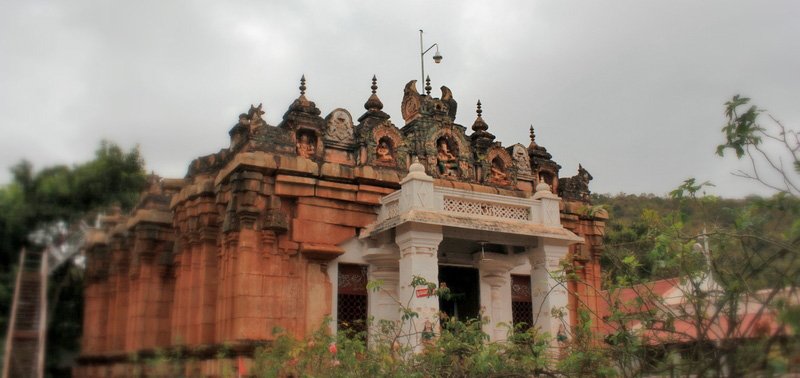
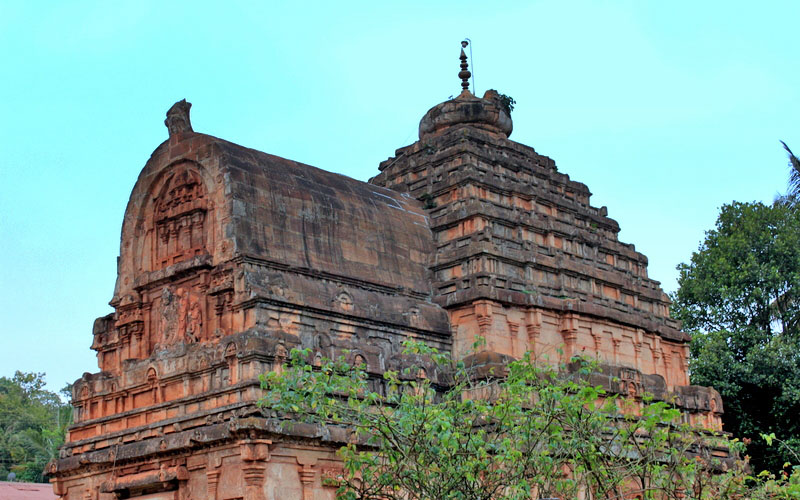
Kumaraswami-Temple--Oldest-Temple-in-Karnataka

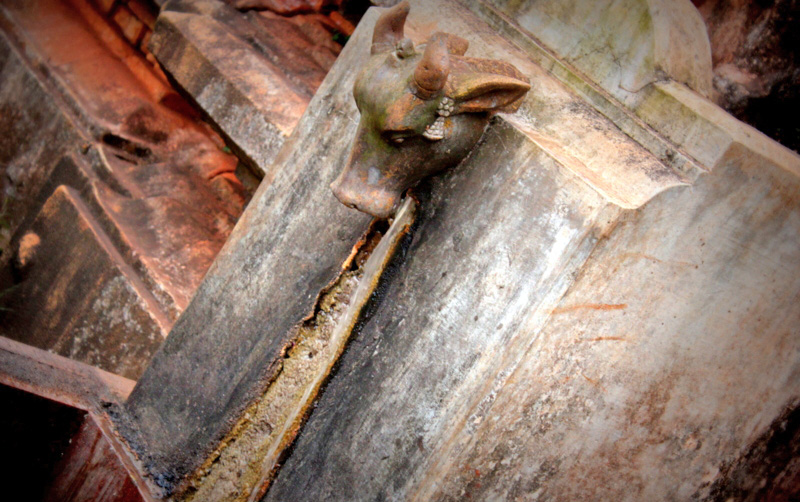
Kumaraswami Temple – The Oldest Temple in Karnataka

The temple, built by the Chalukyas and now a protected monument, has for centuries been out of bounds for women. It was discovered by the local rulers, the Ghorpades, in the thickly-wooded Swamimalai hill in the 15th century.

Women were earlier strictly not allowed to enter the shrine. Murarirao Yeshwantrao Ghorpade lifted the ban on women in October 1996. After the ban was lifted, nearly 3,000 women have worshipped at the temple.

The Ghorpades, well loved and respected by the locals, had declared the temple open to Harijans as early as the 1930s. After learning of this on his visit to Sandur in 1934, Mahatma Gandhi said, “A small state in south India has opened the temple to the Harijans, the heavens have not fallen.”

This centuries old temple complex in located inside Swamimalai forest range and is said to be infested with venomous snakes like russell viper and spectacled cobras. Peacocks are also a very common sight here. The forest range is also a very good habitat of leopards.

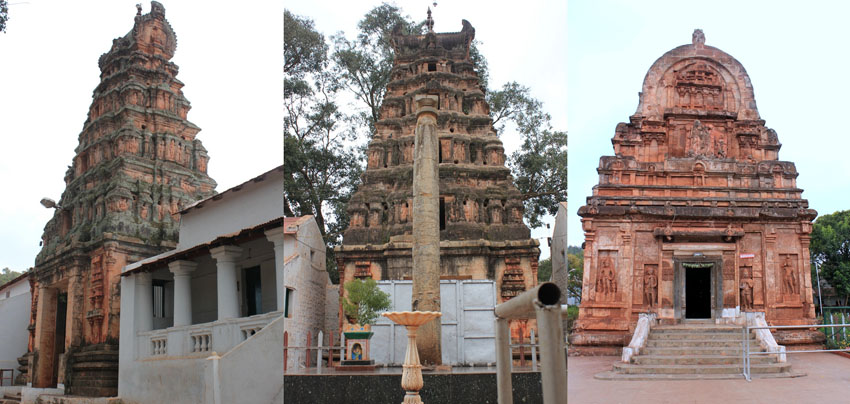
Kumaraswami Temple is located on south-west corner and is connected to Sandur by road. The temple complex is quite huge. The complex houses temples of Parvathy and Kumaraswami.

According to geologists, this peculiar mountain is made of volcanic eruptions and is very rich in mineral deposits. The soil and lake here is red marshy that owes to presence of rich ferrous deposits. Nowadays due to mindless mining in this area is resulting in habitat destruction.

Karnataka State highway No.40 pass through the above said gap in mountain, connecting Sandur to rest of the State. Temple is approachable by road from Sandur. Nearest Rail Heads are Hospet& Bellary on Guntakal-Hubli line.

Krauncha Giri is believed to be the first abode of Subramanya in south India. It is located 10 km from Sandur in Bellary District of Karnataka.

Unique feature of the mountain is its elliptical shape with a diametric narrow pass. According to legend, this gap is made when Kartikeya pierced the mountain in the battle with the demon Tharaka, with his sphere weapon vel to kill the demons who were hidden inside mountain. This legend is held in high esteem in Hindu mythologies including Mahabharata (salya parva.46), Skanda Purana(asura kandam). Krauncha Giri is also associated with legends of the sages Agastya and Parasuram.

Kalidasa in the work Megha Sandesa describes the gap in the mountain. This place is connected with legends of Sri Sailam jyotirlinga in Andhra Pradesh.

The name ‘Krauncha Giri’ is very familiar to many, but few know the location of this legendary mountain. For many, it’s just a mythical one like Mount Meru.
IMG_2465

IMG_2478

IMG_2468

IMG_2513

You may also like

Search the website

Like us on Facebook

Get daily updates via Email

Enter your email address:

Recent Posts

Yogini Ekadashi 2026 — The Yaksha Who Missed the Morning Flowers, and the Ekadashi That Undid His Curse

On Friday, July 10, 2026, the rare Krishna Paksha Ekadashi of Nija Ashadha arrives. The Padma Purana tells the story of Hemamali — the Yaksha gardener of Bhagavan Kubera in Alaka, whose single morning of distraction with his wife Vishalakshi cost him his form, his wife, and his celestial city. Cursed to wander the earth of Bharata as a leper for a long time, he was at last shown the way back by Sage Markandeya — a single sincere keeping of Yogini Ekadashi.

Jamai Shashthi 2026 — The Story of Maa Shashthi, the Cat, and the Wife Who Was Forgiven

Jamai Shashthi 2026 — The Story of Maa Shashthi, the Cat, and the Wife Who Was Forgiven

On Saturday, June 20, 2026, Bengali households across Bharata will welcome their married daughters and sons-in-law home for the legendary jamai-aador feast and perform the Shashthi Vrata. But behind the warmth lies a story most Bengalis know by heart and most non-Bengalis have never heard — the wife who stole the hilsa, blamed the cat, lost six sons to Maa Shashthi’s wrath, and was finally forgiven. The Vrat Katha, the vidhi, the mantras, and the deeper teaching.

Vat Purnima 2026 — The Wife Who Argued Yama Into Returning Her Husband’s Life

On Monday, June 29, 2026, women across Maharashtra, Gujarat, and southern Bharata will tie red thread around banyan trees and hear the story of Savitri — the wife who walked behind Yamaraja Himself when He came for her husband, and out-argued the Lord of Dharma into returning Satyavan’s life. The Mahabharata’s Pativrata Mahatmya Parva, the vrat vidhi, and why the banyan witnessed everything.

Nija Jyeshtha 2026 — The Real Jyeshtha Begins, and the Calendar Resumes

Nija Jyeshtha 2026 — The Real Jyeshtha Begins, and the Calendar Resumes

With Adhik Maas now closed on the Somvati Amavasya of June 15, the long-postponed festivals of Jyeshtha return — Vat Purnima (June 29, the Savitri-Yamaraja katha), Jamai Shashthi (June 20, the Bengali festival of Maa Shashthi), Sankashti Chaturthi (June 28), Yogini Ekadashi (July 10), and Devshayani Ekadashi (July 16, opening the four-month Chaturmas of Bhagavan Vishnu’s yoga-nidra). A guide to what the next four weeks hold and what the household that kept Purushottam Maas now carries forward.

The Closing of Purushottam Maas 2026 — Adhik Amavasya and the Sealing of the Month-Long Vrat

On Monday, June 15, 2026 — a rare Somvati Amavasya — the intercalary month that bears Bhagavan Vishnu’s own name comes to its close. The Acharyas teach that a vrat is not measured by its duration but by its closing. Here are the Padma Purana’s instructions for sealing the month-long Purushottam Maas vrat: the morning snan, the closing puja with the Vishnu Sahasranama, the day of dana, the Somvati Amavasya gift, and the final sarva-arpana — the offering of all merit at the feet of the Lord.

css.php