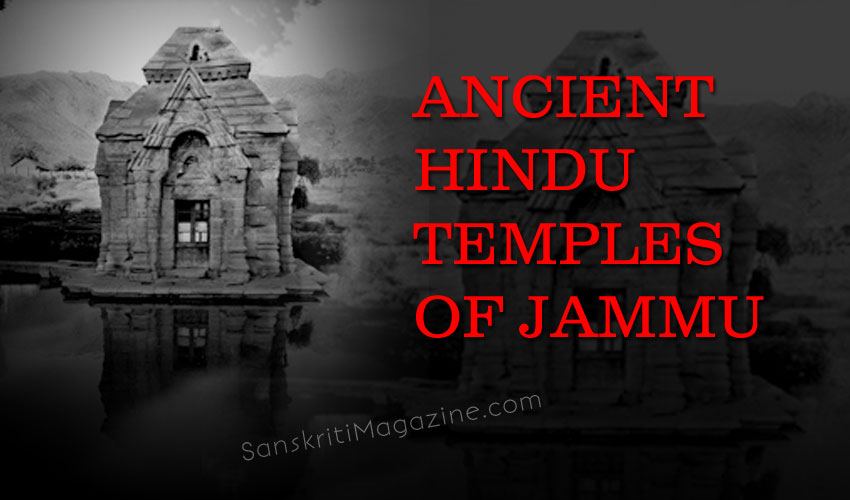
The state of Jammu and Kashmir is full of nature’s bounties. Apart from its beautiful scenic spots, superb gardens and majestic mountains, our state is richly endowed with valuable monuments. These monuments reflect the rich heritage and the glorious achievements of its past history.
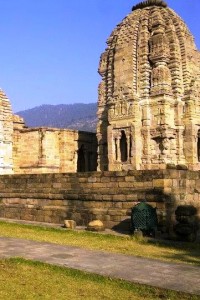
The name of Jammu is associated with a cluster of magnificent temples. Jammu province has a variety of new and old sacred shrines, which attract devotees and pilgrims from far and near. The ancient temples of Jammu speak of its ancient glorious past. The ancient temples of Jammu are broadly of two types viz Shikara and Pahari style. The temples at Kirmachi and Bhillawar are some of the temples in Shikara style. The shikara style consists of a cella, a mandap and a porch. A spire surmounts the cella and the mandap is covered with a low pyramid shaped roof.
 The temples at Daddu, Basant Garh and Gulabgarh are some of the shrines raised in the typical pahari style. The pahari style connotes the timber bonded stonewalls and the stanting roof covered by shingles. These temples are of vertical construction having Varandah an all the four sides. The verandah serves as a circumbulatory path around the cella. These temples exhibit excellent craft’s man ship in woodcarvings. Ceiling, pillars and brackets carry intricate patterns. Common feature of all these temples is the exquisite woodcarvings found on their ceilings, doorjambs, lintels, windows etc. Planetary deities, Nav Grahas are carved in low relief above the lintel of a doorway in a row. They are Ravi (Sun), Soma (Moon), Mangala (Mars) Budha (Mercury), Brihaspati (Jupiter), Sukra (Venus), Shani (Saturn), Rahu (ascending node), and ketu (descending node).
Raja Bask temple at Duddu, con be noted for its ornate carvings. The main entrance is exquisitely carved, Images of Navgrahas lord Ganesh a Narsimha Avtara and Dwarpals are carved in low relief with great delicacy. Inside the temple are the images of Raja and Rani Bask. Snake deities are worshipped here.
Among the ancient stone temples at Jammu are the historical temples at Kirmachi, Bhillawar, Basohli, Sud Mahadev, Babor and Ladan Kotli. The iconographical details found in these ancient temples prove the excellence of our craftsmanship. To the student of iconography, these temples are of absorbing interest. The ancient stone temples of Jammu throw interesting sidelight on the gradual changes in the iconographic features of the images.
The ancient temples of Jammu show the sangam of Kashmiri and Himachali Building style. It also reveals certain distinctive peculiarities of plan and elevations. Architecture and sculptures go hand in hand in these temples. In these temples we see a gradual architecture and engineering developments. Built of mammoth boulders with missionary works, these temples are indeed a marvel.
Kirmachi – 64, Kms from Jammu and about 9 kms from Udhampur is located kirmachi village. Though virtually unknown to the outside world, this village boosts of a unique architectural treasure. Kirmachi held an important place in the past. The four elegant and imposing temples can ascertain this. Three temples are standing in a row on the bank of Devak nadi Traditionally, the construction of these temples is associated with the heroic Pandvas, but there is no reliable record of its date. According to some scholars King Kanishka founded this place. The destruction caused by the weathering and the time dates them back to more than thousand years. The interesting feature of the architecture of these temples is the culmination of Pagoda and Gandhara style of construction. The temples of Kirmachi show close resemblance with the Shikara temples of Himachal. The temples at Masrur, Bajnath, Bajoura and Bharmour are some of the ancient shrines in Shikara style. The outer walls of the temples are embellished with profuse sculptured relicfs. The main entrance of the bigger temple has columns, decorated with flowers, leaves and miniature figures.
Among the sculptures found in this temple are the three headed Shiva and Varah Avtara. The sculptured stones show the excellence in the field of art. It shows the sculpture art was at peak in those days. The temples of Kirmachi still stood letting time to move ahead gently.
Landan Kotli – About 5kms from Udhampur is a small village of Ladan Kotli. The only ancient monument standing at Ladan Kotli is a temple. The Temple called Jalandharia Devi temple is in Shikara style. In front of the temple is a stone lined spring containing limpid water. The temple is of great interest in view of the fact that it is the only temple in the Jammu province showing erotic scenes on the outer sculptured walls.
Bhillawar – 120 kms from Jammu is a small town of Bhillawar. This place held an important place in the past. Bhillawar is the changed form of Villapur, mentioned in Kalhan’s Rajtarangi, the chronology of kings. During the reign of Raja Anant of Kashmir, King Kalsha ruled Villapur. Sussala, the ruler of Kashmir was married to the daughter of Valapur’s ruler. From the past there had been political and cultural relations between Kashmir & Bhillawar.
An ancient temple called Hari Hara temple, built in Shikara style on a three feet high platform is about 70 feet high. The temple has Garbgriha and mandapa, which has now fallen. Above the Garbh griha, the exterior spire of the temple is ornamented with lotus petals. Throughout the exterior between the sculpted figures are also seen the carved figures of animals and mythical creatures. Among the numerous superb sculptures in this temple are three-headed Vishnu, Lord Ganesha and hand folded Bhairava. Many sculptured stones are scattered around the temple. Among them is a bull carved of a stone. Billawar is well worth a visit.
Basohli – About 123 kms from Jammu is a famous town of Basohli. Basohli is famous world wide for Basohli painting. The Pal Dynasty of Basohli rulers, were admires of Art. The Pahari art developed here and reached its zenith prior to the Dogra rule. On the bank of River Ravi is a Shiva temple. Two rock cut caves are also seen on the bank of Ravi. In one of the caves is a life size image. A Shiva Linga and the idol of mother Goddess are seen in one of the caves.
The image of Uma- Maheshwara recovered from Basohli, dating back to 10th century A.D. is now housed in the Dogra art Gallery Jammu. Image of Lord Shiva carved from a Black stone, is shown seated on bull (Nandi). Goddess Uma is seated on his left thigh, Shiva is crowned with richly embellished elaborate crown.
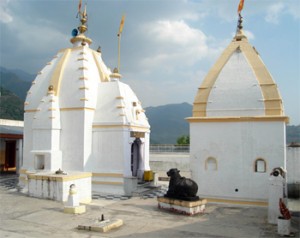 Sud Mahadev – is a sacred Hindu site, the githa of Sud Mahadev is mentioned in Nilmata Purana., Markande Purana and Mahabharata. According to the mythological belief, marriage of Shivji and Parvati was held here. On account of its sacred origin, Hindus from all parts of India visit this place. Every year in the month of June, a festival is celebrated here. The ancient remains are not seen in or around the Sud Mahadev. The present temple at Sud Mahadev is a Dogra construction. In the courtyard of this temple is a trident of ancient date, on which is the inscription in Brahmi. According to some scholars, this trident dates back to 2-3 century A.D., because of the Brahmi script. In one of the niches of this temple are the images of “Shiva and Parvati.
Babor – About 45 kms from Jammu and about 5 kms from Mansar are two hamlets of Babor and Thalwara. Babor changed form of Babapur is mentioned in Pandit. Kalhan’s Rajtarangni. Raja Kirti of Babor used to visit the court of Raja Kalsha, the King of Kashmir.
Temple of Kali Devi at Babor is still standing the ravages of time; built on a high platform, the temple is square internal. Temple is sculpted from top to bottom. Base of the temple is decorated with leaf patterns. On the right side of the entrance is an image of goddess Ganga and on the left side is a disfigured image. Roof of the temple is made up of stone blocks. The outer walls of the temple are profusely ornamented with leaf patterns, flowers and geometrical designs. In front of the door are two vertical pillars, ornamented with bells and creepers. Among the numerous superb sculptures in this temple are the images of Lord Narshima. Lord Krishna and Vishu.
The most interesting sculptures, finely sculpted are of Shiva and Parvati. Shiva is shown crowned and three-headed. Both wear intricate Jewellery. Shiva holds a trident. Both the images are bedecked in a long garland, necklaces and earnings. Beautifully ornamented. Bull torso, dating back to 10th century A.D, recovered from here is now housed in Dogra Art Museum.
Another temple, Kaladhera, stands near the Kali Devi temple. The Garbgraha and mandapa of this temple was erected on pillars. Now the temple is in ruins. On the Southern side of this temple are the ruins of a Shiva temple. Among the sculptured stones scattered here are the images of Lord Shiva, dancers and musicians. The temples at babor speak volumes about the art and culture of those days.
Bahu temple – In Jammu the most famous among the forts is Bahu fort. This fort is situated on the left bank of River Tawi. A famous Mahakali temple is situated in the premises of the fort. Built on a 4 ft high platform this temple is made up of while marble. According to some scholars this temple dates back to 8-9 century but the construction above the plinth appears to be modern.
After studying the history this becomes clear to the mind that places of worship notably temple were the hub of educational and political activities in ancient times. Let us not bother out mind as to how our iconography and woodcarving was born to us. The main point, which needs to be driven to the mind of everybody, is that it captivates everybody who happens to observe it. The call of the time is that we must preserve our ancient monuments so that we could proclaim with the beat of drum that our past was great and illuminating.
~ Virendra Bangroo, Documentation Officer at IGNCA