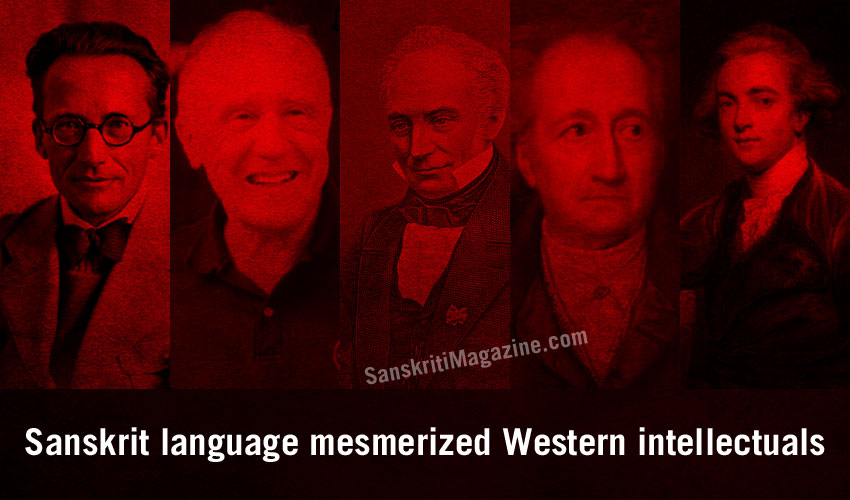
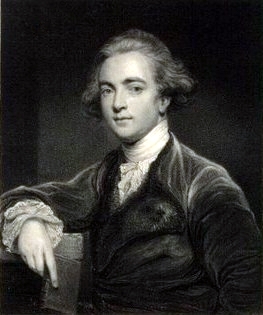
It is for the astounding richness of the Sanskrit language a renowned linguist Sir William Jones first translated Kalidasa’s Shakuntala from the original Sanskrit into English in 1789. This stirred the minds and hearts of the top European intellectuals that include Johann Goethe, Gottfried Herder, Friedrich Schiller, August Schlegel, Wilhelm von Humboldt, et al.
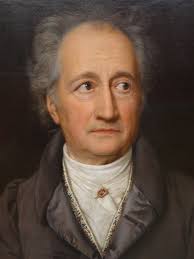
Very impressed by the language and its philosophical plot the father of the German literature (J. Goethe) learnt the Sanskrit on his own. And, he plunged into this ancient play Shakuntala for the whole thirty years. He even wrote an insightful poem eulogizing this play. Again, George Forster translated this Kalidas’s work into German in 1791. In a span of some decades sprouted 46 translations into fourteen European languages. One the other hand the translation of the Bhagavad Gita by Charles Wilkin in 1784 and Upanishads by Anquetil Duperron in 1801 opened up unprecedented vistas for the philosophical regeneration hitherto unknown in the European literature. ‘Oneness of the universe’ of the Vedanta seemed very plausible to the philosophical psyche of the western scholars.
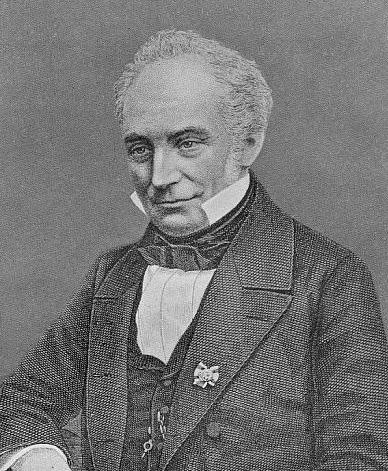
Again, one of the fathers of Modern linguistic Franz Bopp and a great philosopher Friedrich Schlegel, both from Germany, laid the revolutionary foundation of the comparative linguistic by freely borrowing from Panini’s “Ashtadhyayi” which was later further developed by the language giants like Ferdinand de Saussure, Leonard Bloomfield and Noam Chomsky. Panin, who was an enlightened sage of 4th BC India, was the first to systematically put down the comprehensive Grammar of Sanskrit language. This treatise consists of about 3959 sutras which can handle the nuances and intricacies of any languages in the universe, empirically and anatomically.
Having been too bewitched by the Sanskrit language a most renowned American linguist Leonard Bloomfield exclaims — “It was in India, however, that there rose a body of knowledge which was destined to revolutionize European ideas about language. Panini Grammar taught Europeans to analyze speech forms; when one compared the constituent parts, the resemblances, which hitherto had been vaguely recognized, could be set forth with certainty and precision.” Yes, here at home we prefer to call Sanskrit as a dead language, and instead, with enthusiasm and hubris chose to learn German.
There are countless western scholars and scientists who have overwhelmingly acknowledged the exceptional richness of Sanskrit language wherein they saw an immense scope in the development of any area of studies.Voltaire, Hegel, Schopenhauer, Emerson, Henry Thoreau, Leo Tolstoy, TS Eliot, Neils Bohr, Schrodinger, Heisenberg, Oppenheimer, Mark Twain, Car Jung, J. D. Salinger and others learnt Sanskrit or studied Sanskrit literature to strengthen their intellectual prowess.
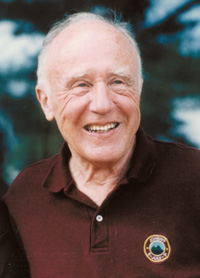
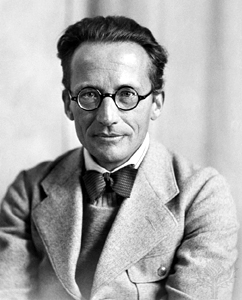
John Archibald Wheeler –a famous modern physicist who first coined Black Hole and Warm Hole and occupied the chair that had previously been held by Albert Einstein, enthuses – ‘One has the feeling that the thinkers of the East (INDIA) knew it all, and if we could only translate their answers into our language we would have the answers to all our questions.’ With the same vigor bursts out another physicist Erwin Schrodinger, known as the father of Quantum Mechanics — “Some blood transfusion from INDIA to the West is a must to save Western science from spiritual anemia.”
Here are my few earnest questions — had all these rational thinkers, scientists, writers — whose theories, whose principles, whose literature, whose formulae and equations we study in schools and colleges and thus claim ourselves as academically qualified, gone crazy to heap high praise on Sanskrit and its literary treasure troves? How can we claim to be INDIAN when we joyfully belittle and undermine our own heritage? What is it that makes us to see only flaws in our Mother even without ever making a bit of genuine effort to know and realize her uncanny virtues?
I don’t think we have ever seen any country in the world that its citizens speak ill of their heritage, their tradition and values — however archaic, rustic and crude they may be. Why does it touch our raw nerves when someone appreciates the values and culture of the native land? Sanskrit and the myriad scriptures produced in this grand language is as resplendent as the Sun ball over our head. Can you ignore the Sun? I don’t think François Voltaire was a big fool to announce with vehemence about 300 years ago —- ‘Everything has come down to us from the bank of GANGA’ , ‘The first Greeks traveled to India to instruct themselves’, ‘India, whom whole Earth need, who needs no one, must by that very fact the most civilized land’. Should it not call for a dispassionate introspection and thus our self-correction and reawakening?
~ Salil Gewali, Journalist & Writer, Shillong, Meghalaya, India