Osho, I am afraid of death, yet at the same time it has an incredible attraction for me. What does it mean?
Prem Shreyas,
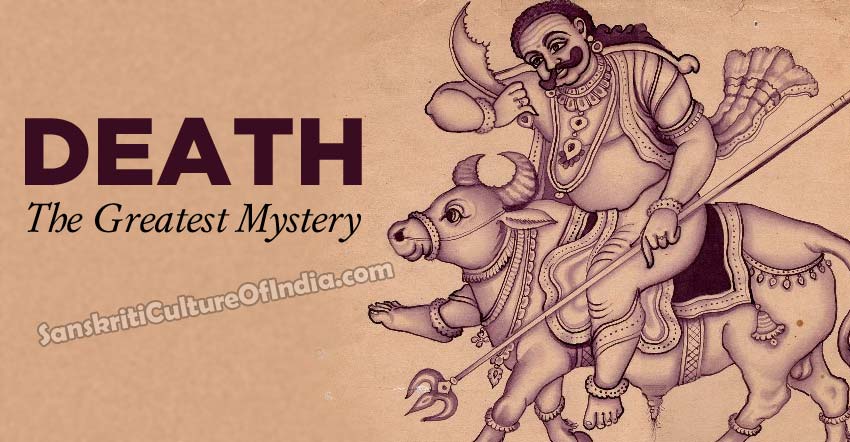
Death is the greatest mystery of life. Life has many mysteries, but there is nothing comparable to death. Death is the climax, the crescendo. One is afraid of it because one will be lost, one will dissolve in it. One is afraid of it because of the ego – the ego cannot survive death. It will be left on this shore when you start moving towards the other; it cannot go with you.
And the ego is all that you know about yourself, hence the fear, great fear: “I will not exist in death.” But there is great attraction too. The ego will be lost, but not your reality. In fact, death will reveal to you your true identity; death will take away all your masks and will reveal your original face.
Death will for the first time make it possible for you to encounter your innermost, interior most subjectivity as it is, without any camouflage, without any pretence, without any pseudo personality.
Hence, everybody is afraid of death and everybody is attracted. This attraction was misunderstood by Sigmund Freud and he thought that there is a death-wish in man – he called it thanatos. He said, “Man has two basic, fundamental instincts: one is eros – a deep desire to live, to be alive for ever, a desire for immortality – and the other is thanatos, the desire to die, to be finished with it all.” He misunderstood the whole point because he was not a mystic; He knew only one face of death – that it ends life – he knew only one thing: that death is an end. He was not aware that death is also a beginning. Each end is always a beginning, because nothing ever ends totally, nothing can ever end. Everything continues, only forms change.
Your form will die, but you have something formless in you too. Your body will not be there, but you have something in you, within your body, which is not part of your body. Your earthly part will drop into the earth, dust unto dust, but you have something of the sky in you, something of the beyond, which will take a new journey, a new pilgrimage.
Death creates fear if you think of the ego, and death appeals to you, attracts you, if you think of your true self So vaguely one remains attracted towards death; if you become clearly aware of it, it can become a transforming understanding, it can become a mutant force.
The meditator has to overcome fear.
The meditator has to fall in love with death,
the meditator has to invite death –
Shreyas, try to understand both the fear and the attraction. And don’t think that they are opposites – they don’t overlap, they are not opposites either; they don’t interfere with each other. The fear is directed in one direction: the ego; and the attraction is directed into a totally different dimension: the egoless self And the attraction is far more important than the fear.
The meditator has to overcome fear. The meditator has to fall in love with death, the meditator has to invite death – the meditator has not to wait for it, he has to call it because death is a friend to the meditator. And the meditator dies before the death of the body. And that is one of the most beautiful experiences of life: the body goes on living, on the outside you go on moving the same as you were before, but inside the ego is no more, the ego has died.
Now you are alive and dead together. You have become a meeting-point of life and death; you contain now the polar opposites and the richness is great when polar opposites are contained. And these are the greater polar opposites, death and life. If you can contain both, you will become capable of containing God because God is both. His one face is life, his other face is death.
Shreyas, this is something beautiful – don’t make a problem out of it. Meditate over it, make it a meditation, and you will be benefitted immensely.
~ Osho, The Fish in the Sea is Not Thirsty, Ch 15, Q 1