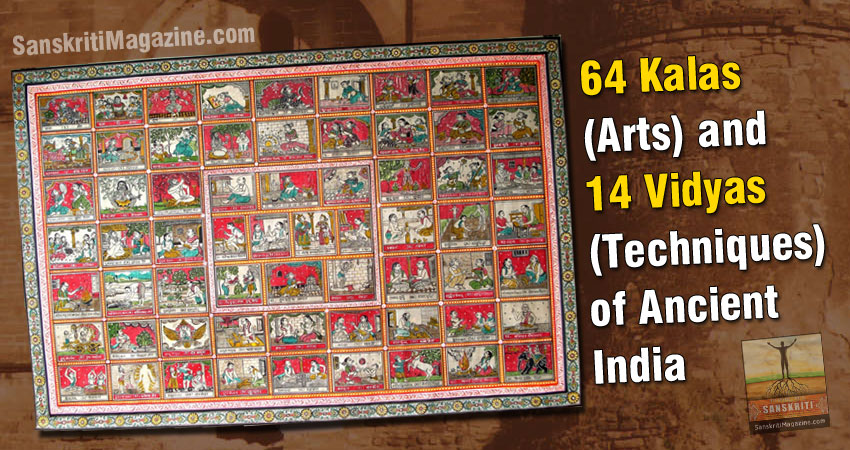
Kala means performing art in Sanskrit.
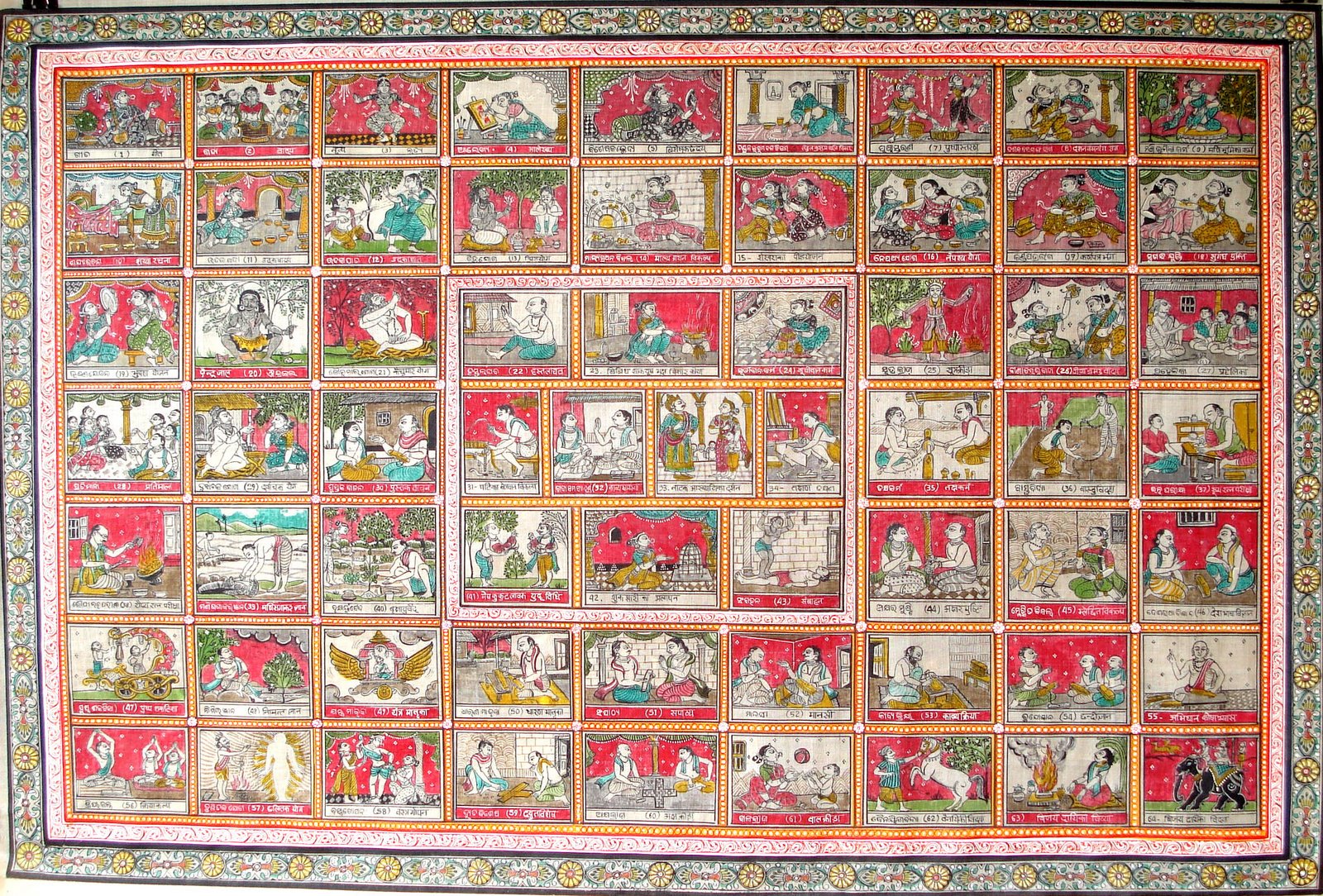
The mastery of as many of the 64 traditional arts known as the Chausath Kalas or Chathusashti Kalas, formed an important basis in the development of a cultured individual in many parts of ancient India.
It is believed that Bhagwan Krishna possesses these arts. After slaying of Kamsa and the thread ceremony, Krishna and Balrama went to the ashram of Guru Sandipani in the city of Avanti (Ujjain).There within a span of 64 days, Krishna learnt fourteen types of sciences (vidyas) and sixty-four arts (kalas), each of which would take a normal person two to two and a half years to accomplish.
These arts are:
Chausath Kalas (64 forms of art)
- Geet vidya: art of singing.
- Vadya vidya: art of playing on musical instruments.
- Nritya vidya: art of dancing.
- Natya vidya: art of theatricals.
- Alekhya vidya: art of painting.
- Viseshakacchedya vidya: art of painting the face and body with color
- Tandula-kusuma-bali-vikara: art of preparing offerings from rice and flowers.
- Pushpastarana: art of making a covering of flowers for a bed.
- Dasana-vasananga-raga: art of applying preparations for cleansing the teeth, cloths and painting the body.
- Mani-bhumika-karma: art of making the groundwork of jewels.
- Aayya-racana: art of covering the bed.
- Udaka-vadya: art of playing on music in water.
- Udaka-ghata: art of splashing with water.
- Citra-yoga: art of practically applying an admixture of colors.
- Malya-grathana-vikalpa: art of designing a preparation of wreaths.
- Sekharapida-yojana: art of practically setting the coronet on the head.
- Nepathya-yoga: art of practically dressing in the tiring room.
- Karnapatra-bhanga: art of decorating the tragus of the ear.
- Sugandha-yukti: art of practical application of aromatics.
- Bhushana-yojana: art of applying or setting ornaments.
- Aindra-jala: art of juggling.
- Kaucumara: a kind of art.
- Hasta-laghava: art of sleight of hand.
- Citra-sakapupa-bhakshya-vikara-kriya: art of preparing varieties of delicious food.
- Panaka-rasa-ragasava-yojana: art of practically preparing palatable drinks and tinging draughts with red color.
- Suci-vaya-karma: art of needleworks and weaving.
- Sutra-krida: art of playing with thread.
- Vina-damuraka-vadya: art of playing on lute and small drum.
- Prahelika: art of making and solving riddles.
- Durvacaka-yoga: art of practicing language difficult to be answered by others.
- Pustaka-vacana: art of reciting books.
- Natikakhyayika-darsana: art of enacting short plays and anecdotes.
- Kavya-samasya-purana: art of solving enigmatic verses.
- Pattika-vetra-bana-vikalpa: art of designing preparation of shield, cane and arrows.
- Tarku-karma: art of spinning by spindle.
- Takshana: art of carpentry.
- Vastu-vidya: art of engineering.
- Raupya-ratna-pariksha: art of testing silver and jewels.
- Dhatu-vada: art of metallurgy.
- Mani-raga jnana: art of tinging jewels.
- Akara jnana: art of mineralogy.
- Vrikshayur-veda-yoga: art of practicing medicine or medical treatment, by herbs.
- Mesha-kukkuta-lavaka-yuddha-vidhi: art of knowing the mode of fighting of lambs, cocks and birds.
- Suka-sarika-pralapana: art of maintaining or knowing conversation between male and female cockatoos.
- Utsadana: art of healing or cleaning a person with perfumes.
- Kesa-marjana-kausala: art of combing hair.
- Akshara-mushtika-kathana: art of talking with fingers.
- Dharana-matrika: art of the use of amulets.
- Desa-bhasha-jnana: art of knowing provincial dialects.
- Nirmiti-jnana: art of knowing prediction by heavenly voice.
- Yantra-matrika: art of mechanics.
- Mlecchita-kutarka-vikalpa: art of fabricating barbarous or foreign sophistry.
- Samvacya: art of conversation.
- Manasi kavya-kriya: art of composing verse
- Kriya-vikalpa: art of designing a literary work or a medical remedy.
- Chalitaka-yoga: art of practicing as a builder of shrines called after him.
- Abhidhana-kosha-cchando-jnana: art of the use of lexicography and meters.
- Vastra-gopana: art of concealment of cloths.
- Dyuta-visesha: art of knowing specific gambling.
- Akarsha-krida: art of playing with dice or magnet.
- Balaka-kridanaka: art of using children’s toys.
- Vainayiki vidya: art of enforcing discipline.
- Vaijayiki vidya: art of gaining victory.
- Vaitaliki vidya: art of awakening master with music at dawn.
14 Vidyas (techniques)
4 Vedas
- RigVeda
- SamVeda
- YajurVeda
- AtharvaVeda
4 UpaVedas (abodes of knowledge)
- ArthaShastra: Ancient treatise on statecraft, economic policy and military strategy.
- Dhanurveda: Science of archery
- GandharvaVeda: Treatise on performing arts, encompassing theatre, dance and music.
- Ayurveda: The word ayurveda consists of the words ayus, meaning “longevity”, and veda, meaning “related to knowledge” or “science”. Thus Ayurveda is the science of life.
6 Vedangas
- Shiksha: science of phonetics and phonology of Sanskrit, its aim is the teaching of correct pronunciation of the Vedic hymns and mantras.
- Kalpa: art of rituals
- Vyakaran: Sanskrit grammatical tradition of vyakarana.
- Nirukta: art of etymology, particularly of obscure words. It consists of brief rules (sutras) for deriving word meanings, supplemented with glossaries of difficult or rare Vedic words.
- Chhanda: study of Vedic meter in Classical Sanskrit poetry.
- Jyotish: system of astrology, traditionally consisting of three branches:
1. Siddhanta: traditional Indian astronomy
2a. Samhita
2b. Medini Jyotisha: prediction of important events based on analysis of astrological dynamics in a country’s horoscope of general transit events such as war, earthquakes, political events, financial positions, elections etc; Vastu Shastra related matters, animals, portents, omens etc.
3. Hora: predictive astrology based on analysis of natal horoscope and the moment a query is made.
In Kama Sutra, Vatsayana states:
“A public woman, endowed with a good disposition, beauty and other winning qualities, and also versed in the above arts, obtains the name of a Ganika, or public woman of high quality, and receives a seat of honour in an assemblage of men. She is, moreover, always respected by the king, and praised by learned men, and her favour being sought for by all, she becomes an object of universal regard. The daughter of a king too as well as the daughter of a minister, being learned in the above arts, can make their husbands favorable to them, even though these may have thousands of other wives besides themselves.
If a wife becomes separated from her husband, and falls into distress, she can support herself easily, even in a foreign country, by means of her knowledge of these arts. Even the bare knowledge of them gives attractiveness to a woman, though the practice of them may be only possible or otherwise according to the circumstances of each case. A man who is versed in these arts, who is loquacious and acquainted with the arts of gallantry, gains very soon the hearts of women, even though he is only acquainted with them for a short time.”