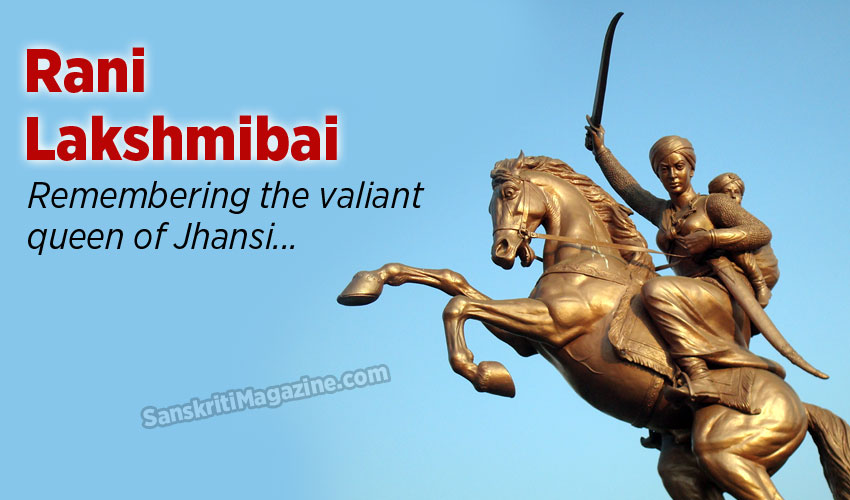
Rani Lakshmibai of Jhansi was probably the bravest of all the leaders who fought for India’s independence against the mighty British. She died in battle as she led the Indian mutiny in 1857, the first armed uprising against British rule. Rani Lakshmibai of Jhansi will always be remembered for her unbreakable patriotism and astonishing courage.
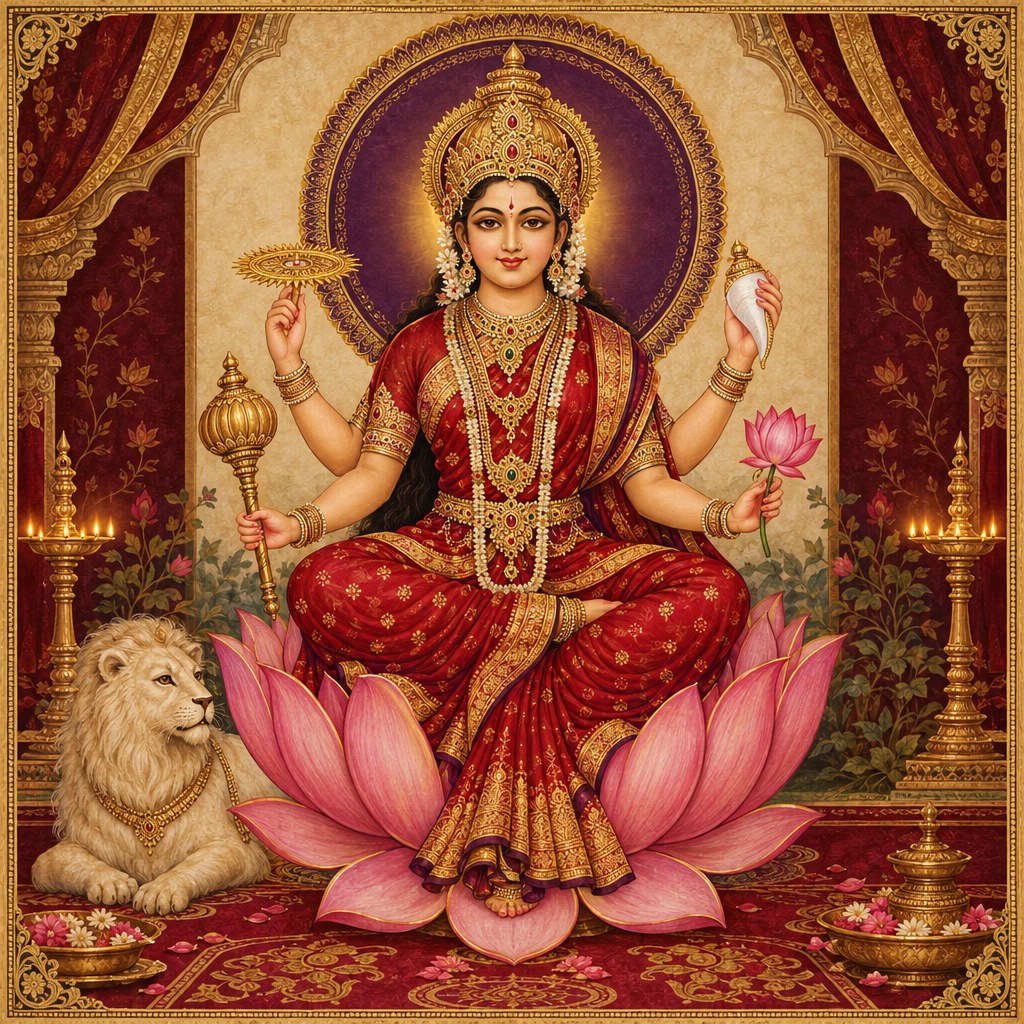
In the early part of 1800, when the British were already well established in India, Manikarnika or Manu (the maiden name of Lakshmibai) was born in the family of a courtier, Moropant, in Bittoor, a place located in Central India. Manu was very athletic and loved to compete with boys. She was also an avid reader with a love for learning. When Manu reached marriageable age, quite unexpectedly, a marriage proposal came from the Maharaja (king) of Jhansi. She was married a year later, in 1842. Manu was named Rani or queen Lakshmibai, after the goddess of wealth and victory.
After nine years, Lakshmibai gave birth to a son. All of Jhansi celebrated the happy event. Alas, the child died after three months. Both Lakshmibai and the Maharaja were grieve stricken. The Maharaja was also unwell and was worried that he had no successor to the throne. He knew the British would not lose the opportunity to take over the kingdom of Jhansi if it were left without an heir. He quickly arranged to adopt a son in November, 1853. On the following day, the Maharaja died. The prince was still a minor. Lakshmibai decided to run the kingdom until the adopted son reached maturity.
It was not easy for a woman to be the head of state at that time. Rani Lakshmibai faced many difficulties but she ran the kingdom well. She mastered the martial arts, and inspired Jhansi’s women to join the army and take a more active role in defending the country.
The British were determined to take over the kingdom Jhansi. So they objected to the adoption. Lakshmibai wrote a petition to the Governor General, and later sent an envoy to London to plead her case. The British rejected her arguments.
The British looked down at the Indians, calling them “nigger natives”. They claimed that the white race was superior and that they had the right to enjoy the enviable wealth of India. As India’s economy deteriorated under British rule, Indians became increasingly unhappy. When the Indian soldiers of the Meerut garrison heard the rumor that their rifle cartridges, which they cut with their teeth, were greased with lard and cow fat, both Muslims and Hindus revolted as eating pork is against the Muslim faith, and eating beef is against the Hindu faith. On May 9, 1857, British officers were shot and prison inmates were released. The rebelling nationalist soldiers marched to Delhi and received a warm welcome from the citizens. The aged ex-emperor, Bahadur Shah, was reinstated to the Mughal throne and Delhi became the nationalist soldiers’ headquarters. Later they seized Lucknow and Satara and pushed the British soldiers southwards to Jhansi. The British approached Rani Lakshmibai for refuge but the Rani refused, saying that she could not betray her fellow Indians. The British army was totally uprooted and the nationalist soldiers returned to Delhi.
The British, however, were shrewd politicians and highly organized. Their soldiers were better equipped and better trained. They recaptured Delhi on September 2, 1857 with the help of their Indian allies. All but three of the independent states surrendered and their rulers became British puppets. The three exceptions were: The Rani of Jhansi, Tantia Topi and Rao Sahib Peshwa. These three swore that they would jointly fight the British until their last breath.
The Rani of Jhansi warned her people that the British would soon come back. The people of Jhansi unanimously supported their queen and assured her that they would lay down their lives to defend Jhansi. On March 25, 1858, the British attacked Jhansi with a huge army equipped with powerful cannons. With the help of traitors, they entered the fort at night in overwhelming numbers. Rani Lakshmibai went underground and the British were disappointed when they captured the fort. To take out their wrath, they burnt the excellent state library, ransacked the palace and shot Rani Lakshmibai’s followers.
Rani Lakshmibai escaped to Rao Sahib Peshwa’s camp at Kalpi. The British heard of this and prepared to attack Kalpi. Rani Lakshmibai was worried that Rao Sahib Peshwa had left himself open to attack from the rear and suggested a change in his battle formations. Rao Sahib Peshwa did not think any woman could teach him how to wage war and ignored her suggestions. As a result, Kalpi fell into the hands of the British on May 24, 1858. The rebels then sought shelter at the Gwalior fort. The king of Gwalior was not willing to give up his fort without a fight as he was afraid of the British. But the soldiers laid down their arms in respect for the Rani of Jhansi. Thus the rebels entered Gwalior without a fight.
The British wasted no time in attacking Gwalior. It was the fiercest, bloodiest battle ever fought on Indian soil. Lakshmibai’s courage, strength, and ability as she valiantly fought the British army’s vastly superior forces, are remembered to this day. She dies fighting and Gwalior was captured. Tantia Topi was hanged and Rao Sahib escaped.
~ Kanai L. Mukherjee, Association of Grandparents of Indian Immigrants (AGII)