IndianSanskriti

Rama and Sita: The Enduring Legacy of Their Love Story in Indian History and Culture

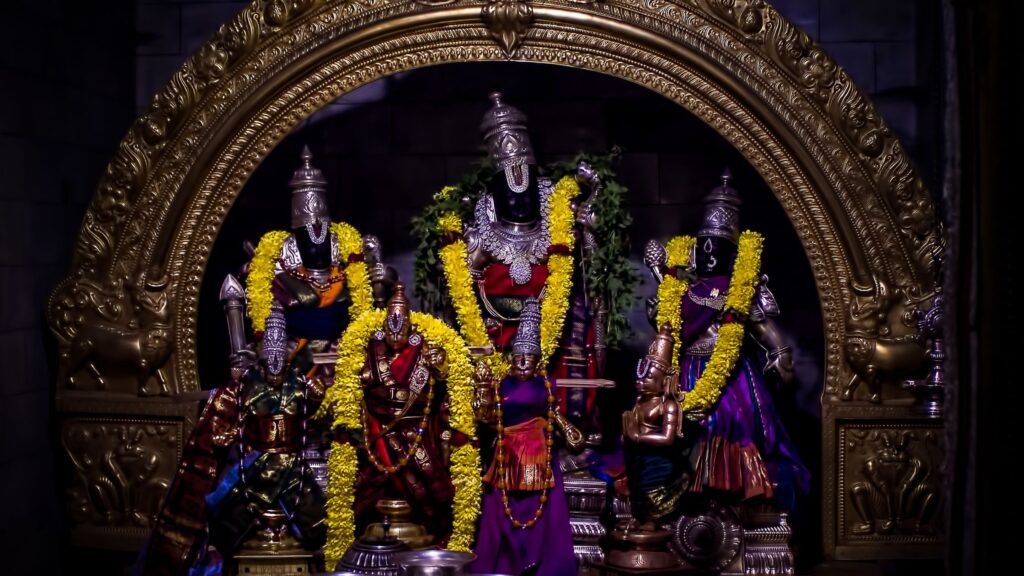
The story of Rama and Sita is not just a tale of love and devotion, but also a significant event in Indian history. The story is set in the Treta Yuga, which is believed to be the second age in Hindu cosmology, and is recorded in the epic Ramayana.

Historians suggest that the Ramayana was composed over a long period of time, with different versions and interpretations emerging in different regions of India. The earliest reference to the Ramayana can be found in the ancient Sanskrit text Brihadaranyaka Upanishad, which dates back to around 700 BCE. Over time, the story of Rama and Sita was adapted and retold in various languages and forms, including plays, poems, and novels.

While the Ramayana is considered a work of fiction, historians believe that the story may have some basis in history. Scholars suggest that Rama and Sita may have been real historical figures, who lived in ancient India and were later mythologized. The exact dates and events of their lives, however, are not well-documented and remain a subject of debate among historians.

Regardless of its historical accuracy, the story of Rama and Sita has had a profound impact on Indian culture and society. The values and principles embodied by Rama and Sita, such as devotion, righteousness, and the triumph of good over evil, have been a source of inspiration and guidance for generations of Indians. The story has been adapted and retold in various forms of art, including music, dance, theatre, and film, and has become an integral part of Indian popular culture.

The legacy of Rama and Sita continues to live on in modern India, with the story and characters still holding great cultural and religious significance. The celebration of Diwali, which marks the return of Rama and Sita to Ayodhya after their fourteen-year exile, is one of the most important festivals in India. The story of Rama and Sita is also a reminder of the enduring power of love and the strength of human values.

In conclusion, the story of Rama and Sita, while not entirely grounded in historical fact, is still a significant event in Indian history and culture. The values and principles embodied by the characters continue to inspire and guide people to this day, and the story remains an integral part of Indian popular culture. The enduring legacy of Rama and Sita is a testament to the timeless wisdom and inspiration that can be found in India’s rich history and culture.

You may also like

Search the website

Like us on Facebook

Get daily updates via Email

Enter your email address:

Recent Posts

Purushottam Maas — The Month No Deity Would Claim, and the Lord Who Made It Supreme

Every month of the Hindu calendar has a lord — except the rare thirteenth, the Adhika Maas, born an orphan and shunned as the “impure month.” The Puranas tell how this rejected month went in grief to Bhagavan Vishnu, who claimed it, gave it His own name — Purushottam — and made it the most fruitful month of all. The origin story, the teaching, and what it means for Purushottam Maas 2026 (May 17 – June 14).

Padmini Ekadashi 2026 — The Ekadashi Even the Devas Descend to Keep

Padmini Ekadashi 2026 — The Ekadashi Even the Devas Descend to Keep

The rarest Ekadashi of the entire Hindu calendar is three days away. The Padma Purana preserves a conversation between Bhagavan Krishna and Yudhishthira about a single Ekadashi the great Rishis spend lifetimes waiting for — Padmini. The Vrat Katha of Queen Padmini of Mahishmati, the lotus teaching, and why May 27, 2026 is the morning Vaishnavas across Bharata are preparing for.

Varada Chaturthi 2026 — The Rare Ganesha Day of Purushottam Maas

Varada Chaturthi 2026 — The Rare Ganesha Day of Purushottam Maas

Once every 2.5–3 years — when the rare 13th month of Adhika Maas opens — a thirteenth Vinayaka Chaturthi appears. The Mudgala Purana calls it Varada Chaturthi, the “boon-giving” Chaturthi, and holds it as the most fruit-bearing Ganesha day of the entire calendar. Today, Wednesday May 20, 2026, is that day.

Padmini Ekadashi 2026 — The Rare Ekadashi That Comes Only in Purushottam Maas

Padmini Ekadashi 2026 — The Rare Ekadashi That Comes Only in Purushottam Maas

Padmini Ekadashi 2026 falls on Wednesday, May 27 — the Shukla Paksha Ekadashi of Adhika Maas, the rarest Ekadashi in the entire Hindu calendar (it appears only every 2.5–3 years). The Padma Purana conversation between Bhagavan Krishna and Yudhishthira, the Vrat Katha of Queen Padmini, complete vrat vidhi with jagrana, mantras, and the lotus symbolism that gives the Ekadashi its name.

Ganga Dussehra 2026 — The Day Maa Ganga Came Down to Bhagiratha

Ganga Dussehra falls on Monday, May 25, 2026 — commemorating the day Maa Ganga descended from Vaikuntha to the earth through the millennia-long tapasya of King Bhagiratha. The full account from the Valmiki Ramayana, snan vidhi, dana traditions, mantras, and the teaching of sustained sincerity.

css.php