[hr]
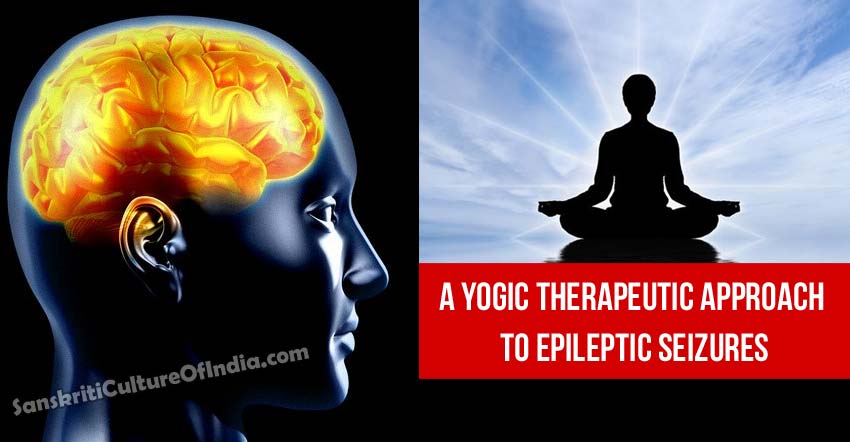
The ancient Indian practice and philosophy of yoga is increasingly becoming a focal point of therapy and research in treating epileptic seizure disorders. The World Health Organization (WHO) estimates that around 50 million people in the world have epilepsy. About 75 per cent of these are with seizure disorders, and they hardly receive any medical treatment.
Yoga offers an ancient yet amazingly modern approach to treating seizures. The ancient Indian texts, Vedas describe four types of epilepsy and nine disorders causing convulsions in children. As therapy, the physical discipline of yoga seeks to re-establish a balance (union) between those aspects of a person’s health that cause seizures.
Many Illnesses, One Common Symptom
Seizure disorder (or epilepsy) is one of the oldest recorded afflictions of humankind. “Epilepsy” is a word used to describe many illnesses with one common symptom – seizures that disrupt the normal activity of the central nervous system. There are dozens of disorders, which may cause seizures. In the language of Ayurveda, epilepsy is called “Apasmara,” meaning loss of consciousness.
Yoga Therapy for Seizures
Epileptologist Dr. Nandan Yardi, head of the Yardi Epilepsy Clinic, Kothrud, Pune, India, speaks of the “yogas,” when writing about seizure disorders. He points out that seizures, like physical diseases, result when there are imbalances in the various physical and psychological systems (unions) of the body. Yoga is one of the oldest formal practices known whose purpose is to restore this balance.
Pranayama or Deep Diaphragmatic Breathing
As a person slips into a seizure state, s/he should reflexively catch and hold their breath, as if startled or frightened. This causes changes in metabolism, blood flow, and oxygen levels in the brain. The practice of pranayama, i.e., controlled deep diaphragmatic breathing helps restore normal respiration, which can reduce the chances of going into a seizure or stop seizures before they become full blown.
Asanas or Postures
The “asanas” or “yogasanas” aid in restoring balance to the body and its metabolic systems. Practicing asanas increase physical stamina and calm the nervous system. Asanas, used as a physical exercise alone, improve circulation, respiration, and concentration while decreasing the chances of having a seizure.
Dhyana or Meditation
Stress is a well-recognized trigger of seizure activity. “Dhyana” or meditation soothes the mind as it heals the body. Meditation improves blood flow to the brain and slows the production of stress hormones. Meditation also increases the levels of neurotransmitters, like serotonin, which keep the body’s nervous system calm. Practicing relaxation techniques, such as yoga meditation, is well known as a definitive aid in seizure control.
Research into Yoga for Seizures
In 1996, The Indian Journal of Medical Researchpublished the results of a study on the effects of “Sahaja Yoga” practice on seizure control. The study was not large enough to be considered conclusive. However, its results were so promising, the study caught the attention of researchers in Europe and the North America. In this study, a group of patients with epilepsy practicing “Sahaja Yoga” for six months experienced an 86 per cent decrease in their seizure frequency.
Research carried out at the All India Institute of Medical Sciences (AIIMS, New Delhi) found that meditation improved the brain wave activity of people with seizure disorders leading to a reduction in seizures. In a similar study conducted in the United States concluded that patients who learned to control their breathing had an improvement in their seizure frequency. Dr. Steven Pacia is currently conducting a study at the New York University Comprehensive Epilepsy Center on the use of yoga to decrease seizures in epileptic persons. The art and science of yoga is being discovered anew as a valuable approach to exercise self-control of seizures.
~ By Zoe Langley
Select Bibliography
– Deepak KK, Manchanda SK, Maheshwari MC; “Meditation Improves Clinicoelectroencephalographic measures in Drug-resistant Epileptics”; Biofeedback and Self-Regulation, Vol. 19, No. 1, 1994, pp 25-40
– Usha Panjwani, W. Selvamurthy, S.H. Singh, H.L. Gupta, L.Thakur & U.C. Rai; “Effect of Sahaja Yoga on Seizure Control and EEG Changes in Patients of Epilepsy”; Indian Journal of Medical Research, 103, March 1996, pp165-172
– Yardi, Nandan; “Yoga For the Control of Epilepsy”; Seizure 2001: 10: 7-12