IndianSanskriti
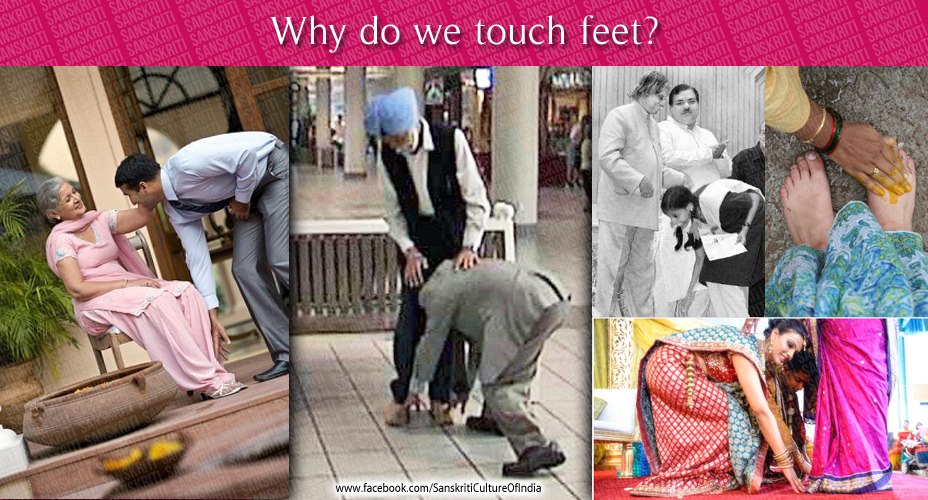
Why do we touch feet?

Why do we touch feet?

Indians prostrate to their parents, elders, teachers and noble souls by touching their feet. The elder in turn blesses us by placing his or her hand on or over our heads. Prostration is done daily, when we meet elders and particularly on important occasions like the beginning of a new task, birthdays, festivals etc, In certain traditional circle, prostration is accompanied by abbivaadana which serves to introduce one self, announce one’s family and social stature. Man stands on his feet. Touching the feet in prostration is a sign of respect for the age, maturity, nobility and divinity that our elders personify. It symbolizes our recognition of their selfless love for us and the sacrifices that they have done for our welfare.
It is a way of humbly acknowledging the greatness of another. This tradition reflects the strong family ties, which has been one of Indian’s enduring strengths. The good wishes (sankalpa) and blessing (aashirvaada) of elders are highly valued in India We prostrate to seek them. Good thoughts create positive vibrations.Good wishes springing from a heart full of love, divinity and nobility have a tremendous strength. When we prostrate with humility and respect, we invoke the good wishes and blessings of elders, which flow in the form of positive energy to envelop us. This is why the posture assumed whether it is in the standing or prone position, enables the entire body to receive the energy thus received.

The different forms of showing respect are :

* Pratuthana – rising to welcome a person.
* Namaskaara – paying homage in the form of namaste .
* Upasangrahan – touching the feet of elders or teachers.
* Shaastaanga – prostrating fully with the feet, knees, stomach, chest, forehead and arms touching the ground in front of elders.
* Pratyabivaadana – returning a greeting.

Rules are prescribed in our scriptures as to who should prostrate to whom. Wealth, family name, age, moral strength and spiritual knowledge in ascending order of importance qualified men to receive respect. This is why a king though the ruler of the land, would prostrate before a spiritual master. Epics like the Ramayana and Mahabharata have many stories highlighting this aspect.

This tradition thus creates an environment of mutual love and respect among people ensuring harmony in the family and society.
You may also like

Search the website

Like us on Facebook

Get daily updates via Email

Enter your email address:

Recent Posts

Adi Shankaracharya Jayanti 2026 — Advaita Vedanta, Om symbol, and four Amnaya Peethas

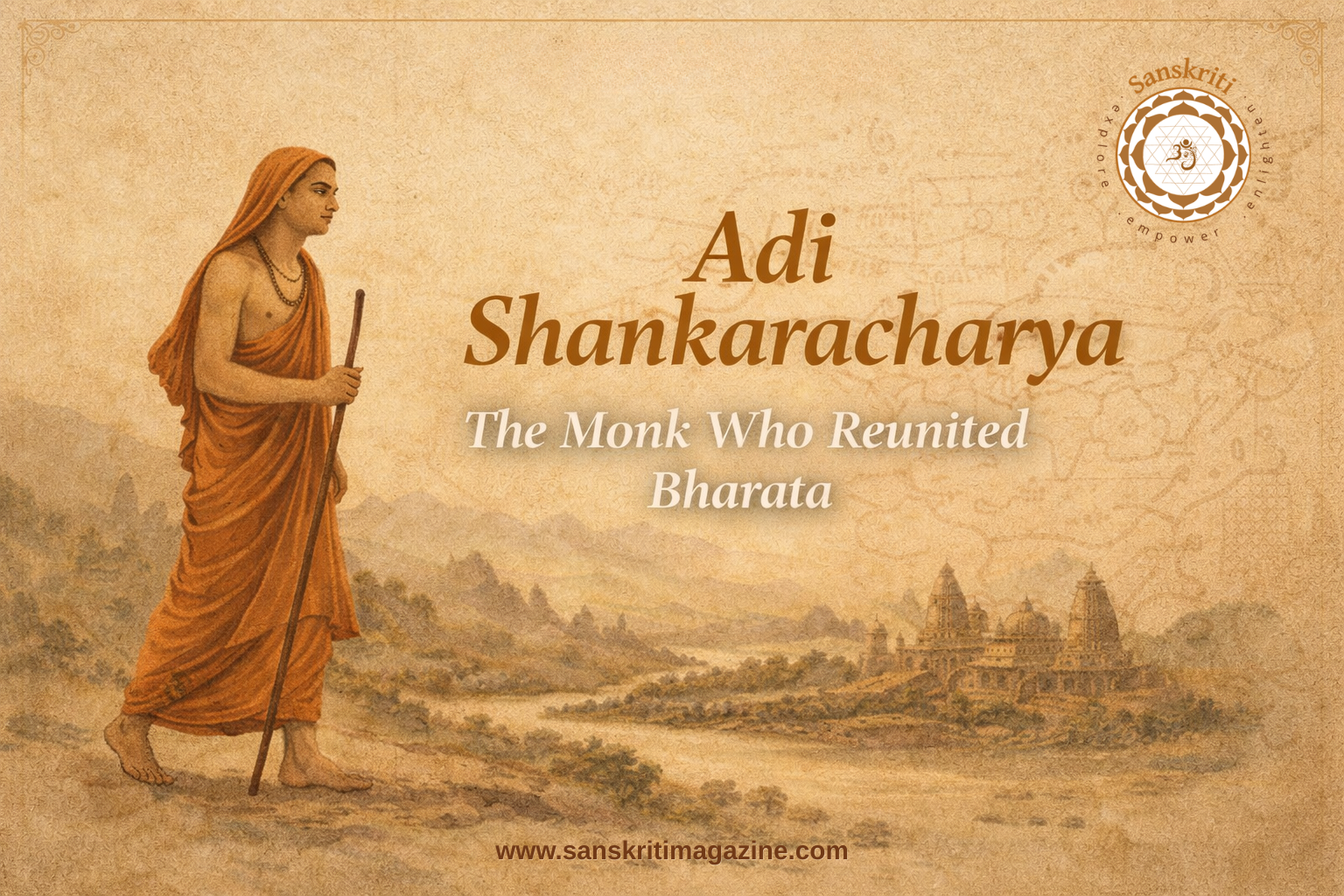
Adi Shankaracharya — The Monk Who Reunited Bharata

Shankaracharya Jayanti 2026 — the 1238th birth anniversary of Adi Shankaracharya. His extraordinary life, the Digvijaya, the debate with Mandana Mishra, Advaita Vedanta, the four Amnaya Peethas, and his timeless literary legacy.

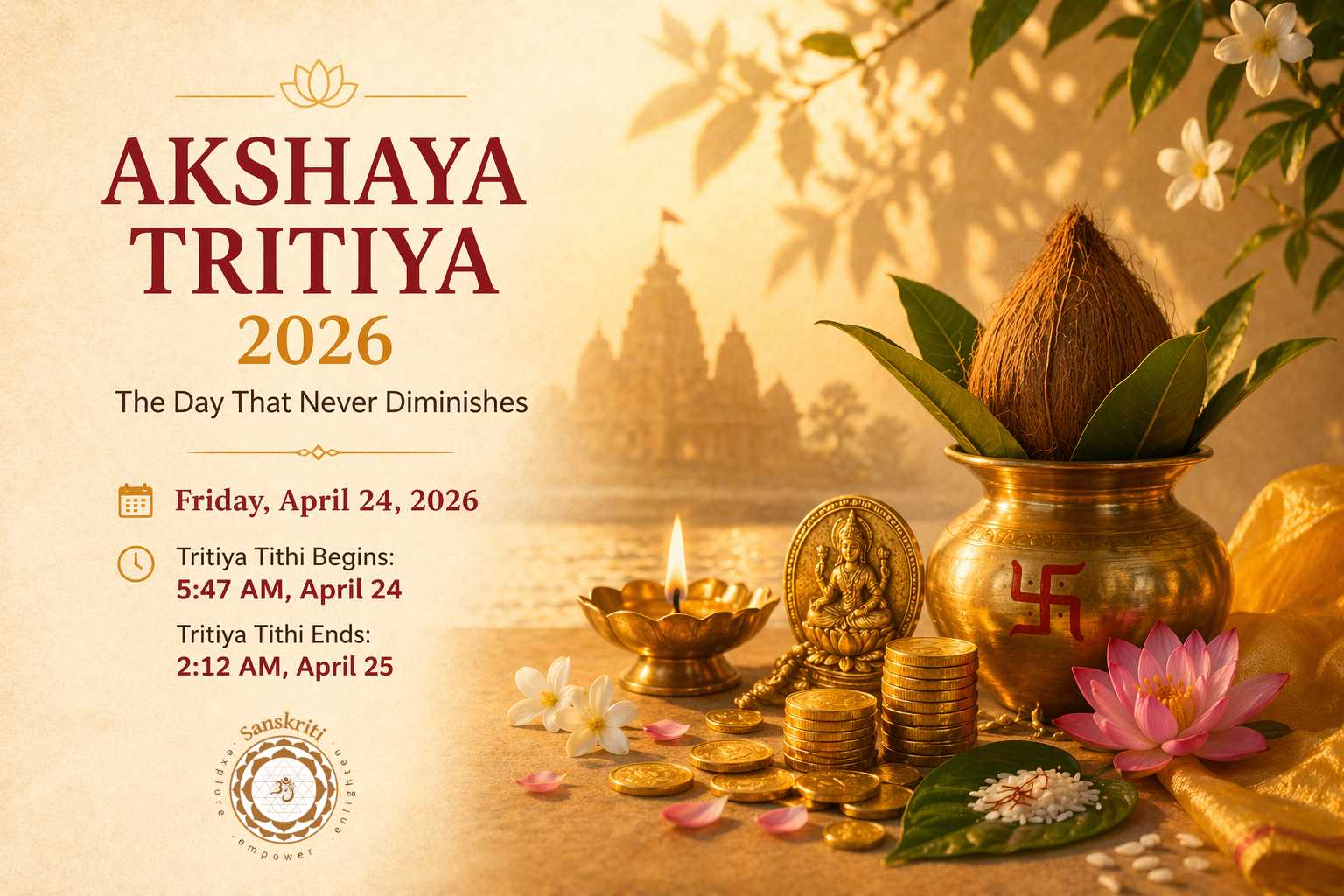
Akshaya Tritiya 2026 — royal purple hero banner with Akshaya Patra vessel and Devanagari text

Akshaya Tritiya 2026 — The Day That Never Diminishes

Akshaya Tritiya (April 19, 2026) is one of the most auspicious days in the Vedic calendar — when any act of dharma, dana, or japa yields imperishable merit. Discover the five sacred Puranic events, complete puja vidhi, timings, mantras, and the deeper spiritual teaching beyond gold-buying.

Baisakhi 2026 — Mesha Sankranti Hindu Solar New Year hero banner with rising sun, Om symbol and wheat harvest

Baisakhi 2026 — Harvest, Hope, and the Hindu Solar New Year

Baisakhi 2026 falls on Tuesday, April 14 — the day Bhagavan Surya enters Mesha Rashi at 9:39 AM, marking the Hindu Solar New Year. Discover the sacred science of Mesha Sankranti, the Punya Kaal rituals, and how this one cosmic moment is celebrated across Bharata as Vishu, Puthandu, Pohela Boishakh, Bohag Bihu, and Pana Sankranti.

Varuthini Ekadashi 2026 — sacred vrat guide hero banner with Vishnu Chakra mandala

Varuthini Ekadashi 2026 — The Sacred Vrat That Shields from Sin

Varuthini Ekadashi (April 13, 2026) is one of the most powerful Ekadashi vrats — dedicated to Lord Vamana, it dissolves lifetimes of karmic burden and shields the devoted soul with Bhagavan Vishnu’s protective grace. Complete vrat vidhi, timings, mantra, and the sacred Vrat Katha from the Bhavishya Purana.

css.php