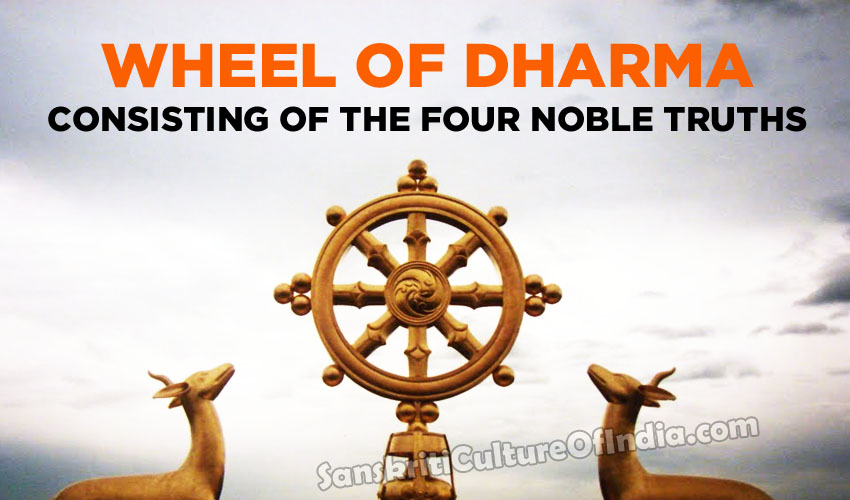
After he became enlightened, the Buddha gave his first sermon to five ascetic monks who were his earliest followers. At this sermon the Buddha expounded the Four Noble Truths:
- the truth of the pervasive existence of suffering
- the truth of the origin of suffering
- the truth of the cessation of suffering
- the truth of ending suffering through the Noble Eightfold Path
With this teaching he set in motion the Wheel of the Dharma, the teachings of Buddhism. The Four Noble Truths are thus the foundation of the Buddhadharma. To understand, to practice, and to realize the Four Noble Truths is to realize the whole of the Buddhadharma.
Understanding these Four Noble Truths, one has a correct view of the nature of sentient existence. Without understanding these foundation teachings, one continues in a state of confusion and delusion. For those who are not already familiar with the Four Noble Truths, we offer a brief review.
The First Noble Truth
Suffering is an unavoidable feature of sentient experience. To live and experience consciousness is to experience change and uncertainty, to feel the pangs of desire, to know pain as well as pleasure, and to be subject to the vagaries of birth, old age, illness and death. These are all suffering. Thus, the beginning point of understanding the teachings of the Buddha is to understand and accept the existence of suffering.
The Second Noble Truth
Suffering originates in our own mind due to wrong views that we have held since time without beginning. Of the mental poisons, or kleshas, the most pervasive are desire (or attachment), aversion or (hatred), and delusion (or ignorance). The ultimate purpose of following the path is to become free of these poisons.
The Third Noble Truth
Since suffering results from the deleterious effects of the three mental poisons, which themselves lack enduring reality, it is possible to be relieved of suffering by casting off the three poisons.
The Fourth Noble Truth
The way out of suffering is to follow the Noble Eightfold Path, which consists of Right View, Right Intention, Right Speech, Right Actions, Right Livelihood, Right Effort, Right Meditation, and Right Wisdom. To follow the Noble Eightfold Path is to practice the Buddha Path to liberation from suffering which consist of:
- The Right View
The correct way to look at life and everything in it is through compassion and wisdom. Whether or not you have the requisite wisdom is debatable until you find enlightenment. However, compassion is something everyone has buried within him/her; this should become an integral part of you. - The Right Thoughts
Thoughts are what shape our character, our actions. Cultivate pure thoughts, clear thoughts and good thoughts. - The Right Speech
Give respect to all human beings for they are part of you as you are part of them. Whenever you speak, only kind words should come out, for speech can be a very powerful took to hurt others. - The Right Conduct
Our behavior is the yard-stick by which other people measure us. The right conduct means we should not be judgmental or harsh with anyone. Behave with compassion, kindness and calm. - The Right Livelihood
Whatever you do to earn money, do not do it at the cost of someone’s life or happiness. The Holy Buddha had said, “Do not earn your living by harming others. Do not seek happiness by making others unhappy”. - The Right Effort
Endeavor to do your best ever in all the tasks you take up. Endeavor to do good at all times. The right effort is polling your whole strength toward constructive activities, and desisting from going into activities that cause harm for others or indicate in any way hostility, envy, jealousy, greed, and many other such negativity. The right effort means doing good, planning good and delivering good. - The Right Mindfulness
For the right mindfulness, you will need to have and sustain good thoughts, do good deeds and speak only kind words. - The Right Concentration
Whenever you do something, you have to focus on what you are doing at present. By focusing on one thing at a time, you can achieve wonders while you gain peace of mind.
The Buddha often compared the Noble Eightfold path with that of cultivating a garden. You put the best things in it, the sooner we set up a wonderful garden and get only good things from it.