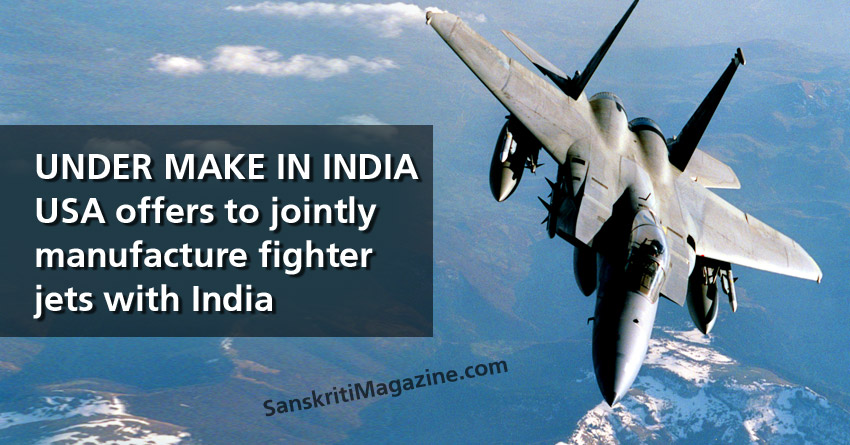
NEW DELHI: The US today offered to produce fighter aircraft jointly with India to promote deeper military ties as it spoke about the Indian Air Force facing a “critical shortage” of front-line fighter jets.
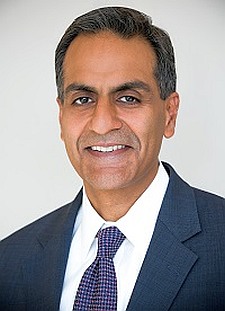 Talking about the new developments in bilateral military ties, the American Ambassador here, Richard Verma, noted that India faces a critical shortage of front-line fighter aircraft for keeping India’s air space safe.
“Defence cooperation can help to counter this challenge and I see no reason why the US and India can’t produce fighter aircraft together,” he said at the Observer Research Foundation here.
Countries like the UK, Germany, Sweden and France, too, are looking to join hands with India to manufacture fighter aircraft as the country faces a depletion of its air strength due to modernisation delays.
Referring to US Defence Secretary Ashton Carter’s visit here in June, Verma said both countries had established a new aircraft carrier working group to support India’s indigenous programme.
“I’m happy to report that the first meeting of that group took place this week in the US,” he said.
Verma stressed that US has committed to deepening its maritime security relations with India and, in March and again in April, the leaders of the US and Indian navies met and discussed how to improve maritime domain awareness.
“Now, we are into the planning stage of our 2015 Malabar joint naval exercise. We want to continue this exercise to deepen our maritime security relationship with India,” he said.
Referring to the recent “cross border terror attacks,” Verma said the US condemns such acts in “the strongest possible terms” and stands with the people of India and all free people in fighting the curse of terrorism.
“There can be no place, no accommodation and no justification for violence on innocent people. As (US) President (Barack) Obama said during his visit to New Delhi, the US and India are united in this fight and the two countries will continue our focus for a better future,” Verma said.
Verma said that the way India chooses to define its own world as a leading power can have a profound impact on their shared interests in defending and preserving assured access to shared spaces.
“As the (US) President articulated in his February, 2015, National Security strategy, shared spaces are the arteries of the world economy, a sure access is pre-requisite for the governments of the world to continue to provide their citizens with better standards of living,” he said.
The top American diplomat here said he believes that as leading powers, cooperation between the US and India will lay the ground for the next breakthrough in bilateral ties.
“Let’s start with the seas, free the sea for everyone; It has been a foundational argument for naval freedom. 90 per cent of the trade worldwide operates on the oceans.
“Our oil, fuels, imports and exports depend on the safe passage of cargo … but, today, the safety and security of sea (commerce) faces a genuine threat from terrorists, natural environmental disruptions, mass migrations and organised criminal activities,” he said.
Piracy on the high seas continues to create uncertainties, Verma said, adding that world powers have stood up and worked to address these concerns with the US and India often at the forefront of such efforts.
“We are both maritime powers, our navies engage in joint training and exercises as partners, our leaders have expressed an interest to work together in both the US-India joint statement and US-India defence agreement.
“We demonstrated it in the case of Somalia in 2009, but we can do more,” he said.
Verma added that as natural disasters may also affect the maritime domain, India and the US, being leading powers, must be prepared to deal with such phenomena.
The US ambassador said that India has proven herself in this regard in 2004, when it immediately responded to the devastation caused by the tsunami, saving thousands of lives in south and south-east Asia.
“There are thousands of other examples of India’s humanitarian disaster response capability,” he said.
#MakeInIndia