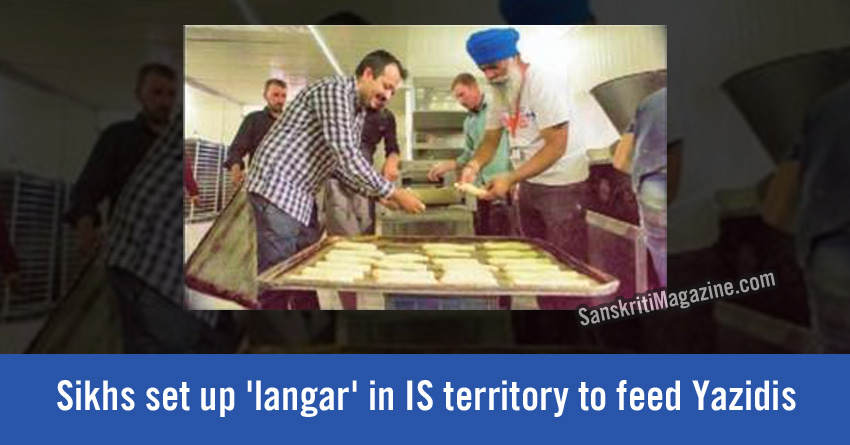
Large-hearted Sikhs have taken their traditional community kitchen to one of the most dangerous places on earth today – Syria. Giving a twist to the concept of langar, a group of Punjabi NRIs has collaborated with locals to provide fresh bread to nearly 14,000 refugees daily in the strife-torn region for several months now.
Langar Aid, an extension of UK-based NGO Khalsa Aid, is located in the Pesh Harbour area, about 35km from the Kurdish city of Duhok and 10km from the Syrian border. Almost 70% of the members of Langar Aid are with Punjabi roots, besides some European volunteers as well.
Instead of the classic kitchen, Langar Aid set up a bakery because IS fighters were destroying any food coming in for the Yazidis. While Khalsa Aid provided the machinery and Joint Help for Kurdistan gave a new building to house the bakery , the local government in Duhok is providing free power.
UK-based Indy Hothi, a 27-year-old economist-cum volunteer of Indian origin said, “We set up a bakery at a refugee camp for Yazidi people to provide a self-sustaining solution. Support in the form of food for distressed people has been there for over a year now and organizations from Sweden are helping run the bakeries. Help is also pouring in from Serbia and Greece.”
“Refugees often mistake us for IS because of our appearance,” said Ravi Singh, CEO of Khalsa Aid, but that not deterred this unique force. “I was there about two months back and it was a very overwhelming experience. It was poignant to meet a family that had fled from their homes with their 10-monthold child and they were pleasantly surprised to find aid in the middle of nowhere. Then there was an elderly lady who still wanted to return to her village she had built after years of hard work. The situation will get more challenging as winter sets in.”
On the other side of Syria, on the Lebanon-Syrian border, the organization is helping refugees by running a school for 5,000 local children. “The idea is to take the langar outside the walls of the gurdwara and share food with people who need it the most,” added Hothi.