IndianSanskriti
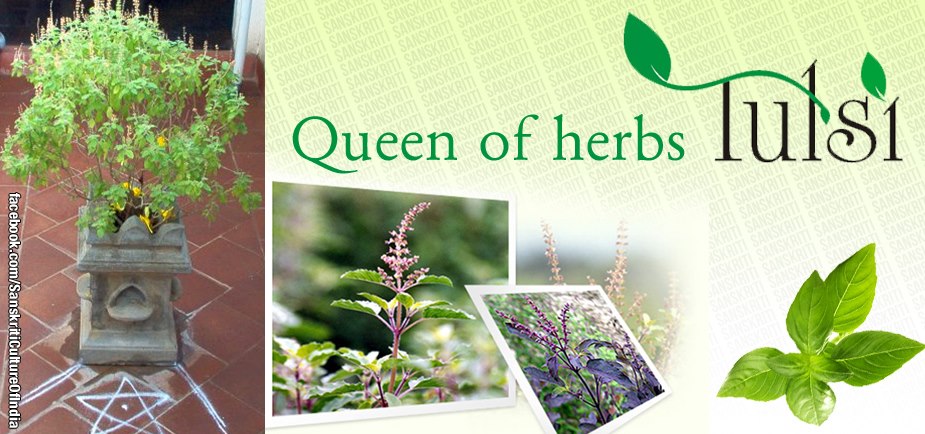
Tulsi - The Queen of Herbs!!

Tulsi – The Queen of Herbs

Referred as the “Queen of Herbs” and a symbol of purity, Tulsi or better known as Basil, is a popular household name in India. Worshipped in the morning and evening, many Hindu families grow Tulsi in their courtyard as it is believed to bring longevity, happiness, purify the environment and bring peace in the home.

From seasoning food to herbal remedies, each and every part of this plant can be used in one way or another. Of the two main species readily available in India, the darker form of Tulsi known as Shyama has more medicinal values than the lighter one called Rama.

Following are some benefits of Tulsi:
– Increases mental health
– High in anti-oxidants, preventing premature aging
– Flavonoids protect cells from radiation and its harmful side effects
– Effective on acne and psoriasis
– As an anti-inflammatory, it helps reduce arthritic symptoms, decreasing pain and swelling
– Reduces anxiety, depression and stress
– Relieves constipation, stomach cramps, indigestion and flatulence
– Enhances immunity in babies
– Helps reduce symptoms of cold, cough, influenza, bronchitis, asthma, sinus infections
– Prevents nausea
– Provides relief from menstrual cramps
– Reduces chances of food poisoning
– Enhances the flavour of food
– Chewing fresh Tulsi leaves or boiling them with tea reduces the effects of fever and common cold
– Heals infections of the mouth
– Used as a paste, it relieves the effects of insect bites
– Regulates blood sugar

There is interest in using Tulsi seed oil for curing cancer as research shows the oil can slow progression and improve survival rate in animals with certain types of cancer.

Considered to be a divine plant in Ayurveda, Tulsi not only has medicinal properties but also carries spiritual significance for practitioners of this ancient system of medicine. It is considered to be a reincarnation of the goddess Tulsi, who offers divine protection from all ills.

You may also like

Search the website

Like us on Facebook

Get daily updates via Email

Enter your email address:

Recent Posts

Yogini Ekadashi 2026 — The Yaksha Who Missed the Morning Flowers, and the Ekadashi That Undid His Curse

On Friday, July 10, 2026, the rare Krishna Paksha Ekadashi of Nija Ashadha arrives. The Padma Purana tells the story of Hemamali — the Yaksha gardener of Bhagavan Kubera in Alaka, whose single morning of distraction with his wife Vishalakshi cost him his form, his wife, and his celestial city. Cursed to wander the earth of Bharata as a leper for a long time, he was at last shown the way back by Sage Markandeya — a single sincere keeping of Yogini Ekadashi.

Jamai Shashthi 2026 — The Story of Maa Shashthi, the Cat, and the Wife Who Was Forgiven

Jamai Shashthi 2026 — The Story of Maa Shashthi, the Cat, and the Wife Who Was Forgiven

On Saturday, June 20, 2026, Bengali households across Bharata will welcome their married daughters and sons-in-law home for the legendary jamai-aador feast and perform the Shashthi Vrata. But behind the warmth lies a story most Bengalis know by heart and most non-Bengalis have never heard — the wife who stole the hilsa, blamed the cat, lost six sons to Maa Shashthi’s wrath, and was finally forgiven. The Vrat Katha, the vidhi, the mantras, and the deeper teaching.

Vat Purnima 2026 — The Wife Who Argued Yama Into Returning Her Husband’s Life

On Monday, June 29, 2026, women across Maharashtra, Gujarat, and southern Bharata will tie red thread around banyan trees and hear the story of Savitri — the wife who walked behind Yamaraja Himself when He came for her husband, and out-argued the Lord of Dharma into returning Satyavan’s life. The Mahabharata’s Pativrata Mahatmya Parva, the vrat vidhi, and why the banyan witnessed everything.

Nija Jyeshtha 2026 — The Real Jyeshtha Begins, and the Calendar Resumes

Nija Jyeshtha 2026 — The Real Jyeshtha Begins, and the Calendar Resumes

With Adhik Maas now closed on the Somvati Amavasya of June 15, the long-postponed festivals of Jyeshtha return — Vat Purnima (June 29, the Savitri-Yamaraja katha), Jamai Shashthi (June 20, the Bengali festival of Maa Shashthi), Sankashti Chaturthi (June 28), Yogini Ekadashi (July 10), and Devshayani Ekadashi (July 16, opening the four-month Chaturmas of Bhagavan Vishnu’s yoga-nidra). A guide to what the next four weeks hold and what the household that kept Purushottam Maas now carries forward.

The Closing of Purushottam Maas 2026 — Adhik Amavasya and the Sealing of the Month-Long Vrat

On Monday, June 15, 2026 — a rare Somvati Amavasya — the intercalary month that bears Bhagavan Vishnu’s own name comes to its close. The Acharyas teach that a vrat is not measured by its duration but by its closing. Here are the Padma Purana’s instructions for sealing the month-long Purushottam Maas vrat: the morning snan, the closing puja with the Vishnu Sahasranama, the day of dana, the Somvati Amavasya gift, and the final sarva-arpana — the offering of all merit at the feet of the Lord.

css.php