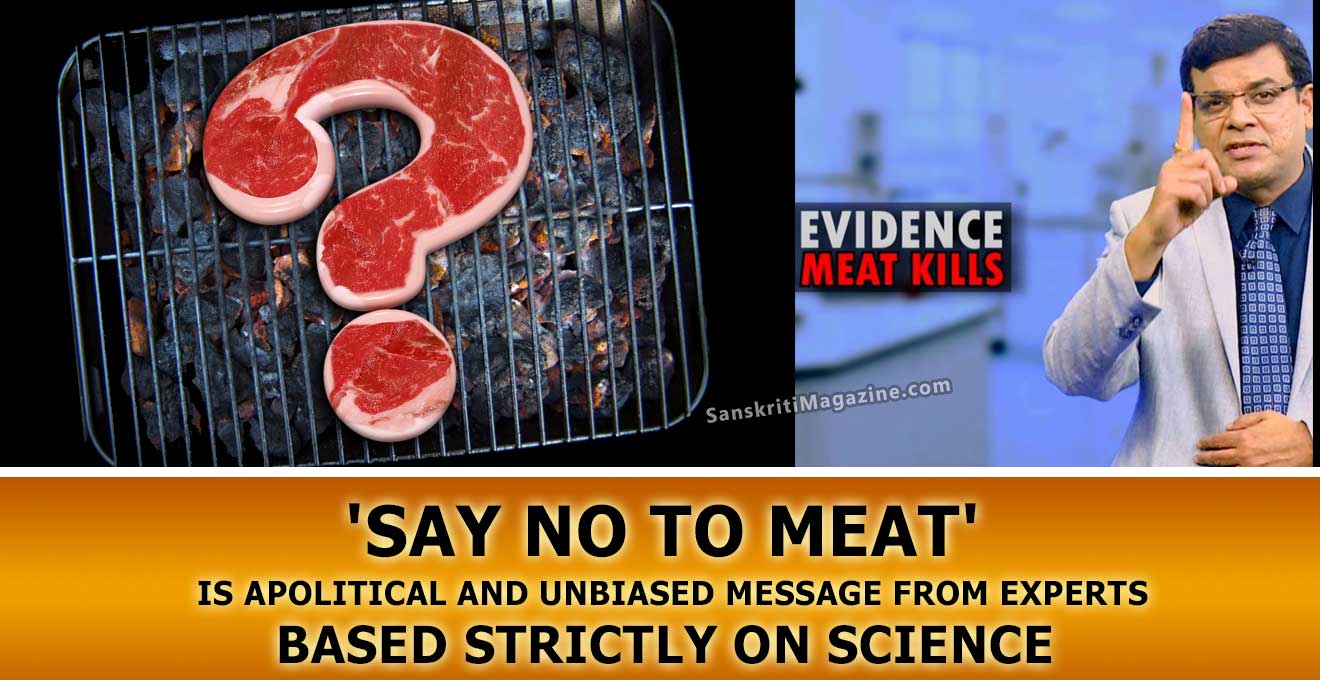
The debate on ‘why it is good to be a vegetarian’ has long been settled. The internet is full of information on why eating meat is not good for both one’s own health or the environment. For example, according to US Department of Agriculture, 70 per cent of food poisoning is caused by meat, including exposure to arsenic. Another research says production of one kilogram of beef is responsible for as much carbon dioxide emission as by driving 250 km in a car.
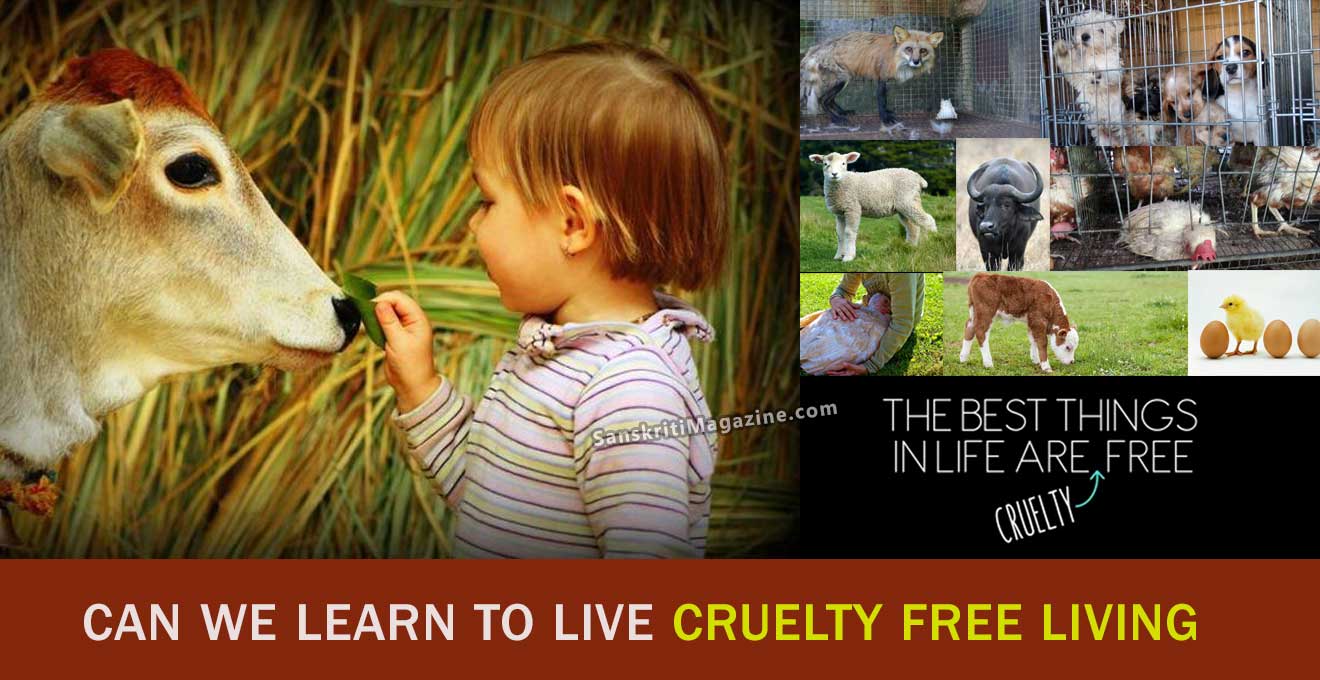
There is plenty of disturbing footage also available on what treatment animals are subject to in slaughterhouses, like the documentary ‘Meet your Meat‘. They are injected with hormones so that they grow faster and add more bulk. All these chemicals then end up in the bodies of people who eat this meat. But their system cannot take these chemicals and they eventually turn into cancers and other immune system disorders. The milk from these animals is also toxic and is rejected by the consumers’ biology. In fact, large number of cases of lactose intolerance and diseases among meat eaters was what gave birth to the vegan movement.
The human body is designed for a vegetarian diet. Our teeth are not pointed and our intestines are much longer than our bodies, very much like herbivores. Carnivores have short intestines through which meat passes easily. It passes through our intestines much more slowly and is very heavy to digest, sometimes taking up to 72 hours. In this time, it rots and ferments in our bodies. Vegetarian food, on the other hand, is digested within a few hours.
So, ethically, environmentally and health-wise, it is a wise choice to be a vegetarian. It is even better to eat organic fruits and vegetables, which have no chemicals and fertilisers.
The only reason that people still continue to eat meat is that they are driven by cultural habit or craving for taste. The way to overcome this craving is to make small time-bound commitments in the beginning and then gradually increasing it, like deciding not to have meat for a week, then two weeks and so on. People have also found ways to use tofu and other forms of soya to cook ‘mock meat’ which tastes identical to real meat. We have also observed that with the practice of meditation and pranayama, one’s taste changes on its own and the body begins to ask for food that is conducive to keep it light and moves away from foods that make it otherwise. Many people have become vegetarian on their own after doing our workshops.
However, today with a massive global consumer base, producing meat is a highly profitable business. So, there is a big lobby that does not want people to be educated on the harmful effects of meat and become vegetarian. In India, the issue of vegetarianism also assumes religious connotations and therefore, becomes political.
Food being an essential part of any lifestyle, people would like to have the right to exercise their freedom in making a choice; arguing or forcing anyone will not work. The right way is to make people aware and then let them choose for themselves. It may take some time but everybody realises sooner or later that short term gratification is not worth the long term troubles it brings. Quality of life is enhanced when we make choices that are life supporting.Being vegetarian does not just helps one’s own life flourish but also that of other beings.
~Sri Sri Ravi Shankar