The son of a Sikh farmer from Harpoke, Sohan Singh died a martyr. Part of the 58th Vaughan’s Rifles, a regiment in Britain’s Indian Army, he served in the Western Front in World War I for over a year before being taken prisoner of war in the Wünsdorf Camp near Berlin. It was here perhaps that he encountered Hermann Struck, a German Jewish artist known for his etchings.
The 22-year-old Indian was to become his subject. The artist had his portraits in his book Prisoners of War. A century later, a lone sketch of his is now on display at Brunei Gallery in London. It is part of an exhibition marking the contribution of Sikh soldiers fighting for the British army in World War I.
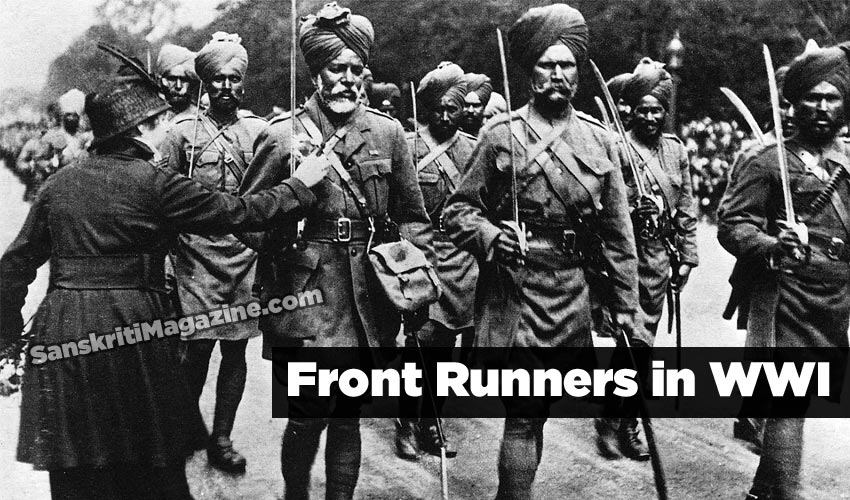
“Although accounting for less than one per cent of the population of British India at the time, Sikhs made up nearly 20 per cent of the British Indian Army at the outbreak of hostilities,” says Harbakhsh Grewal, vice-chair at the United Kingdom Punjab Heritage Association (UKPHA), that has organised the exhibition.
He adds that, with the project titled “Empire, Faith & War: The Sikhs and World War One”, the contribution of non-whites in the British army is being celebrated. “The non-white Empire’s efforts have largely been forgotten and their heroism and sacrifices omitted from mainstream narratives, or left as somewhat forlorn footnotes of history… we want to remind the world of this wider undervalued contribution,” says UKPHA chair, Amandeep Madra.
At the core of the three-year-long project are archival photographs ranging from the 15th century to 1918. If, in a 1918 frame, a French lady pins a flower on a Sikh soldier, in a 1915 print, men of the 15th Sikh Regiment are seen with locals in Belgium. There are other images where the contribution of the community is acknowledged more directly — from a 1915 propaganda postcard praising the contribution of Indian soldiers to the Allied cause, to the cover of the The Great War magazine published in 1918, showing men of the 45th Sikhs serving with British troops on the banks of the Tigris River.
British artist Richard Caton Woodville, Jr, has engraved Indian troops charging the German trenches at Neuve Chapelle. Artifacts, including uniforms and gallantry medals, are on display and playing on loop is a rare archive film footage that projects the first Sikh fighter pilot Hardit Singh Malik. Folk songs of wives left home by the soldiers are also printed on a panel.
This is just the first phase of the project though. In the coming months the organisation plans to invite people to share stories of their ancestors who fought in the war. “We’ll link this data to the Imperial War Museum and it’ll live forever,” says Grewal.
~ by Vandana Kalra , IE