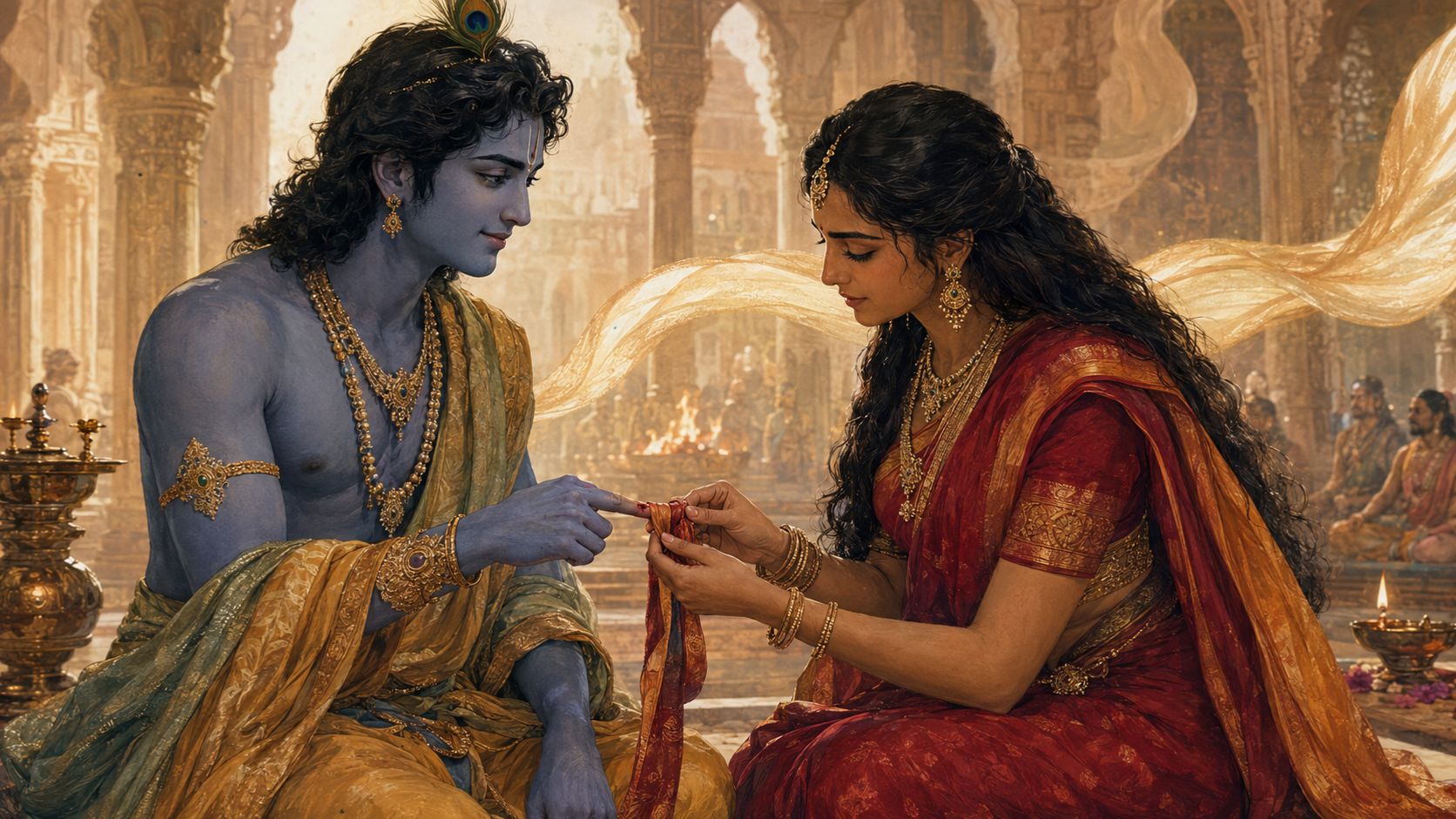
One of the most common questions people ask about Hinduism is also one of the most misunderstood.
Why are there so many gods?
At first glance, it appears fragmented.
- Many names.
- Many forms.
- Many stories.
This surface view often leads to the assumption that Hinduism speaks of many unrelated divine beings. That assumption misses the starting point of Hindu thought.
Hindu philosophy begins with unity.
At its core lies Brahman.
One ultimate reality.
Infinite. Beyond form, name, or boundary.
The many deities seen across Indian history are not competing truths. They are ways of relating to the same truth. Each form reflects a different human need, temperament, or way of understanding. What differs is the approach, not the essence.
One reality.
Many expressions.
The Rig Veda captures this idea with remarkable clarity:
Truth is one; the wise describe it in many ways.
This worldview shaped Indian civilization in a profound way. It allowed multiple schools of thought to exist side by side. It made debate a tradition, not a threat. Difference became a space for dialogue rather than division.
Plurality was not seen as weakness.
It was seen as depth.
This is why Hindu thought could absorb new ideas without erasing old ones. Why disagreement did not require rejection. Why unity never demanded sameness.
The Sanskriti 2026 Calendar is built around this spirit.
Each month opens with one essential question drawn from Indian history and philosophy. Not to provide rigid answers, but to invite reflection. To slow down thought. To encourage clarity.
January begins with this question for a reason. It sets the tone for the year.
Many gods are not the problem.
The misunderstanding is.
If you are curious to explore one such question each month, you can download the Sanskriti Calendar 2026 here: Click Here
Live with the questions.
Let them shape how you see the year ahead.