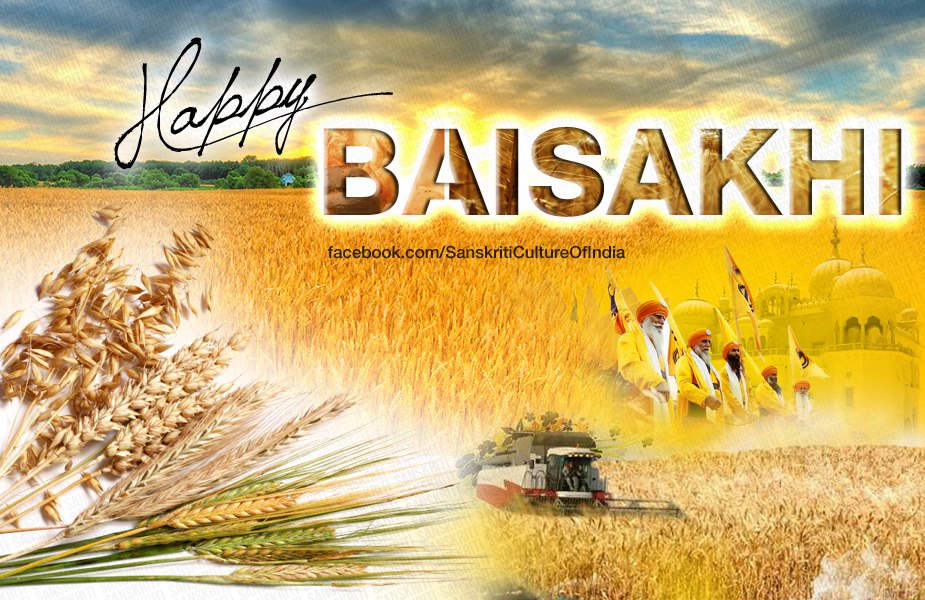
Baiskhi is also spelled ‘Vaisakhi’, and is a vibrant Festival considered to be an extremely important festival in India. It is celebrated all over India under different names and rituals.
Astrological Significance of Baisakhi
The festival of Baisakhi falls on April 13 every year and April 14 once in every 36 years. Change in date is because of the fact that date of Baisakhi is reckoned according to the solar calendar. Astrologically, the date of Baisakhi is significant as marks sun’s entry into Mesh Rashi. For this very reason, many people also know Baisakhi as Mesha Sankranti. The auspicious date of Baisakhi is celebrated all over India under different names and rituals. It is celebrated as ‘Rongali Bihu’ in Assam, ‘Naba Barsha’ in Bengal, ‘Puthandu’ in Tamil Nadu, ‘Pooram Vishu’ in Kerala and ‘Vaishakha’ in the state of Bihar.
Significance of Baisakhi for Farmers
For the agriculturally rich state of Punjab and Haryana, Baisakhi marks the time for harvest of Rabi (winter) crops and is therefore extremely significant for the farmers. Baisakhi Festival is also celebrated as a Thanksgiving Day festival in these states. After waking up early and dressing themselves in new clothes, farmers visit temples and gurdwaras to express gratitude to God for the good harvest and seek blessing for ensuing agriculture season. Farmers also celebrate Baisakhi by performing energetic bhangra and gidda dance and participating in Baisakhi Fairs.
Significance of Baisakhi in Sikhism
Baisakhi is of major importance for the people following Sikh faith. As it was on a Baisakhi Day, in the year 1699 that the Tenth Guru of Sikhs, Guru Gobind Singh founded Khalsa Panth or the Order of Pure Ones and gave a unique identity to Sikhs. On the same day the guru administered amrit (nectar) to his first batch of five disciples making them Singhs, a martial community. By doing so, he eliminated the differences of high and low and established that all human beings were equal.
Sikhs celebrate Baisakhi by participating in special prayer meetings organized at gurdwaras. They also carry out joyful Baisakhi processions to mark the day.
Significance of Baisakhi in Other Religions
The day of Baisakhi is of significance for the Hindus as it was on this day in 1875 that Swami Dayanand Saraswati founded the Arya Samaj – a reformed sect of Hindus who are devoted to the Vedas for spiritual guidance and have discarded idol worship. Besides, Baisakhi day is of relevance for the Buddhists as Gautama Buddha attained enlightenment and Nirvana on this auspicious day.
In Kerala, the festival is called ‘Vishu’. It includes fireworks, shopping for new clothes and interesting displays called ‘Vishu Kani’. These are arrangements of flowers, grains, fruits, cloth, gold, and money are viewed early in the morning, to ensure a year of prosperity.
In Assam, the festival is called Bohag Bihu, and the community organizes massive feasts, music and dancing. Bengalis mark it as new years day or ‘Naba Varsha’ or Pohela Boishakh in Bengal, Assam and Tripura.
Puthandu (Tamil New Year) in Tamil Nadu. Whatever the history says, today Baisakhi is celebrated with all pomp and show in almost all parts of the country.