IndianSanskriti
Swami Vivekananda: Ownership is but Vanity

Swami Vivekananda: Ownership is but Vanity

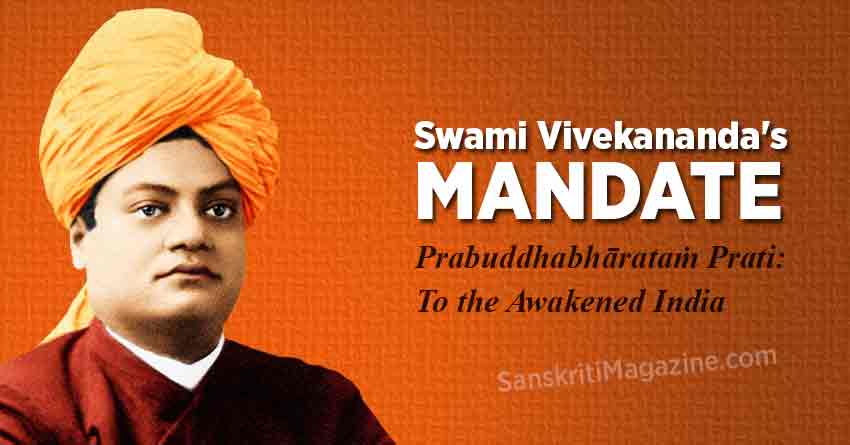
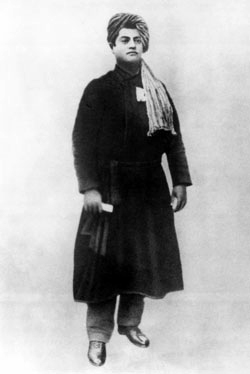
Swami VivekanandaUpon the request of a disciple, Swami Vivekananda, on His return from Amarnath and other places in Kashmir was narrating about His stay in Kshir Bhavani when He said that:

He went to visit Kshir Bhavani Devi and staying there for seven days worshiped the Devi and made Homa to Her with offerings of Kshira (condensed milk). Every  day He used to worship the Devi with a mound of Kshira as offering.

One day, while worshiping, the thought arose in Swamiji’s mind: “Mother Bhavani has been manifesting Her Presence here for untold years. The Mohammedans came and destroyed Her temple, yet the people of the place did nothing to protect Her. Alas, if I were then living I could never have borne it silently.”

When, thinking in this strain, His mind was much oppressed with sorrow and anguish, He distinctly heard the voice of the Mother saying,

“It was according to My desire that the Mohammedans destroyed this temple. It is My desire that I should live in a dilapidated temple, otherwise, can I not immediately erect a seven-storeyed temple of gold here if I like? What can you do? Shall I protect you or shall you protect me!”

Swamiji said, “Since hearing that Divine voice, I cherish no more plans. The idea of building Maths etc., I have given up; as Mother wills, so it will be.”

The disciple, speechless with wonder, began to think, “Did He not one day tell me that whatever I saw and heard was but the echo of the Atman within me, that there was nothing outside?”– and fearlessly spoke it out also –”Sir, you used to say that Divine Voices are the echo of our inward thoughts and feelings.”

Swamiji gravely said, “Whether it be internal or external, if you actually hear with your ears such a disembodied voice, as I have done, can you deny it and call it false? Divine Voices are actually heard, just as you and I are talking.”

The disciple, without controverting accepted Swamiji’s word, for His words always carried conviction.

Source: The Complete Works of Swami Vivekananda, Vol. 7

You may also like

Search the website

Like us on Facebook

Get daily updates via Email

Enter your email address:

Recent Posts

Yogini Ekadashi 2026 — The Yaksha Who Missed the Morning Flowers, and the Ekadashi That Undid His Curse

On Friday, July 10, 2026, the rare Krishna Paksha Ekadashi of Nija Ashadha arrives. The Padma Purana tells the story of Hemamali — the Yaksha gardener of Bhagavan Kubera in Alaka, whose single morning of distraction with his wife Vishalakshi cost him his form, his wife, and his celestial city. Cursed to wander the earth of Bharata as a leper for a long time, he was at last shown the way back by Sage Markandeya — a single sincere keeping of Yogini Ekadashi.

Jamai Shashthi 2026 — The Story of Maa Shashthi, the Cat, and the Wife Who Was Forgiven

Jamai Shashthi 2026 — The Story of Maa Shashthi, the Cat, and the Wife Who Was Forgiven

On Saturday, June 20, 2026, Bengali households across Bharata will welcome their married daughters and sons-in-law home for the legendary jamai-aador feast and perform the Shashthi Vrata. But behind the warmth lies a story most Bengalis know by heart and most non-Bengalis have never heard — the wife who stole the hilsa, blamed the cat, lost six sons to Maa Shashthi’s wrath, and was finally forgiven. The Vrat Katha, the vidhi, the mantras, and the deeper teaching.

Vat Purnima 2026 — The Wife Who Argued Yama Into Returning Her Husband’s Life

On Monday, June 29, 2026, women across Maharashtra, Gujarat, and southern Bharata will tie red thread around banyan trees and hear the story of Savitri — the wife who walked behind Yamaraja Himself when He came for her husband, and out-argued the Lord of Dharma into returning Satyavan’s life. The Mahabharata’s Pativrata Mahatmya Parva, the vrat vidhi, and why the banyan witnessed everything.

Nija Jyeshtha 2026 — The Real Jyeshtha Begins, and the Calendar Resumes

Nija Jyeshtha 2026 — The Real Jyeshtha Begins, and the Calendar Resumes

With Adhik Maas now closed on the Somvati Amavasya of June 15, the long-postponed festivals of Jyeshtha return — Vat Purnima (June 29, the Savitri-Yamaraja katha), Jamai Shashthi (June 20, the Bengali festival of Maa Shashthi), Sankashti Chaturthi (June 28), Yogini Ekadashi (July 10), and Devshayani Ekadashi (July 16, opening the four-month Chaturmas of Bhagavan Vishnu’s yoga-nidra). A guide to what the next four weeks hold and what the household that kept Purushottam Maas now carries forward.

The Closing of Purushottam Maas 2026 — Adhik Amavasya and the Sealing of the Month-Long Vrat

On Monday, June 15, 2026 — a rare Somvati Amavasya — the intercalary month that bears Bhagavan Vishnu’s own name comes to its close. The Acharyas teach that a vrat is not measured by its duration but by its closing. Here are the Padma Purana’s instructions for sealing the month-long Purushottam Maas vrat: the morning snan, the closing puja with the Vishnu Sahasranama, the day of dana, the Somvati Amavasya gift, and the final sarva-arpana — the offering of all merit at the feet of the Lord.

css.php