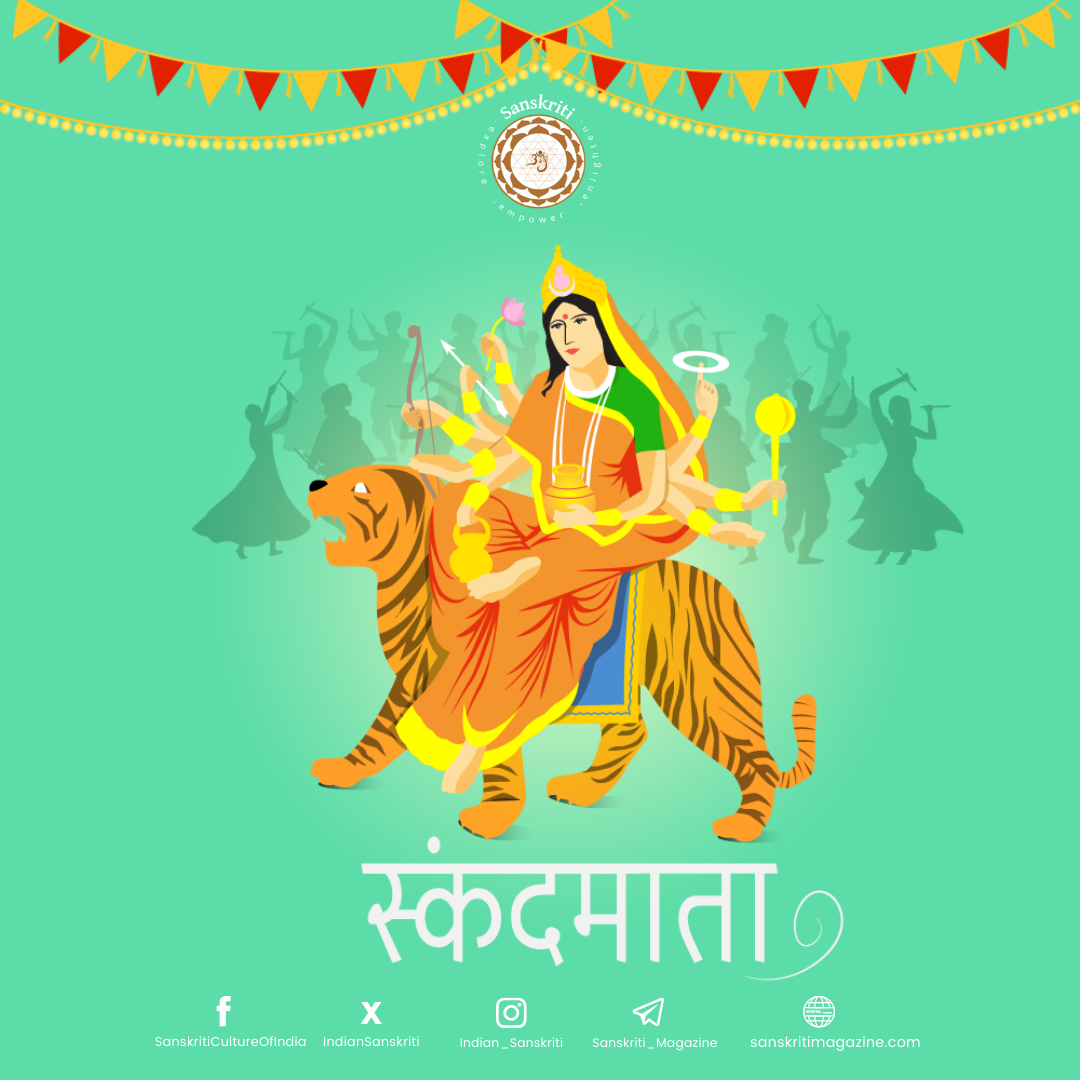
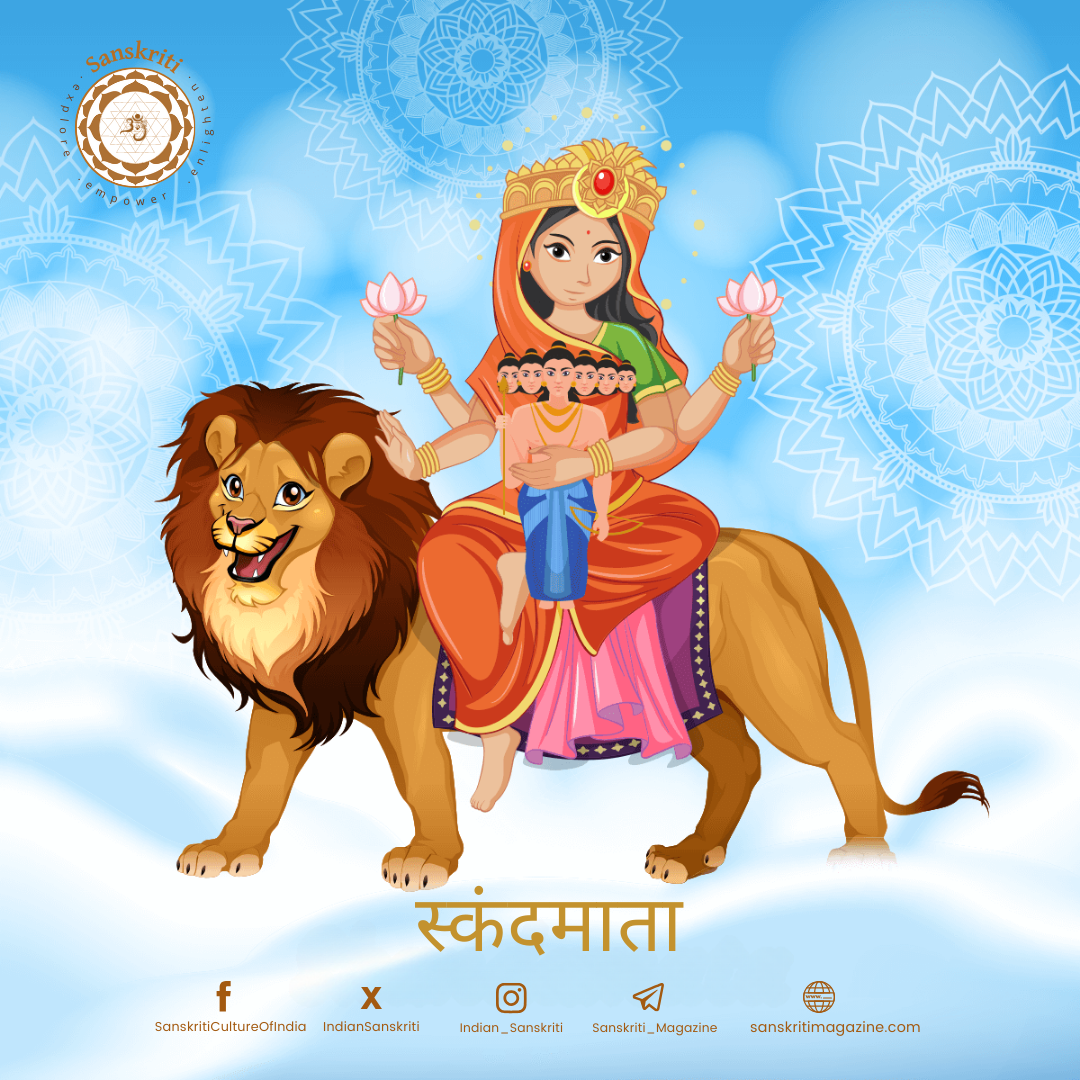
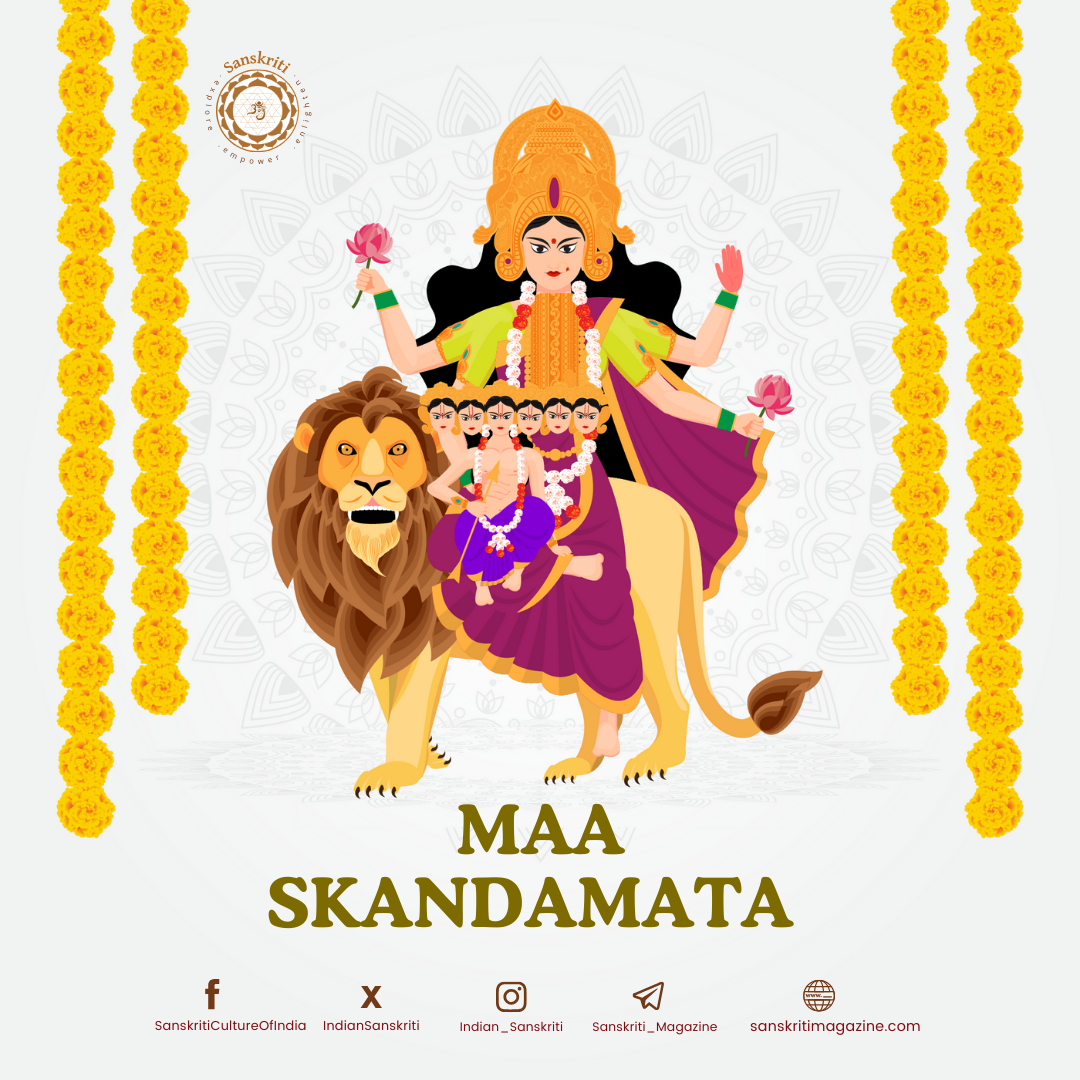
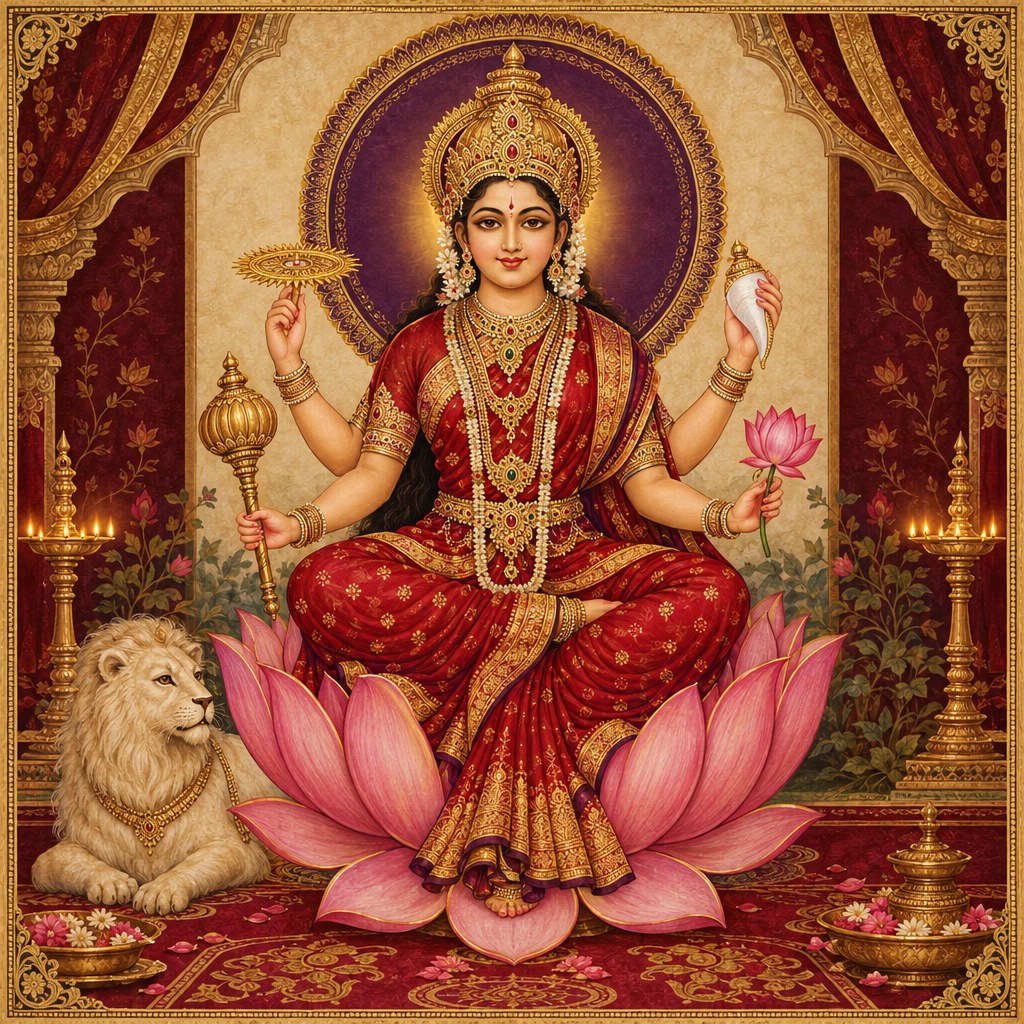
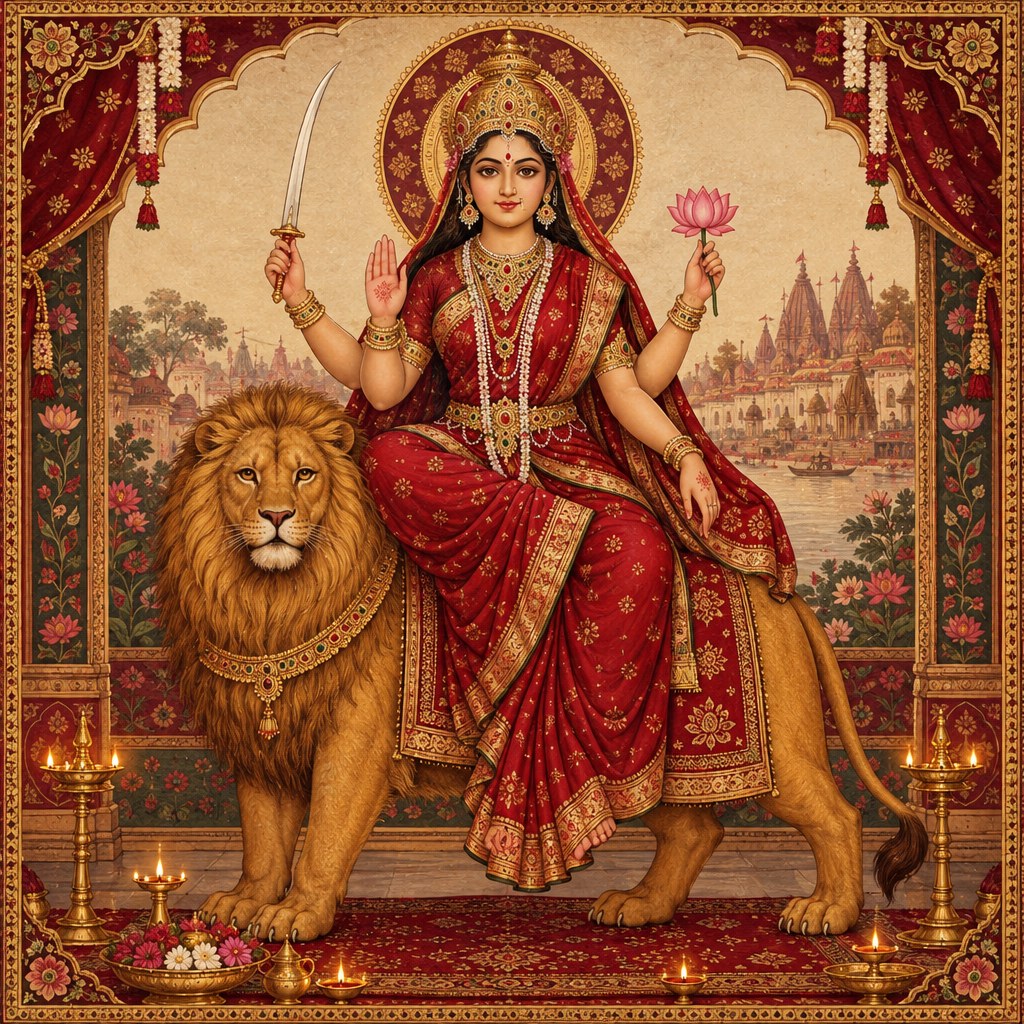
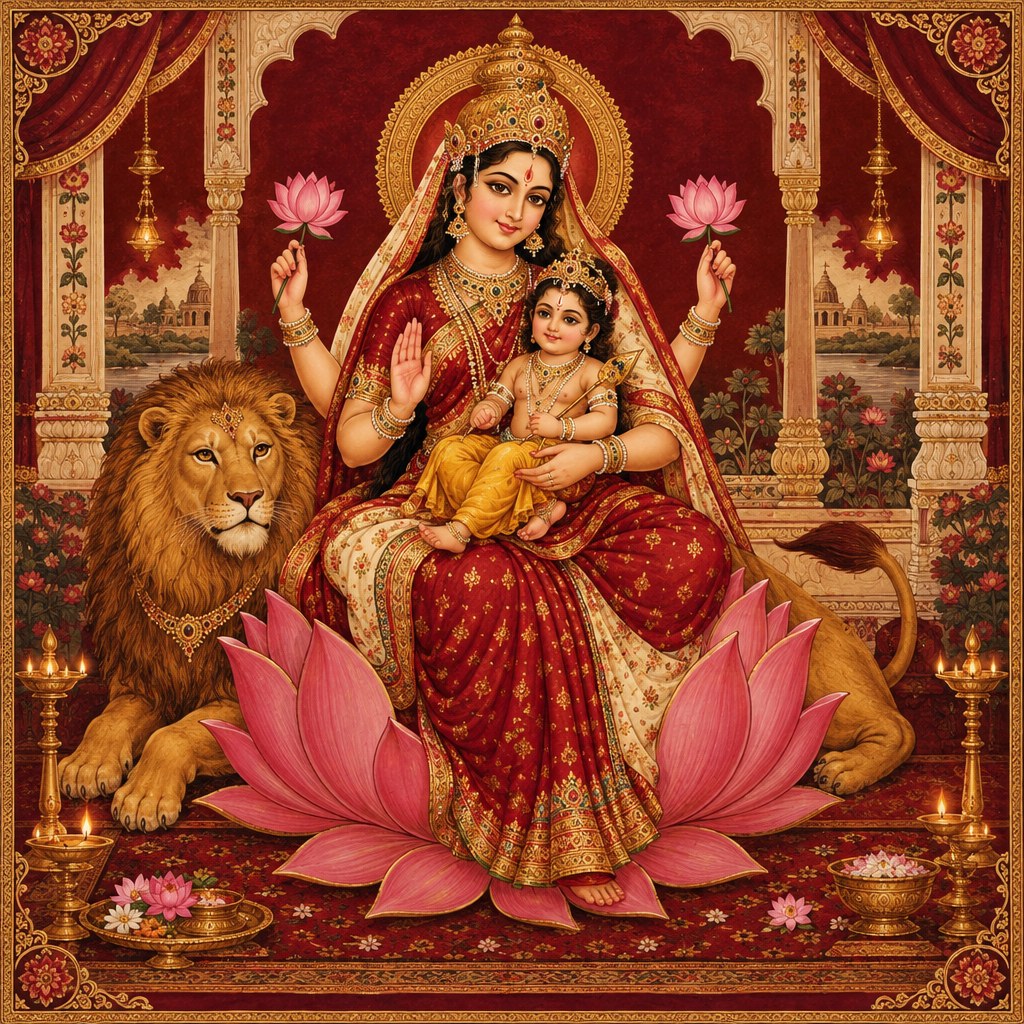
On the fifth day of Navratri, devotees worship Goddess Skandamata, the mother of Lord Skanda (also known as Kartikeya), the commander of the divine army. Skandamata represents the nurturing aspect of the Divine Mother, offering strength, love, and protection. She is depicted riding a lion and holding her son, Lord Skanda, in her lap, symbolizing her role as the protector of warriors.
Significance of Day 5: Worshipping Skandamata on the fifth day of Navratri is believed to invoke her blessings for courage, wisdom, and strength, especially for those seeking protection from adversity. Skandamata also symbolizes the nurturing side of motherhood, balancing the fierce warrior form with tenderness and care.
Spiritual Aspect: Goddess Skandamata is associated with the Vishuddha Chakra, also known as the Throat Chakra. This chakra governs communication and expression, encouraging devotees to focus on the purity of speech and wisdom. Worshipping Skandamata helps balance this chakra, enabling the seeker to express their inner truth and wisdom clearly.
Rituals of the Day:
- Devotees wake up early and offer flowers, fruits, and sweets, particularly bananas, as prasad to Skandamata.
- Many offer red flowers and light oil lamps as part of their worship.
- Chanting the Durga Saptashati and offering prayers to Lord Skanda are integral to the rituals.
- Fasting on this day is common, and many offer prayers for strength and success in all endeavors.
Color of the Day: White White is the color for Day 5 of Navratri, symbolizing peace, purity, and serenity. Wearing white is believed to invoke calmness and balance, allowing devotees to connect with the peaceful energy of Skandamata.
Mantra to Chant: “Om Devi Skandamatayai Namah”
Chanting this mantra invokes the protective and nurturing energy of the goddess and helps attain blessings for strength, health, and prosperity.
Prasad of the Day: Bananas are offered as the main prasad to Skandamata, symbolizing nourishment and simplicity. Devotees also prepare milk-based sweets like kheer, which are distributed to family and friends.
Story of Goddess Skandamata: The legend of Skandamata is closely tied to her son, Lord Skanda, who was created by Lord Shiva and Parvati to defeat the demon Tarakasura. Skanda became the commander of the divine army and fought valiantly to protect the gods. Skandamata, as his mother, represents the nurturing force that raised and guided him, embodying both strength and compassion.
Devotees’ Practices: Devotees focus on both external and internal purity on this day. The prayers and offerings are done with sincerity to receive the motherly blessings of Skandamata, ensuring protection from negativity and success in life.
On the fifth day of Navratri, Goddess Skandamata provides a perfect blend of love, protection, and guidance. By worshipping her, devotees seek the courage and wisdom to overcome challenges while also nurturing and protecting those they love. Let us invoke the grace of Skandamata for strength and wisdom in all aspects of life.
Stay tuned for Day 6 as we worship Goddess Katyayani, the powerful warrior goddess!
Share this with your family and friends to spread the love and blessings of Maa Skandamata. #MaaSkandamata #NavratriBlessings #SanskritiCulture