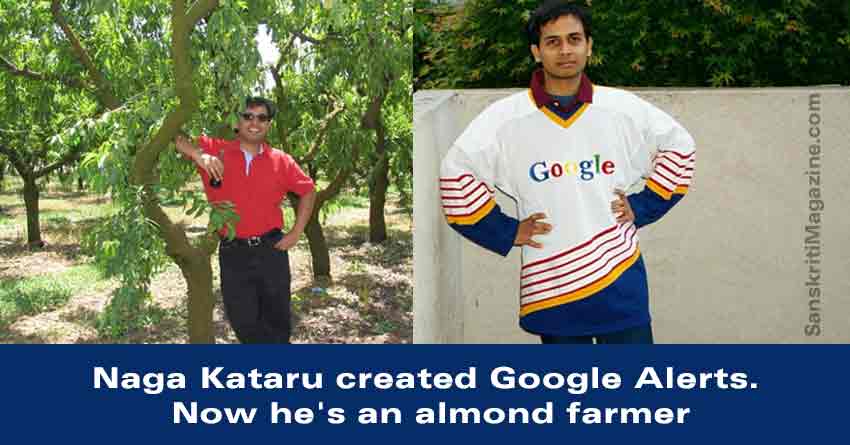
When Naga Kataru first pitched the idea of Google Alerts, it was immediately rejected.
“My manager didn’t like it,” said Kataru. “He said Google makes money when people come to us. If we set alerts, then we’re losing money because we’re sending people away from Google.”
Kataru trusted his instincts anyway.
“I went to Sergey Brin and Larry Page. I said I had a cool prototype with a simple user interface to show them,” he said.
The Google founders tested it right away, said Kataru. In fact, the first keywords ever used to test Google Alerts were ‘”Google” and “Larry Page,” he said.
“They both loved it,” said Kataru, who is listed on three patents for Google Alerts.
Google (GOOGL, Tech30) launched Google Alerts in 2003. It’s become one of its most useful tools, with hundreds of millions of people using it to monitor the web for specific content.
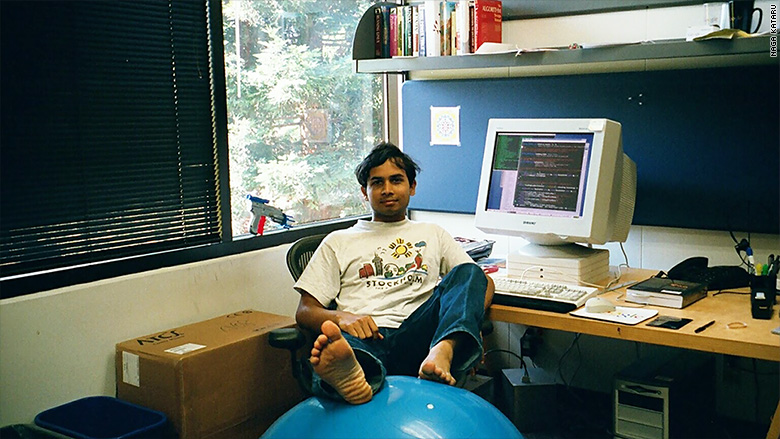
When Google hired Kataru in 2000, he was the 40th engineer at the 110-employee startup.
But just getting to Google’s door was a remarkable feat for a 25-year-old engineer who first encountered a computer as an undergraduate in India.
Kataru grew up in Gampalagudem, a farming village in the southern Indian state of Andhra Pradesh. He was a gifted student in a high school where only half the students would show up for class, “because education wasn’t a priority for them,” he said.

His father, the school’s principal, was determined to keep his son college-bound.
So Kataru graduated with a college degree in computer science and engineering and then enrolled at the Indian Institute of Technology, in one of the country’s best computer science programs.
Kataru credits Google for spurring his creativity as a technologist. “There was so much freedom to explore and invent,” he said.
But after eight years, Kataru grew restless.
“I felt I was stagnating,” he said. “I had worked one side of my brain for so long. I wanted to explore the other side.”
Kataru eventually left Google and jumped into completely new territories — documentary short films and improv theater.
He applied to and was accepted into a directing program at Second City, the world-famous improv group, whose alumni include Tina Fey and Amy Poehler.
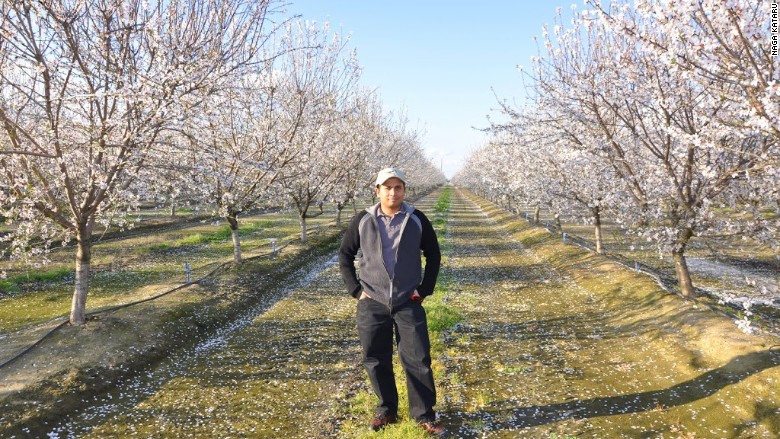
Kataru’s latest career reincarnation is as a farmer. In 2008, he bought a 320-acre farm in Modesto, California. It was only meant to be a diversified investment.
“I thought I would sell it after five years,” said Kataru.
But the farm reminded him of his life in India. “I missed the way the fruits and flowers smelled differently in India,” he said.
Instead of selling the money-losing farm, he converted it into an almond farm, which required one-third the labor.
“I didn’t know anything about farming. But I love education and I taught myself,” he said.
Today the farm, which also grows apricots, is profitable and has eight employees. It generates $2.5 million in annual revenue.
Kataru still isn’t resting on his laurels. He’s working on two degrees at Stanford — an MBA and an MS in Environment & Resources — to prepare him for his next challenge: making farming more tech-savvy.
“It’s ironic that even though there are farms just 90 miles outside of Silicon Valley, technology hasn’t been used much to improve processes and crop yields,” he said. “As a technologist, I think I can do something about it.”
(Source: CNN Money)