
IndianSanskriti
Meaning of Om

Meaning of OM

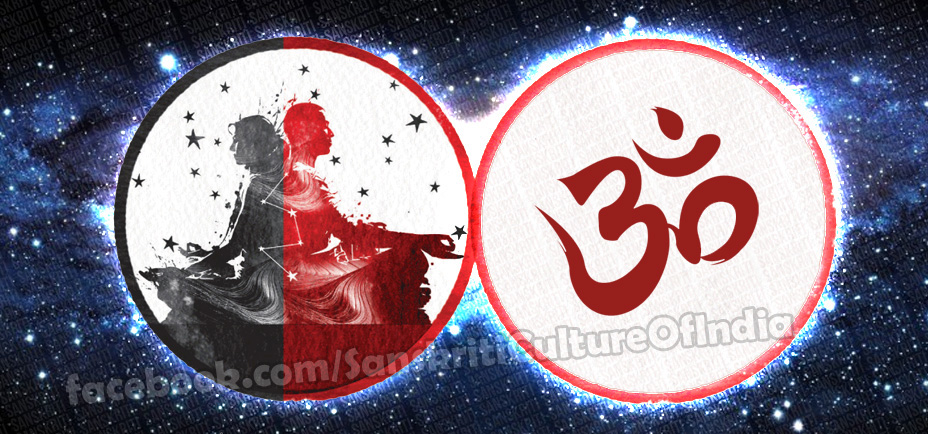
Most of us have heard the word “AUM” or more popularly known as “OM”, but do we know what it really means ? Why it is considered the most sacred sound in Eastern religions ? Why is it chanted in meditation ?The answers can be found in Mandukya Upanishad, which are shortest of the Upanishads, the scriptures of Hindu Vedanta consisting of twelve verses written around 800BC. Aum is said to be the essence of all mantras and Vedas, the highest of all mantras or divine words, symbolizing the infinite Brahman (the Ultimate and the Absolute) and the entire universe.

A stands for Creation, representing Brahma
U stands for Preservation, representing Vishnu
M stands for destruction of dissolution, representing Shiva

Aum stands for the Supreme Reality. It is the symbol of what was, what is, and what shall be. It also represents what lies beyond past, present and future.The Upanishads explain that “AUM” has four states of consciousness:Vaishvanara: the waking state, consciousness with senses turned outwards, awareness of the external world.Tijasa: the dreaming state, consciousness with the senses turned inwards.

Prajna: deep sleep, consciousness with no mind, no dreams and no desires, the source and end of all.

Turiya – super consciousness, beyond the senses and the intellect, represented by AUM.

To sum it up on one sentence, AUM is the primordial vibration of the consciousness which created the universe.


You may also like

Search the website

Like us on Facebook

Get daily updates via Email

Enter your email address:

Recent Posts

Purushottam Maas — The Month No Deity Would Claim, and the Lord Who Made It Supreme

Every month of the Hindu calendar has a lord — except the rare thirteenth, the Adhika Maas, born an orphan and shunned as the “impure month.” The Puranas tell how this rejected month went in grief to Bhagavan Vishnu, who claimed it, gave it His own name — Purushottam — and made it the most fruitful month of all. The origin story, the teaching, and what it means for Purushottam Maas 2026 (May 17 – June 14).

Padmini Ekadashi 2026 — The Ekadashi Even the Devas Descend to Keep

Padmini Ekadashi 2026 — The Ekadashi Even the Devas Descend to Keep

The rarest Ekadashi of the entire Hindu calendar is three days away. The Padma Purana preserves a conversation between Bhagavan Krishna and Yudhishthira about a single Ekadashi the great Rishis spend lifetimes waiting for — Padmini. The Vrat Katha of Queen Padmini of Mahishmati, the lotus teaching, and why May 27, 2026 is the morning Vaishnavas across Bharata are preparing for.

Varada Chaturthi 2026 — The Rare Ganesha Day of Purushottam Maas

Varada Chaturthi 2026 — The Rare Ganesha Day of Purushottam Maas

Once every 2.5–3 years — when the rare 13th month of Adhika Maas opens — a thirteenth Vinayaka Chaturthi appears. The Mudgala Purana calls it Varada Chaturthi, the “boon-giving” Chaturthi, and holds it as the most fruit-bearing Ganesha day of the entire calendar. Today, Wednesday May 20, 2026, is that day.

Padmini Ekadashi 2026 — The Rare Ekadashi That Comes Only in Purushottam Maas

Padmini Ekadashi 2026 — The Rare Ekadashi That Comes Only in Purushottam Maas

Padmini Ekadashi 2026 falls on Wednesday, May 27 — the Shukla Paksha Ekadashi of Adhika Maas, the rarest Ekadashi in the entire Hindu calendar (it appears only every 2.5–3 years). The Padma Purana conversation between Bhagavan Krishna and Yudhishthira, the Vrat Katha of Queen Padmini, complete vrat vidhi with jagrana, mantras, and the lotus symbolism that gives the Ekadashi its name.

Ganga Dussehra 2026 — The Day Maa Ganga Came Down to Bhagiratha

Ganga Dussehra falls on Monday, May 25, 2026 — commemorating the day Maa Ganga descended from Vaikuntha to the earth through the millennia-long tapasya of King Bhagiratha. The full account from the Valmiki Ramayana, snan vidhi, dana traditions, mantras, and the teaching of sustained sincerity.

css.php



