
IndianSanskriti
Kalavantin Durg: World's most dangerous fort

Kalavantin Durg: World’s most dangerous fort

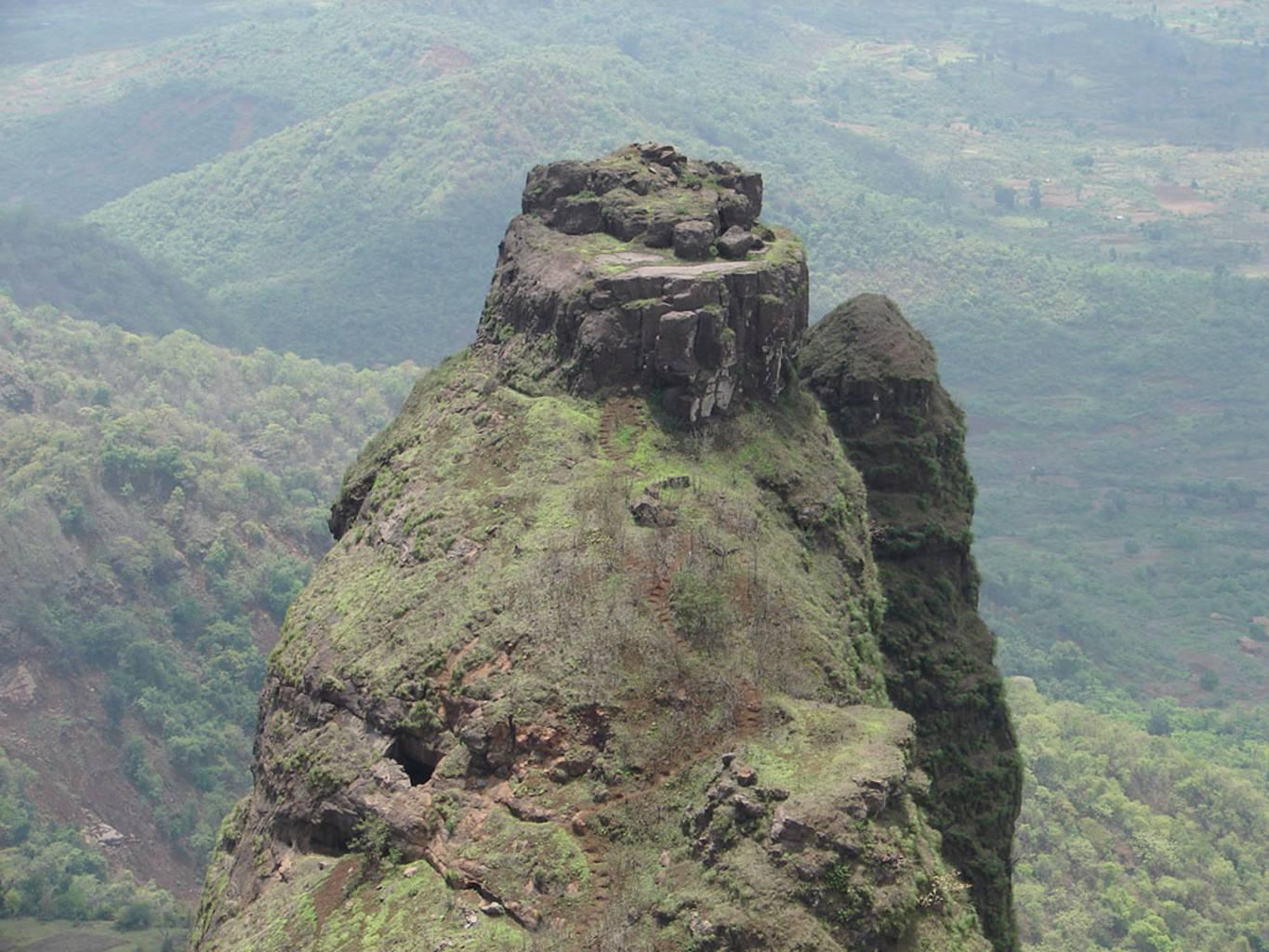
Located at an elevation of 2,300 feet in the Western Ghats near Mumbai, the Kalavantin Durg is a truly amazing feat that was used as a watch tower in the past.

As one of the 23 forts that were handed over to the Mughal Empire by Shivaji according to the Treaty of Purandar in 1665, it was later reclaimed by the Maratha forces in 1667.

The fort is believed to be built around the time of Buddha or approximately around 500 BC for a queen named Kalavantin whose story seems to have been lost in the mist of time.

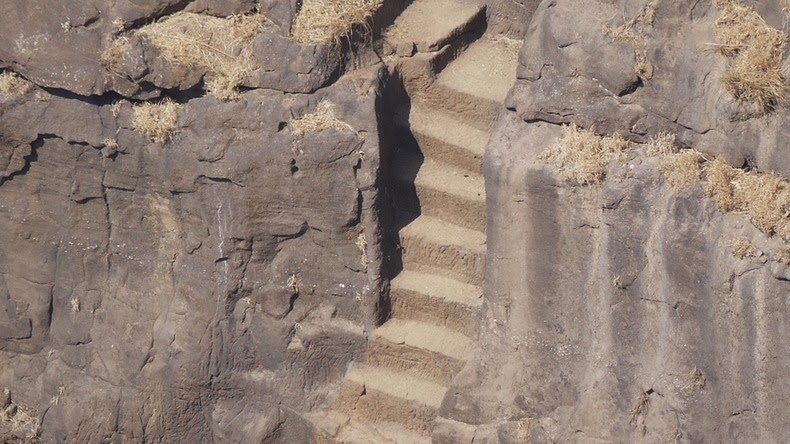
One of its most impressive features is the steps leading up to the fort that were cut into the rock of the hill with such perfection.  There are no railings on the edge and no ropes on the wall to support the climb, which makes the climb down pretty tough to handle if one suffers from vertigo.

The steps up to the peak are almost a three hour climb while getting to the fort is yet another challenge to face, recommended only for the experienced trekkers.  However, once at the summit, the panoramic view is breathtaking and one easily forgets the climb or the throbbing body ache as the entire valley unfolds in front of you!

Not only the city of Mumbai can be viewed from here but also other forts like Peb, Chanderi, Materan, Karnala and Ershai are a sight to see.  Accessible from Mumbai-Pune Expressway, the fort is a main tourist attraction and it no longer holds any military significance as was the original intent.

On every Shimga Festival of Holi, locals from Machi-Prabal Village dance on top of the fort and they consider it a part of their culture and heritage.

Kalavantin Durg’s location and treacherous steps up to the top have given it the rightly deserved reputation of being the most dangerous fort in the world.

You may also like

Search the website

Like us on Facebook

Get daily updates via Email

Enter your email address:

Recent Posts

Yogini Ekadashi 2026 — The Yaksha Who Missed the Morning Flowers, and the Ekadashi That Undid His Curse

On Friday, July 10, 2026, the rare Krishna Paksha Ekadashi of Nija Ashadha arrives. The Padma Purana tells the story of Hemamali — the Yaksha gardener of Bhagavan Kubera in Alaka, whose single morning of distraction with his wife Vishalakshi cost him his form, his wife, and his celestial city. Cursed to wander the earth of Bharata as a leper for a long time, he was at last shown the way back by Sage Markandeya — a single sincere keeping of Yogini Ekadashi.

Jamai Shashthi 2026 — The Story of Maa Shashthi, the Cat, and the Wife Who Was Forgiven

Jamai Shashthi 2026 — The Story of Maa Shashthi, the Cat, and the Wife Who Was Forgiven

On Saturday, June 20, 2026, Bengali households across Bharata will welcome their married daughters and sons-in-law home for the legendary jamai-aador feast and perform the Shashthi Vrata. But behind the warmth lies a story most Bengalis know by heart and most non-Bengalis have never heard — the wife who stole the hilsa, blamed the cat, lost six sons to Maa Shashthi’s wrath, and was finally forgiven. The Vrat Katha, the vidhi, the mantras, and the deeper teaching.

Vat Purnima 2026 — The Wife Who Argued Yama Into Returning Her Husband’s Life

On Monday, June 29, 2026, women across Maharashtra, Gujarat, and southern Bharata will tie red thread around banyan trees and hear the story of Savitri — the wife who walked behind Yamaraja Himself when He came for her husband, and out-argued the Lord of Dharma into returning Satyavan’s life. The Mahabharata’s Pativrata Mahatmya Parva, the vrat vidhi, and why the banyan witnessed everything.

Nija Jyeshtha 2026 — The Real Jyeshtha Begins, and the Calendar Resumes

Nija Jyeshtha 2026 — The Real Jyeshtha Begins, and the Calendar Resumes

With Adhik Maas now closed on the Somvati Amavasya of June 15, the long-postponed festivals of Jyeshtha return — Vat Purnima (June 29, the Savitri-Yamaraja katha), Jamai Shashthi (June 20, the Bengali festival of Maa Shashthi), Sankashti Chaturthi (June 28), Yogini Ekadashi (July 10), and Devshayani Ekadashi (July 16, opening the four-month Chaturmas of Bhagavan Vishnu’s yoga-nidra). A guide to what the next four weeks hold and what the household that kept Purushottam Maas now carries forward.

The Closing of Purushottam Maas 2026 — Adhik Amavasya and the Sealing of the Month-Long Vrat

On Monday, June 15, 2026 — a rare Somvati Amavasya — the intercalary month that bears Bhagavan Vishnu’s own name comes to its close. The Acharyas teach that a vrat is not measured by its duration but by its closing. Here are the Padma Purana’s instructions for sealing the month-long Purushottam Maas vrat: the morning snan, the closing puja with the Vishnu Sahasranama, the day of dana, the Somvati Amavasya gift, and the final sarva-arpana — the offering of all merit at the feet of the Lord.

css.php