IndianSanskriti

India’s Most Successful Export to Japan

Please click on images below to view in full:

A few hundred Japanese, mostly middle-aged women, congregate in the courtyard of the Asakusa Shrine in central Tokyo. The five-storey pagoda is ornate and immaculate, not least because it was rebuilt in the 1970s. A bespectacled monk sits at a stall as worshippers paid a few yen to burn incense or ritually rinse hands with spring water.

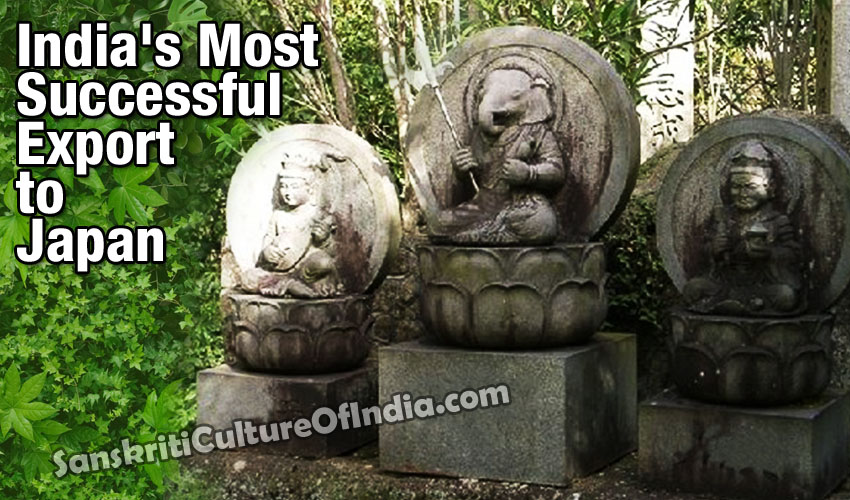
This is the Shoten-cho part of the Japanese capital, famous for its many temples and shrines. Less known is that Shoten, the Noble God, is the Hindu deity Ganapati. And there are temples to Sarasvati and Shiva to be found amid these crowded streets. In the 1830s, say scholars, over 100 Ganapati temples could be found here.

Few Japanese and fewer Indians realize most deities worshipped in Japan are of Indian origin. “A majority of Japanese gods are actually Indian gods,” was a common line of the former Japanese Ambassador to India, Yasukuni Enoki. Hindu deities were imported wholesale from the 6th century onwards. Between “These Indian deities were introduced from China into Japan as Buddhist deities with Chinese names,” writes Sengaku Mayeda of Japan’s Eastern Institute. Thanks to the centuries and translation hurdles, the names and appearances of the gods have become localized to the point of anonymity.

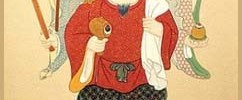
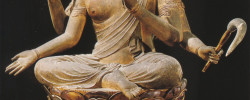
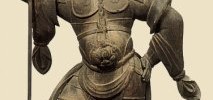
An example is Shichifukujin, the popular Japanese sect of the Seven Deities of Fortune. This pantheon includes Sarasvati, Shiva and Vaisravana – under their Japanese names of, respectively, Benzaiten, Daikokuten and Bishamonten. Some names are direct Japanese translations. Daikokuten means “great head god”, a direct translation of one of Shiva’s names, Mahakala.

The absorption of Indian imports was probably eased by the common animist base of indigenous Shintoism.

Temples to Brahma, Kubera and other Hindu-derived deities are scattered all over Japan. The Shibamata and Katsushika wards of Tokyo have Indra temples. Many will show these gods on either side of a Buddha image. The suffix “ten” derives from deva and was once a way to denote a god with Indian origins.

Religion is a declining force in Japan. The country is half atheist. But, said one Japanese official when I asked him, troubled economic times has made the temple popular among the young again.

~ Pramit Pal Chaudhuri

Some Hindu Gods and Their Japanese Names:

  • Indra:  Taishakuten (King of Gods)
  • Ganesha:  Shoten (God of Success)
  • Shiva:  Daikoku (The Great Black One – Mahesh)
  • Brahma:  Bonten (Heavenly King)
  • Kuvera:  Bishamon (God of Wealth)
  • Sarasvati:  Benten (Goddess of Learning)
  • Lakshmi:  Kichijoten / Kisshoten (Goddess of Fortune)
  • Varuna:  Suiten (Sea God)
  • Vishvakarma:  Bishukatsuma (Divine Architect)
You may also like

Search the website

Like us on Facebook

Get daily updates via Email

Enter your email address:

Recent Posts

Jamai Shashthi 2026 — The Story of Maa Shashthi, the Cat, and the Wife Who Was Forgiven

Jamai Shashthi 2026 — The Story of Maa Shashthi, the Cat, and the Wife Who Was Forgiven

On Saturday, June 20, 2026, Bengali households across Bharata will welcome their married daughters and sons-in-law home for the legendary jamai-aador feast and perform the Shashthi Vrata. But behind the warmth lies a story most Bengalis know by heart and most non-Bengalis have never heard — the wife who stole the hilsa, blamed the cat, lost six sons to Maa Shashthi’s wrath, and was finally forgiven. The Vrat Katha, the vidhi, the mantras, and the deeper teaching.

Vat Purnima 2026 — The Wife Who Argued Yama Into Returning Her Husband’s Life

On Monday, June 29, 2026, women across Maharashtra, Gujarat, and southern Bharata will tie red thread around banyan trees and hear the story of Savitri — the wife who walked behind Yamaraja Himself when He came for her husband, and out-argued the Lord of Dharma into returning Satyavan’s life. The Mahabharata’s Pativrata Mahatmya Parva, the vrat vidhi, and why the banyan witnessed everything.

Purushottam Maas — The Month No Deity Would Claim, and the Lord Who Made It Supreme

Every month of the Hindu calendar has a lord — except the rare thirteenth, the Adhika Maas, born an orphan and shunned as the “impure month.” The Puranas tell how this rejected month went in grief to Bhagavan Vishnu, who claimed it, gave it His own name — Purushottam — and made it the most fruitful month of all. The origin story, the teaching, and what it means for Purushottam Maas 2026 (May 17 – June 14).

Padmini Ekadashi 2026 — The Ekadashi Even the Devas Descend to Keep

Padmini Ekadashi 2026 — The Ekadashi Even the Devas Descend to Keep

The rarest Ekadashi of the entire Hindu calendar is three days away. The Padma Purana preserves a conversation between Bhagavan Krishna and Yudhishthira about a single Ekadashi the great Rishis spend lifetimes waiting for — Padmini. The Vrat Katha of Queen Padmini of Mahishmati, the lotus teaching, and why May 27, 2026 is the morning Vaishnavas across Bharata are preparing for.

Varada Chaturthi 2026 — The Rare Ganesha Day of Purushottam Maas

Varada Chaturthi 2026 — The Rare Ganesha Day of Purushottam Maas

Once every 2.5–3 years — when the rare 13th month of Adhika Maas opens — a thirteenth Vinayaka Chaturthi appears. The Mudgala Purana calls it Varada Chaturthi, the “boon-giving” Chaturthi, and holds it as the most fruit-bearing Ganesha day of the entire calendar. Today, Wednesday May 20, 2026, is that day.

css.php