IndianSanskriti
rasmancha temple

Rasmancha – Unique Pyramid Brick Temple of India

We all feel a sense of pride when it comes to the rich culture of India and don’t hesitate to brag about breathtaking monuments like The Taj Mahal, Qutub Minar, Meenakshi Temple and other such fantastic monuments and temples. But, there is much more in India, unexplored and unknown that meets the eyes. Lets talk about one such little known heritage of India and the story behind it – The Rasmancha.

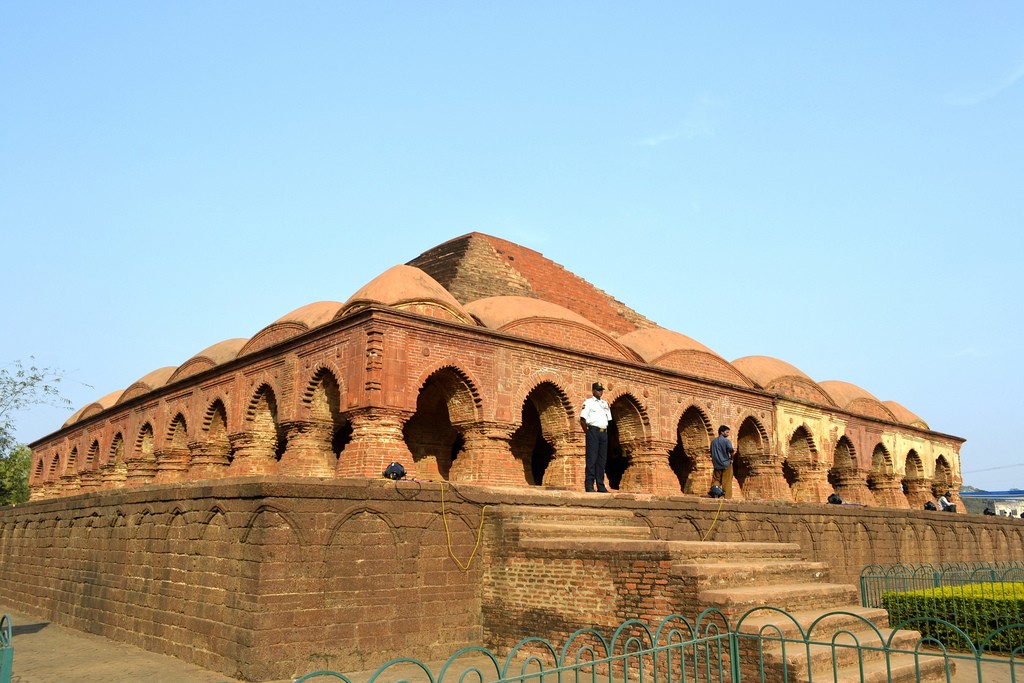
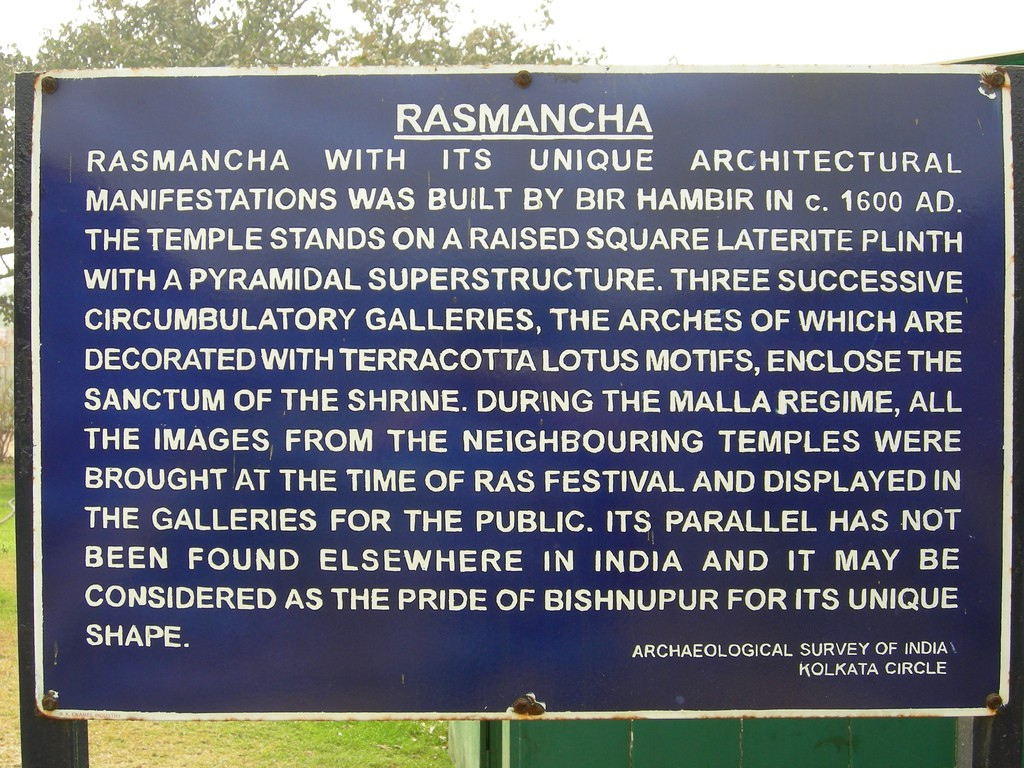
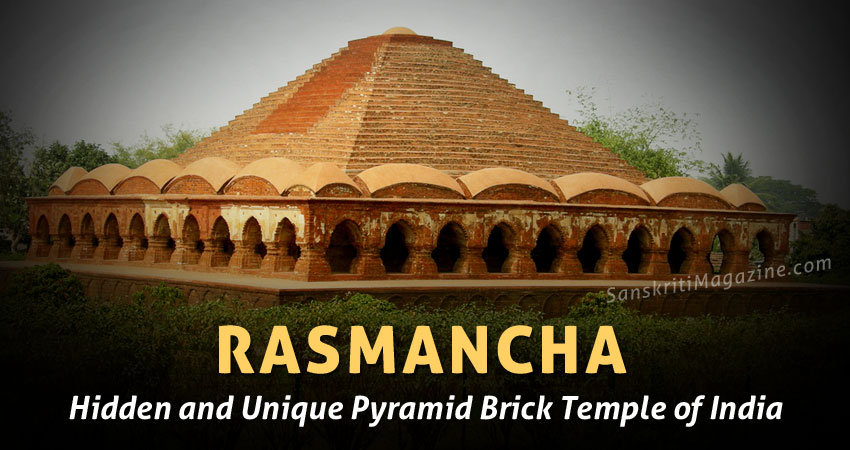
Rasmancha  is a historical building located at Bishnupur, Bankura district, West Bengal, India.  It was commissioned by Malla king Vir Hambir in 1600 CE. During the Vaishnava Ras festival, all the Radha Krishna idols of Bishnupur town used to be brought here to be worshiped by the citizens.The annual festival was held till 1932 and then it was stopped.

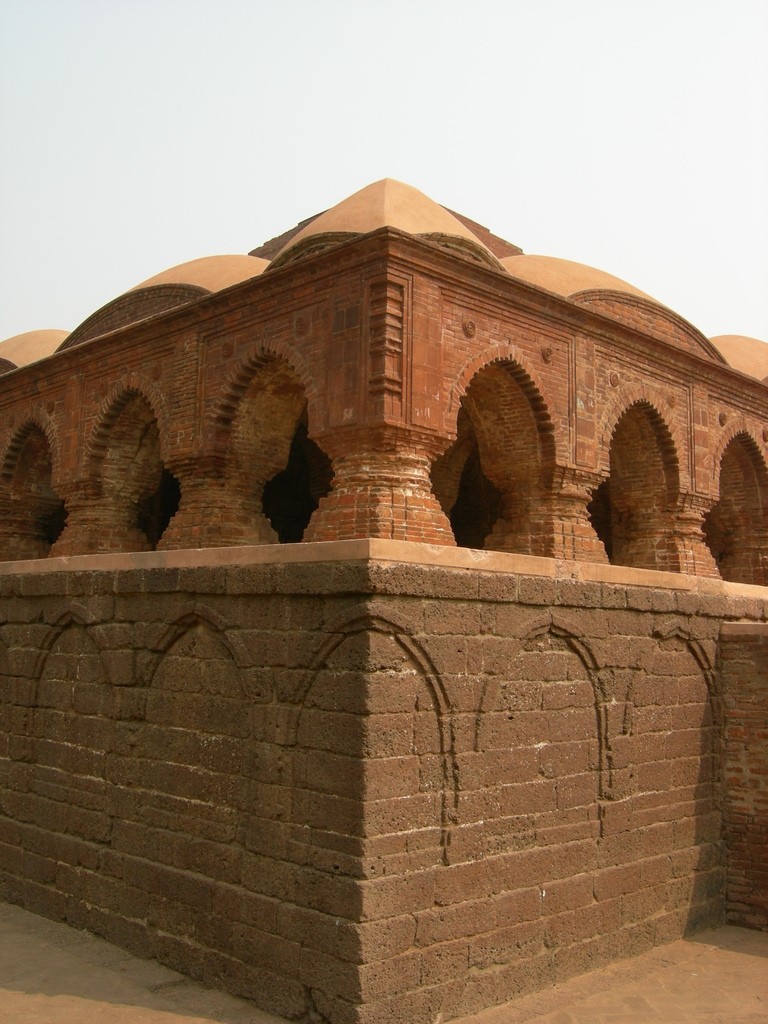
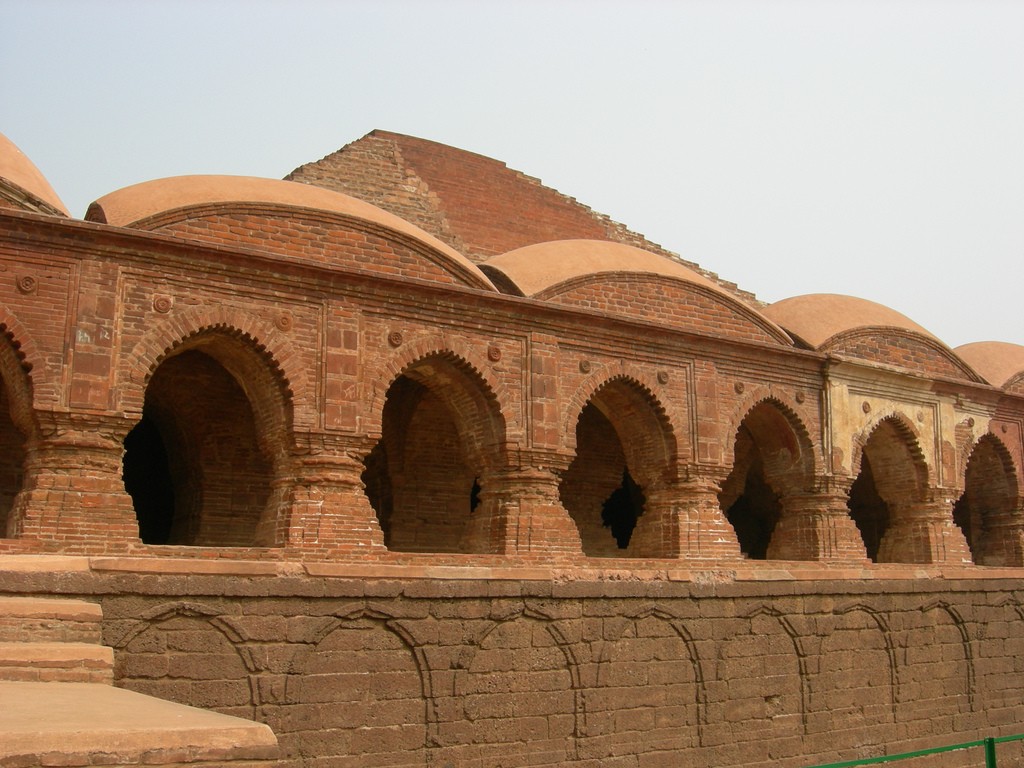
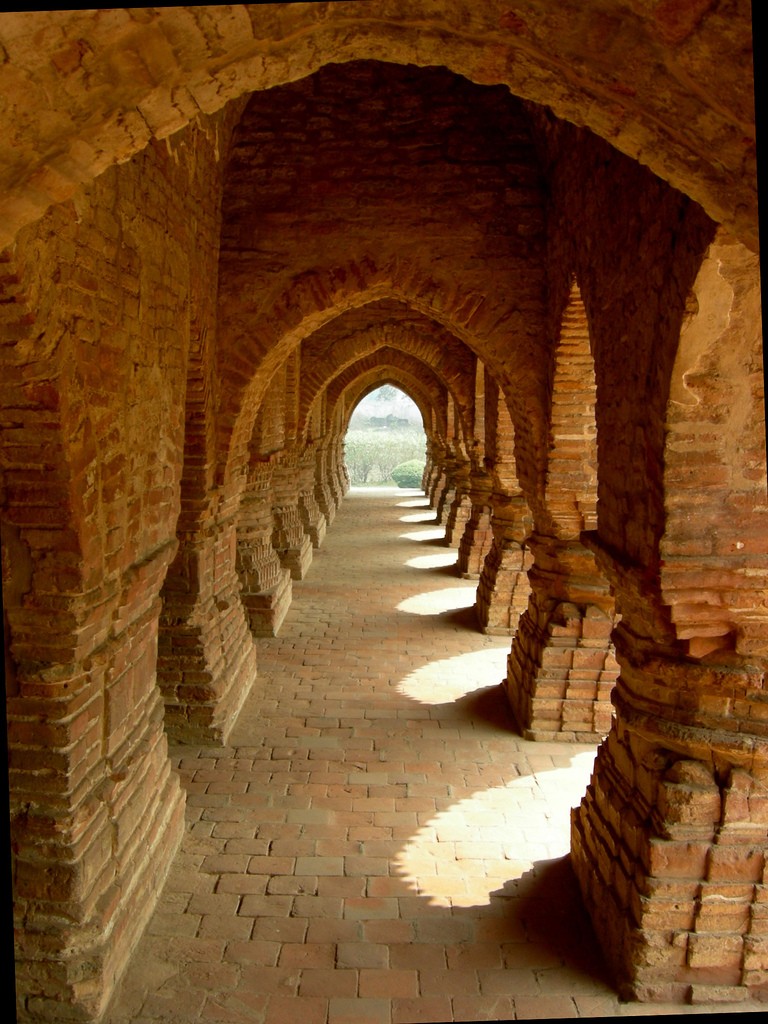
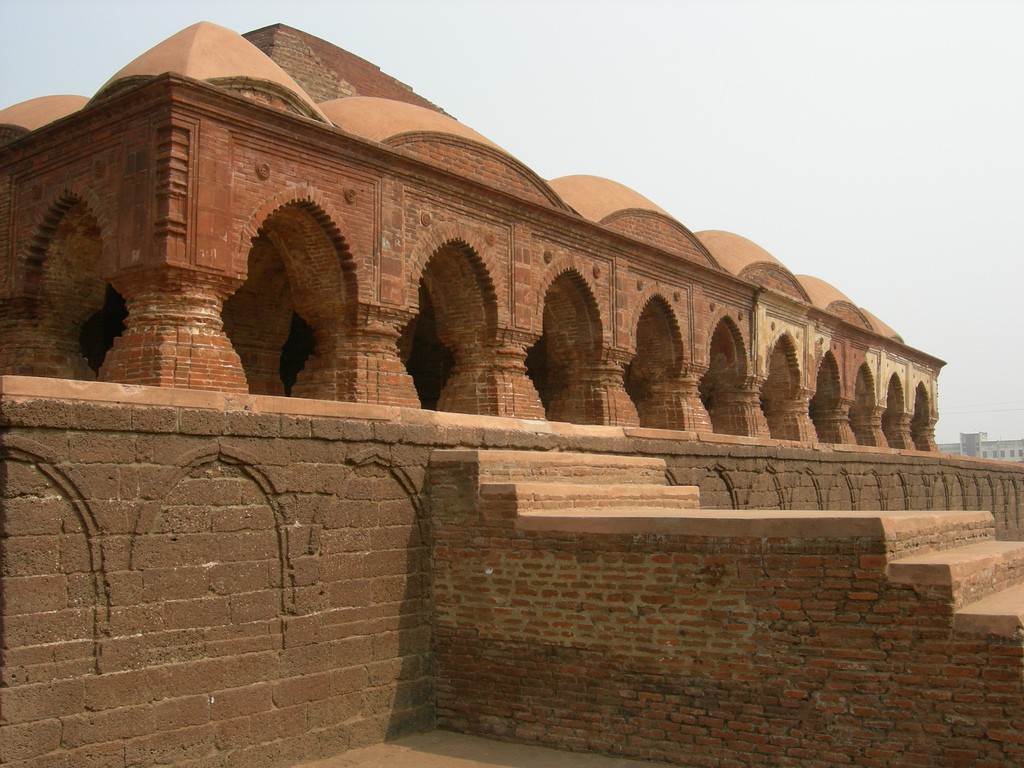
The Temple stands on a raised square lateral plinth with a pyramidal superstructure. The internal chamber of the shrine is enclosed by three consecutive circumambulatory galleries and topped by a colossal pyramidal crown above, the arches of which are decorated with terracotta lotus motifs.

Its parallel has not been found elsewhere in India and it may be considered as the pride of Bishnupur for its unique shape.

The square foundation is 1.5m high, each side of which is 24.5m long and rises to a height of about 11m to reach a stage roof above.

The primary reason behind the creation of this mammoth structure was the celebration of the ‘Ras’ festival, when every image, large or small, in the form of Deities was taken in here from each and every adjoining shrine or temple. They were arranged for exhibit to every individual during this event. This ritual was put into practice during the Malla Rule and now stands outdated, excepting the majesty and glory of those days that the Ras-Mancha reminds one of.

Maintenance of this significant masterpiece is being conducted earnestly by the ASI, providing lighting facilities and conserving the flimsy terracotta craftsmanship that is etched on each and every deliberate brick and wall of the Ras-Mancha. The ASI charges Rs.5/- per head, for entry and maintenance of the Ras-Mancha, Jor-Bangla and Shyam-Ray Temples.

Bishnupur is situated at a distance of around 134 from Kolkata and there are several buses and trains that can take you to Bishnupur within 3 hours transit time.  So next time you are in the neighborhood, be sure to pay a visit to one of India’s unique yet little known wonder that is Rasmancha.
You may also like

Search the website

Like us on Facebook

Get daily updates via Email

Enter your email address:

Recent Posts

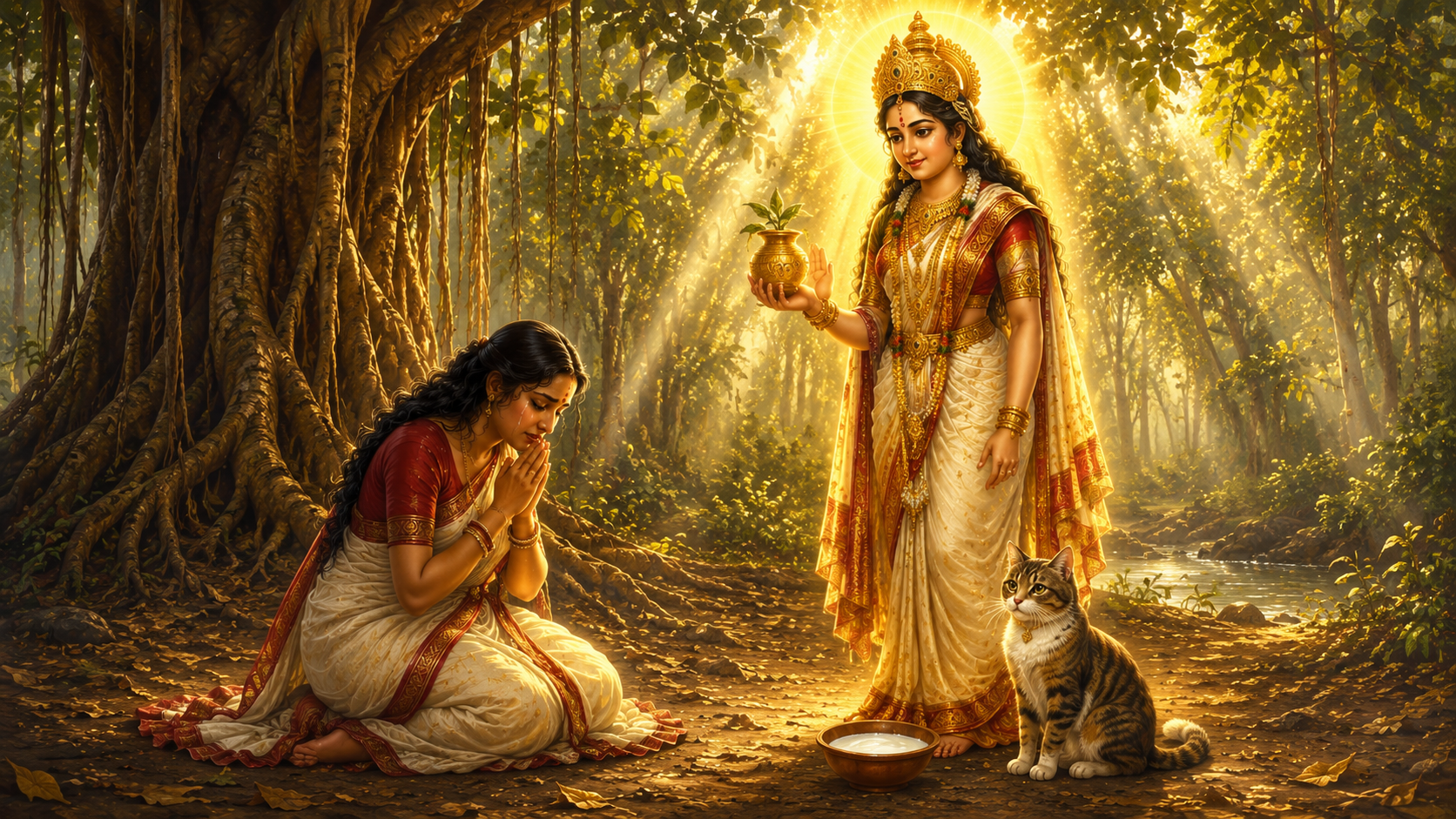
Jamai Shashthi 2026 — The Story of Maa Shashthi, the Cat, and the Wife Who Was Forgiven

Jamai Shashthi 2026 — The Story of Maa Shashthi, the Cat, and the Wife Who Was Forgiven

On Saturday, June 20, 2026, Bengali households across Bharata will welcome their married daughters and sons-in-law home for the legendary jamai-aador feast and perform the Shashthi Vrata. But behind the warmth lies a story most Bengalis know by heart and most non-Bengalis have never heard — the wife who stole the hilsa, blamed the cat, lost six sons to Maa Shashthi’s wrath, and was finally forgiven. The Vrat Katha, the vidhi, the mantras, and the deeper teaching.

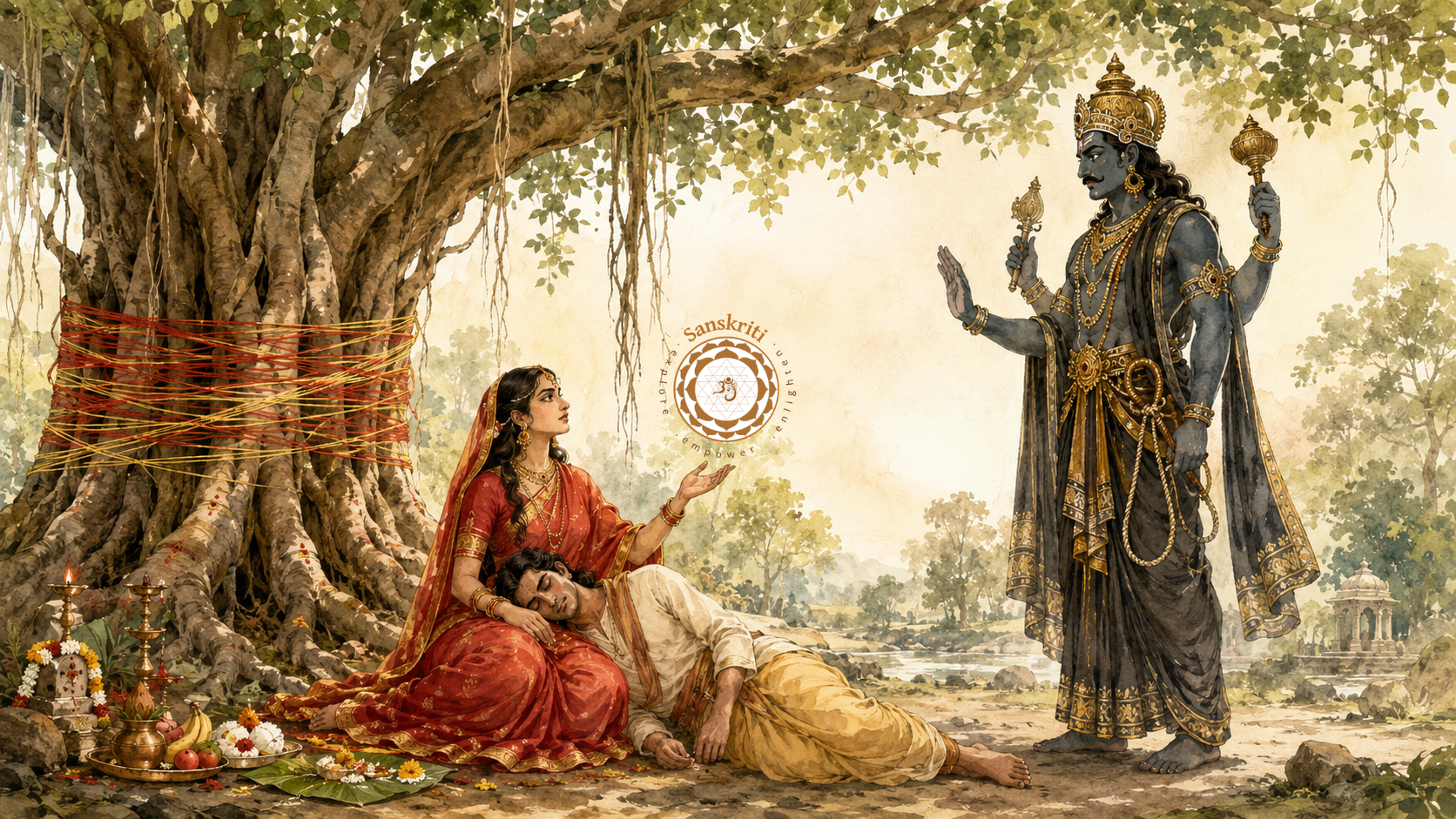
Vat Purnima 2026 — The Wife Who Argued Yama Into Returning Her Husband’s Life

On Monday, June 29, 2026, women across Maharashtra, Gujarat, and southern Bharata will tie red thread around banyan trees and hear the story of Savitri — the wife who walked behind Yamaraja Himself when He came for her husband, and out-argued the Lord of Dharma into returning Satyavan’s life. The Mahabharata’s Pativrata Mahatmya Parva, the vrat vidhi, and why the banyan witnessed everything.

Nija Jyeshtha 2026 — The Real Jyeshtha Begins, and the Calendar Resumes

Nija Jyeshtha 2026 — The Real Jyeshtha Begins, and the Calendar Resumes

With Adhik Maas now closed on the Somvati Amavasya of June 15, the long-postponed festivals of Jyeshtha return — Vat Purnima (June 29, the Savitri-Yamaraja katha), Jamai Shashthi (June 20, the Bengali festival of Maa Shashthi), Sankashti Chaturthi (June 28), Yogini Ekadashi (July 10), and Devshayani Ekadashi (July 16, opening the four-month Chaturmas of Bhagavan Vishnu’s yoga-nidra). A guide to what the next four weeks hold and what the household that kept Purushottam Maas now carries forward.

The Closing of Purushottam Maas 2026 — Adhik Amavasya and the Sealing of the Month-Long Vrat

On Monday, June 15, 2026 — a rare Somvati Amavasya — the intercalary month that bears Bhagavan Vishnu’s own name comes to its close. The Acharyas teach that a vrat is not measured by its duration but by its closing. Here are the Padma Purana’s instructions for sealing the month-long Purushottam Maas vrat: the morning snan, the closing puja with the Vishnu Sahasranama, the day of dana, the Somvati Amavasya gift, and the final sarva-arpana — the offering of all merit at the feet of the Lord.

Parama Ekadashi 2026 — The Other Rare Ekadashi of Purushottam Maas, and the Poor Brahmin Who Kept It

Two weeks ago, Vaishnavas across Bharata kept Padmini Ekadashi — the rare Shukla Paksha Ekadashi of Adhik Maas. Padmini has a twin. On Thursday, June 11, 2026, the Krishna Paksha Ekadashi of the same intercalary month appears: Parama — the Supreme Ekadashi. The Padma Purana names it the rarer and more secret of the two, and reserves it for those whose poverty or sorrow has refused to lift in spite of every other vrat already kept. The story of Sumedha and Pavitra of Kampilya, the rishi Kaundinya, the prince sent by Bhagavan Brahma — and the vidhi for the day.

css.php