IndianSanskriti

Homeless Britons are turning to the Sikh community for food

Homeless people in the UK are getting free meals thanks to a centuries-old Sikh tradition. Why, asks Rajeev Gupta.

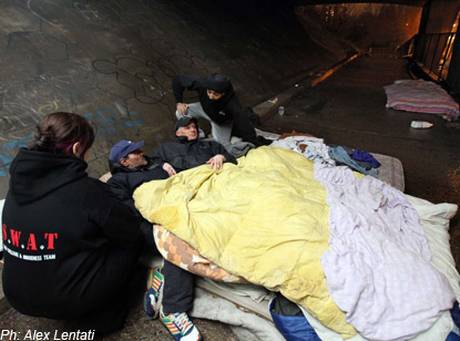
“We come here because we get food… A hot meal. It’s a luxury for me.” John Davidson is 55 and homeless. He is one of 250 people who have just received a hand-out of hot soup, drinks, chocolate bars and other supplies from the Sikh Welfare and Awareness Team van parked up on the Strand in central London on a cold Sunday evening. The Swat team, as they’re known, park at the same spot every week so a group of volunteers from the Sikh community can hand out vital supplies. Homeless people, who overwhelmingly are not Sikh, patiently wait in line to be served.
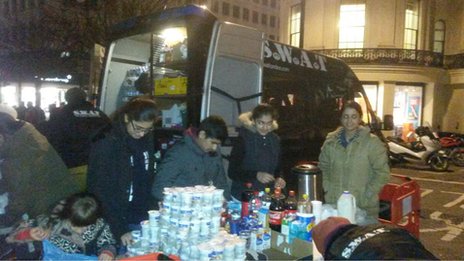
S.W.A.T. Volunteers distributing food

For the volunteers handing out food here, this is more than just good charitable work. For them this is a religious duty enshrined by the founder of the Sikh religion, Guru Nanak, over 500 years ago. At a time of deep division by caste and religious infighting between Hindus and Muslims in India, Guru Nanak called for equality for all and set forward the concept of Langar – a kitchen where donated produce, prepared into wholesome vegetarian curry by volunteers, is freely served to the community on a daily basis.

Today, thousands of free Langar meals are served every day in Sikh temples throughout the UK. The Guru Singh Sabha Gurdwara in Southall, thought to be the biggest Sikh temple outside of India, says it alone serves 5,000 meals on weekdays and 10,000 meals on weekends. Every Sikh has the duty to carry out Seva, or selfless service, says Surinder Singh Purewal, a senior member of the temple management team. “It means we’re never short of donations or volunteers to help prepare the Langar.”

S.W.A.T. Volunteers
S.W.A.T. Volunteers

In recent times the Langar meal has acted as a barometer for the state of the economy. After the 2008 recession many Sikh temples reported a surge in the numbers of non-Sikhs coming in for the free Langar meals. It’s now common to see non-Sikhs inside the temple, Purewal says: “We don’t mind it. As long as people show respect, are not intoxicated and cover their heads in line with our traditions, then everyone is welcome.”

The Swat team say they decided to take the concept of Langar outside its traditional setting in temples and out onto the streets when they saw a growing homelessness problem in London. Randeep Singh who founded SWAT says: “When you go to the temple, what’s the message? The message is to help others, help your neighbours. That’s what we are doing.”

Source : BBC
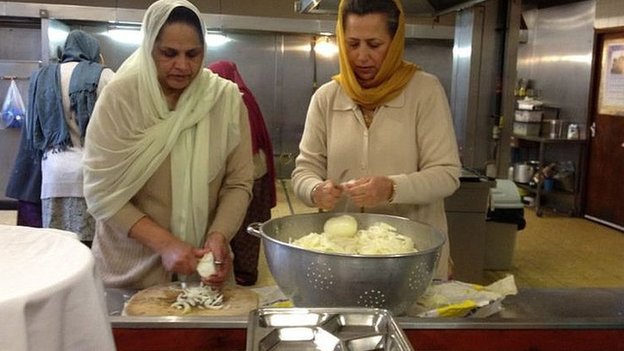
 

Volunteers at Gurudwara preparing langar
The men sleeping under the M4
S.W.A.T. Volunteers Helping Homeless Men sleeping under the bridge


You may also like

Search the website

Like us on Facebook

Get daily updates via Email

Enter your email address:

Recent Posts

Yogini Ekadashi 2026 — The Yaksha Who Missed the Morning Flowers, and the Ekadashi That Undid His Curse

On Friday, July 10, 2026, the rare Krishna Paksha Ekadashi of Nija Ashadha arrives. The Padma Purana tells the story of Hemamali — the Yaksha gardener of Bhagavan Kubera in Alaka, whose single morning of distraction with his wife Vishalakshi cost him his form, his wife, and his celestial city. Cursed to wander the earth of Bharata as a leper for a long time, he was at last shown the way back by Sage Markandeya — a single sincere keeping of Yogini Ekadashi.

Jamai Shashthi 2026 — The Story of Maa Shashthi, the Cat, and the Wife Who Was Forgiven

Jamai Shashthi 2026 — The Story of Maa Shashthi, the Cat, and the Wife Who Was Forgiven

On Saturday, June 20, 2026, Bengali households across Bharata will welcome their married daughters and sons-in-law home for the legendary jamai-aador feast and perform the Shashthi Vrata. But behind the warmth lies a story most Bengalis know by heart and most non-Bengalis have never heard — the wife who stole the hilsa, blamed the cat, lost six sons to Maa Shashthi’s wrath, and was finally forgiven. The Vrat Katha, the vidhi, the mantras, and the deeper teaching.

Vat Purnima 2026 — The Wife Who Argued Yama Into Returning Her Husband’s Life

On Monday, June 29, 2026, women across Maharashtra, Gujarat, and southern Bharata will tie red thread around banyan trees and hear the story of Savitri — the wife who walked behind Yamaraja Himself when He came for her husband, and out-argued the Lord of Dharma into returning Satyavan’s life. The Mahabharata’s Pativrata Mahatmya Parva, the vrat vidhi, and why the banyan witnessed everything.

Nija Jyeshtha 2026 — The Real Jyeshtha Begins, and the Calendar Resumes

Nija Jyeshtha 2026 — The Real Jyeshtha Begins, and the Calendar Resumes

With Adhik Maas now closed on the Somvati Amavasya of June 15, the long-postponed festivals of Jyeshtha return — Vat Purnima (June 29, the Savitri-Yamaraja katha), Jamai Shashthi (June 20, the Bengali festival of Maa Shashthi), Sankashti Chaturthi (June 28), Yogini Ekadashi (July 10), and Devshayani Ekadashi (July 16, opening the four-month Chaturmas of Bhagavan Vishnu’s yoga-nidra). A guide to what the next four weeks hold and what the household that kept Purushottam Maas now carries forward.

The Closing of Purushottam Maas 2026 — Adhik Amavasya and the Sealing of the Month-Long Vrat

On Monday, June 15, 2026 — a rare Somvati Amavasya — the intercalary month that bears Bhagavan Vishnu’s own name comes to its close. The Acharyas teach that a vrat is not measured by its duration but by its closing. Here are the Padma Purana’s instructions for sealing the month-long Purushottam Maas vrat: the morning snan, the closing puja with the Vishnu Sahasranama, the day of dana, the Somvati Amavasya gift, and the final sarva-arpana — the offering of all merit at the feet of the Lord.

css.php