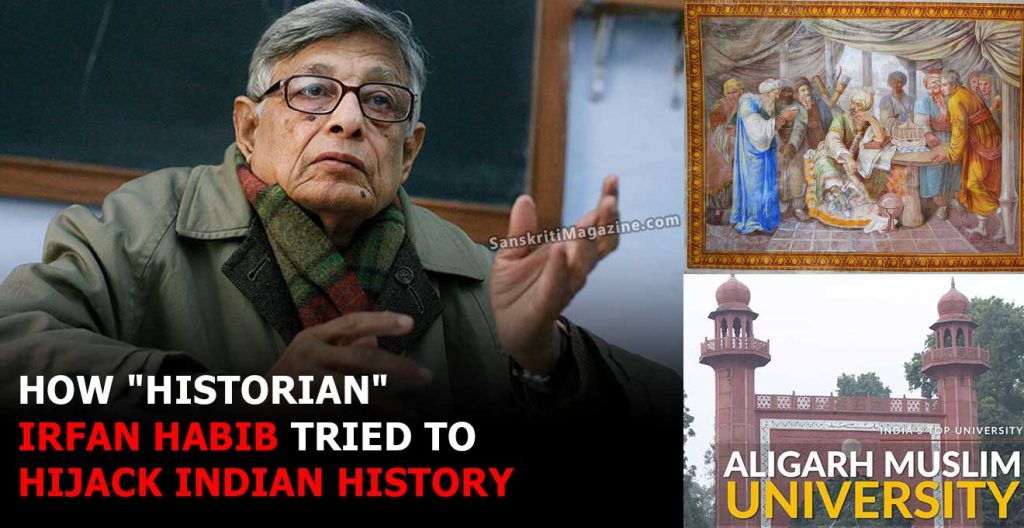
According to Prof M. G. S. Narayanan, Prof Irfan Habib has poisoned not just history, but culture and social life by his narrow groupism, nepotism and treachery. – Jayakrishnan Nair
Few decades back, at Aligarh Muslim University(AMU), Prof Irfan Habib summoned his former student and now faculty member K. K. Muhammed to his office. Muhammed had discovered Ibādat Khānain Fatepur Sikri. Built by Akbar in 1575 CE, the Ibādat Khāna was the place where various religious scholars held discussions. A major discovery, this was reported in various newspapers, something which Prof Habib was not too happy about. The conversation went as follows:
Irfan Habib: “This is not Ibādat Khāna”
Muhammed: “No? This is not Ibādat Khāna?”
IH: “What you gave in Times of India is not Ibādat Khāna”
M: “How can you say that? Are you an archaeologist?”
IH: “I may not be as good an archaeologist like you”
M: “Sorry, you are not an archaeologist.” Irfan Habib was speechless.
Habib pushed a paper to Muhammed and said, “write what you discovered is not Ibādat Khāna”. Muhammed refused and walked away.
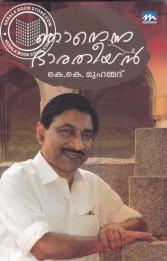 After working both at AMU and the Archaeological Survey of India (ASI) in various designations, K. K. Muhammed has now written an autobiography in Malayalam titled, ഞാനെന്ന ഭാരതീയൻ (Me, the Indian), which has details of his encounters with Prof Habib and his cabal. As part of his education, Mr Muhammed learned how a historian becomes secular.
When Muhammed reached AMU as a student, he was initially excited to have someone as famous as Prof. Habib as his teacher. Muhammed recollects, “As a teacher, he did not make any impact on me.” His other classmates too had similar opinion. This news reached Habib’s ears. Muhammed ran for the Student’s Union as a Congressman. This too did not go well with the Marxists and they decided to contain him. This would cause various encounters between the Irfan Habib group and Muhammed and they are detailed in the first few chapters of the book.
Due to some Machiavellian maneuvers by the Marxists, Muhammed did not get admission as a researcher and hence opted for archaeology. After completing his post-graduate diploma in archaeology, he returned to AMU. He thanks Habib for blocking his path, because it led him to archaeology where he made a name for himself by discovering not just the Ibādat Khāna, but also a Christian church Akbar had built for the missionaries.
The Marxist attack came in multiple ways. First, they tried to prove that the discovery was not Muhammed’s. That failed. The second attack claimed that if Muhammed had discovered this, then it could not be the Ibādat Khāna. Soon after that Habib became the Head of the Department and that’s when the direct confrontation mentioned earlier happened.
Muhammed was a Communist sympathizer, but what he encountered in the campus was a new form of it. The petty version. Muhammed writes that he could never get along with Irfan Habib.
Habib group could cause career damage. They controlled the purse strings: they could decide who got scholarships or who would be admitted as researchers. If you were not part of his group, you were branded communal. Independent thinking was anathema. But if you joined his group, you became secular.
For this Muhammed cites the example of Prof Ramachandra Gaur, with whom he worked. An enemy of Habib, Prof Gaur was branded an RSS man. Once he became the Head of the Department, he changed his allegiance. Gaur also advised Muhammed that it was better to switch to Habib’s group for career advancement. Once Prof Gaur joined the Habib group, he was considered “secular”. Muhammed says, he refused to follow Gaur’s example.
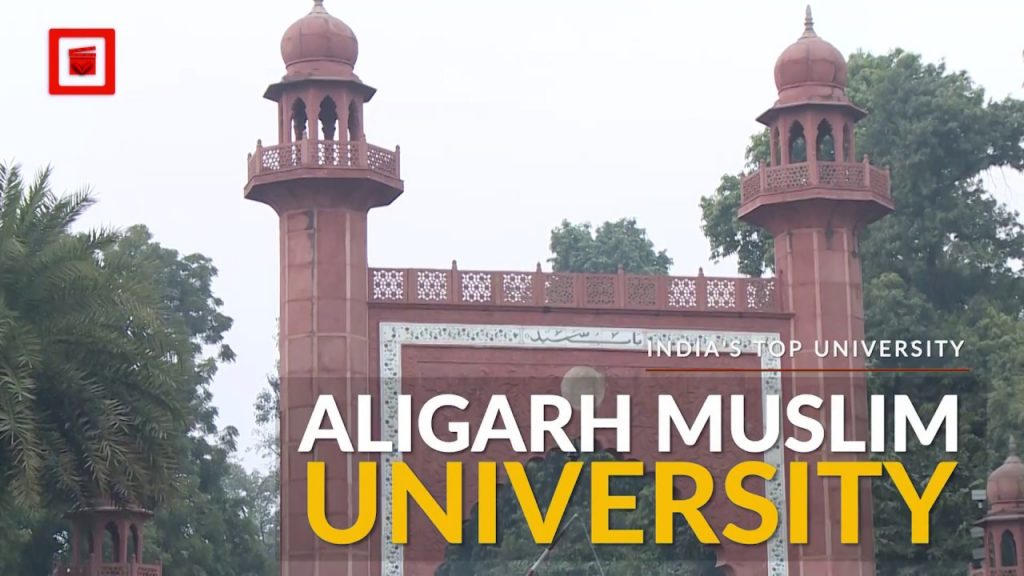
Another encounter he mentions, occurred in front of an interview panel consisting of among others, the Vice Chancellor and Habib. During the interview, the Vice Chancellor said he could not consider anyone for AMU, who did not respect Prof Habib. Muhammed replied that respect has to be earned not demanded. He mentioned how a person who got less marks than him was admitted as a researcher. Another case was when someone with less marks and no post-graduate diploma was given the post of assistant archaeologist instead of him. Muhammed also had evidence against a false accusation that Irfan Habib had made. While Muhammed said all of this, Irfan Habib sat with his eyes down. Muhammed, writes, “His behavior towards me changed, but I was sure he would stab me at the first opportunity”
Muhammed writes that Prof Habib preferred people who flattered him like Makkan Lal. Prof Habib tried to get Prof Makkan Lal as the deputy director instead of Muhammed. When this was challenged by Muhammed in court, Makkan Lal became an ally of Irfan Habib. Muhammed writes, “Unholy alliances are short lived”. By the time of the World Archaeology Congress in Delhi, the Habib group and Makkan Lal group were openly fighting and in the Babri Masjid dispute, Irfan Habib and Makkan Lal were on the opposite sides.
Muhammed was finally selected as the Deputy Superintending Archaeologist at the Archaeological Survey of India. According to Muhammed, Prof Habib met the Director General of ASI and asked him to reject Muhammed. The DG replied that it was a UPC selection and he did not have the power to reject it. Then Prof Habib had one final request. Don’t post him in Agra. (What if he discovers something else.) Muhammed was posted to Madras Circle. But he would visit AMU for lectures and then efforts were made to block them. The only place where they were successful in blocking him was at JNU (no big surprise there), but everywhere else Muhammed was able to speak freely.
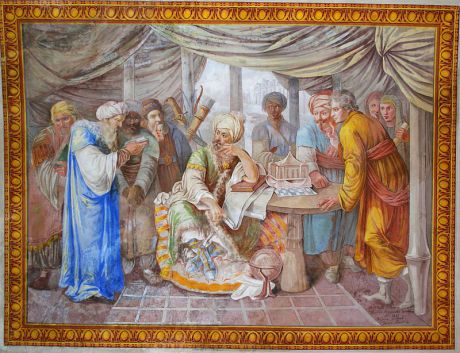
In the foreward of the book, Prof M. G. S. Narayanan, too writes about Prof Habib. According to Prof MGS, Prof Habib has poisoned, not just history, but culture and social life by his narrow groupism, nepotism and treachery. At the same time, he writes that Prof Habib is a hard working person, but crafty. His group would threaten, cheat and would be part of various intrigues. Anyone who criticized this group would be branded a Hindutvavaadi and communalist. At the same time, Prof MGS says, Prof Habib is not an Muslim fundamentalist. He is not sure even if he is a believer. Prof MGS attributes this group for making Babri Masjid a national issue.
According to Muhammed, it was during the Babri Masjid time that his mask of secularism came off. As the head of a government body (ICHR), he should not have taken sides in the dispute. People saw this as an effort to to increase his influence by taking sides with the Muslim side in the dispute. The one historian who had to courage to say that the head of ICHR should not take sides in the dispute was Prof M. G. S. Narayanan. Prof MGS initially had a great opinion of Prof Irfan Habib. He even disagreed with Muhammed on his opinion of Prof Habib, Once Prof MGS worked with Prof Habib in ICHR, he realized that truth of Muhammed’s statements. Not being able to work with Irfan Habib, he left ICHR. Very soon Prof MGS was branded with the Hindutva label.
These are just few select incidents from the first few chapters of the book. It is these petty people who get to define Indian history on if a Ram temple existed or if Saraswati flowed in India or in Afghanistan (see The Lost River). This is the price for continuing the British practice for having an “official” history. We have become bystanders while our history has been hijacked by Marxists like Prof Irfan Habib. – Varnam, 4 September 2016
» Jayakrishnan Nair is a history enthusiast. Source