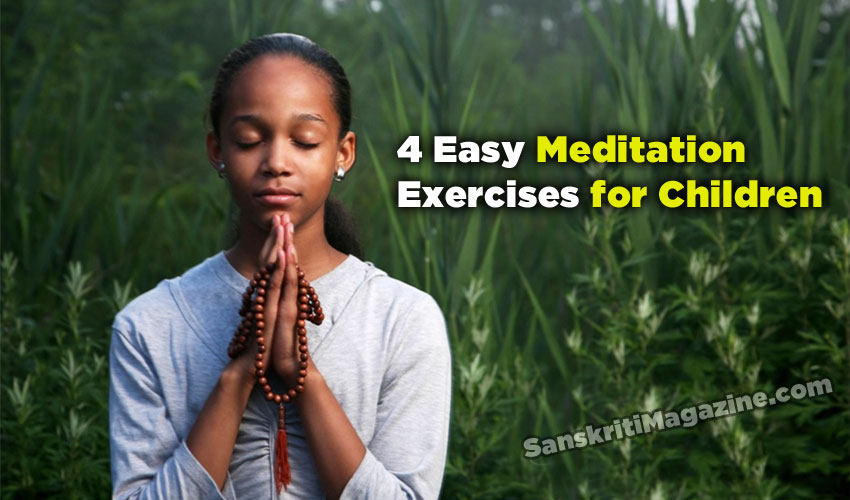
In a world of sensory overload and school, family and internal pressures, kids need meditation as much as adults. Meditation helps kids develop focus, regulate their own emotions and learn how to pay attention inside and out. It gives them a sense of center and, therefore, resilience.
But while adult meditation is all about turning the senses inward, with kids, often the first step in meditation practice is consciously, and with focus, exploring the senses before they can be turned inside. Try the following kid meditation exercises to help yogis create calm, focus and build self-awareness:
1. Listen! Bell Meditation
Invite kids to sit up tall in “criss-cross applesauce” and let their eyes close. Ring a bell or singing bowl, and ask kids to use their sense of hearing to explore the sound. Ask them to listen very carefully, and as soon as they hear it stop, raise their hand. They can then practice attentive listening without the bell. Close your eyes and listen to the sounds in your space. Which are closest to you? Which are far away? Which to the left, or right? You can also try this meditation while walking down the street or lying in bed before falling asleep. (Thanks to Little Flower Yoga for the bell tip!)
2. Sing! Relaxation Song
This meditation combines song with touch and brings even the youngest of kids to a place of peace. Invite kids to sit up tall. Sometimes we sing the syllables Sa Ta Na Ma, or sometimes an English affirmation like “I Am Strong.” With each syllable, touch a different finger to your thumb, starting with the pointer finger and moving to the pinky. We practice singing, whispering, and singing quietly to ourselves in our minds. This is a self-soothing exercise and can be done discretely anywhere kids want to calm down, from the train to the classroom desk to the dinner table.
3. Breathe! Take Five Breath
Your breath is always with you. Learning to check in to it from an early age is a major tool. Try “take 5 breath” where you inhale for five, and exhale for five. Use your fingers to count as you breathe. Slowing your breath will slow down your mind. Can you feel your heart rise and fall as you breathe? Can you feel the breath enter and leave your nose?
4. Watch! Cloud Gazing
Sitting quietly, pay attention to your inhale and exhale. When thoughts or feelings come up, think of them like clouds passing through your mind, which is like the sky. You can watch the clouds come and go just like you can watch clouds in the sky move and shift in their shapes. Kids may not sit too long, but just introducing this concept is a great preparation for adult meditation. And the awareness that things are always changing and things do pass is important to share and practice observing with kids.
You’d be amazing how many little yogis love sitting in meditation instead of taking savasana (relaxation) at the end of class and how fun it is to explore one sense at a time!