IndianSanskriti
widows diwali

Defying century old tradition, hundreds of widows celebrate diwali in Vrindavan

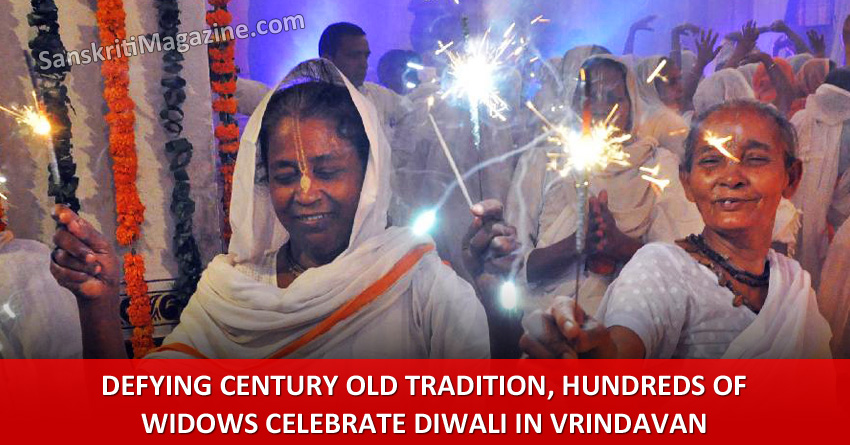
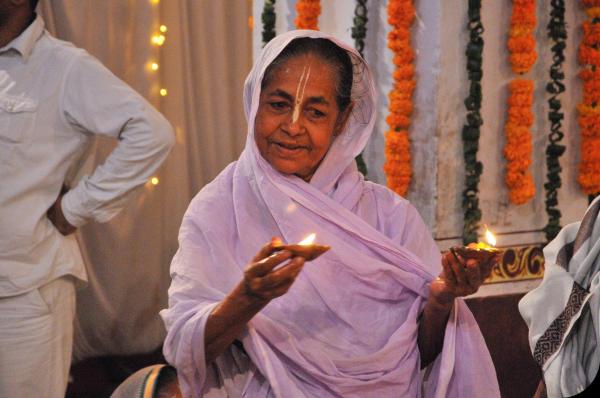
AGRA: As the early autumn sun begins to set on Tuesday, hundreds of widows, who have been abandoned by their families hold earthen oil lamps and offered prayers on the banks of Kesi Ghat of Vrindavan as part of Diwali celebrations. These widows who live in various ashrams run by the district administration and NGO’s in Vrindavan celebrated Diwali for the third consecutive year this time and claimed to continue with the tradition, for the rest of their lives.

Local residents cheered the women on as they passed through the lanes and bylanes of the temple-filled town. The elderly women loudly chanted the tune of ‘hare krishna’ and later, they lit earthen lamps prepared and painted by them and offered prayers on the riverbank on the eve of Diwali.

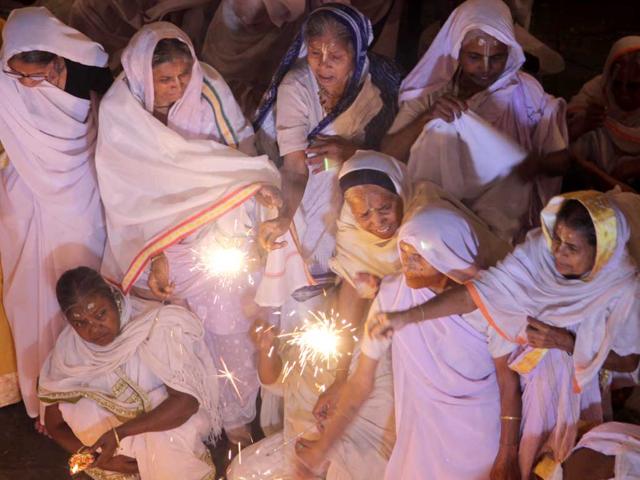
As hundreds of earthen lamps were released in the water, the river turned into a sheet of light emitting diyas. The widows than burset crackers on the river bank before heading back to their ashram to celebrate, some dancing late into the night.

In places like Varanasi and Vrindavan, hundreds of widows lead an isolated life to attain moksha or liberation from the cycle of death and rebirth. Living in small rooms in narrow alleys, they spend most of their time praying and looking for food, in the absence of family support.
1145925_Wallpaper1
“We all were almost lost in the dark rooms of our ashrams since we were realized that we are not inauspicious or a curse. It’s great to celebrate Diwali. I am now waiting for next year’s Diwali,” said 96-year-old Manu Ghosh who came to the town after the deaths of her husband, leaving three sons behind, around three decades ago.

Almost 102-year-old Kanaklata, the oldest widow in Mera Sehbhagini Ashram of Vrindavan, who couldn’t even walk without wheelchair said that the lights, crackers and dancing reminded her of happier times with her family. ‘I never thought that I too would be able to celebrated Diwali ever again in this birth, after the death of my husband,” she added.

“With an aim to bring a ray of happiness at their twilight years, we have come up with this unique idea to organise the festival of lights specially for the widows. It is important to bring these widows, who are considered as inauspicious, back in the life again,” said Bindeshwar Pathak, founder of Sulabh Movement.
widows-of-vrindavan-diwali-4

This is the third year in a row that the event is being organised in a big way by the Sulabh international which has been organising holi festival for the widows, besides arranging their visit to West Bengal and national capital Delhi during Dussehra. The NGO on routine basis, Sulabh provides them medical facilities and vocational training besides meeting their day-to-day necessities.


~TOI

You may also like

Search the website

Like us on Facebook

Get daily updates via Email

Enter your email address:

Recent Posts

Yogini Ekadashi 2026 — The Yaksha Who Missed the Morning Flowers, and the Ekadashi That Undid His Curse

On Friday, July 10, 2026, the rare Krishna Paksha Ekadashi of Nija Ashadha arrives. The Padma Purana tells the story of Hemamali — the Yaksha gardener of Bhagavan Kubera in Alaka, whose single morning of distraction with his wife Vishalakshi cost him his form, his wife, and his celestial city. Cursed to wander the earth of Bharata as a leper for a long time, he was at last shown the way back by Sage Markandeya — a single sincere keeping of Yogini Ekadashi.

Jamai Shashthi 2026 — The Story of Maa Shashthi, the Cat, and the Wife Who Was Forgiven

Jamai Shashthi 2026 — The Story of Maa Shashthi, the Cat, and the Wife Who Was Forgiven

On Saturday, June 20, 2026, Bengali households across Bharata will welcome their married daughters and sons-in-law home for the legendary jamai-aador feast and perform the Shashthi Vrata. But behind the warmth lies a story most Bengalis know by heart and most non-Bengalis have never heard — the wife who stole the hilsa, blamed the cat, lost six sons to Maa Shashthi’s wrath, and was finally forgiven. The Vrat Katha, the vidhi, the mantras, and the deeper teaching.

Vat Purnima 2026 — The Wife Who Argued Yama Into Returning Her Husband’s Life

On Monday, June 29, 2026, women across Maharashtra, Gujarat, and southern Bharata will tie red thread around banyan trees and hear the story of Savitri — the wife who walked behind Yamaraja Himself when He came for her husband, and out-argued the Lord of Dharma into returning Satyavan’s life. The Mahabharata’s Pativrata Mahatmya Parva, the vrat vidhi, and why the banyan witnessed everything.

Nija Jyeshtha 2026 — The Real Jyeshtha Begins, and the Calendar Resumes

Nija Jyeshtha 2026 — The Real Jyeshtha Begins, and the Calendar Resumes

With Adhik Maas now closed on the Somvati Amavasya of June 15, the long-postponed festivals of Jyeshtha return — Vat Purnima (June 29, the Savitri-Yamaraja katha), Jamai Shashthi (June 20, the Bengali festival of Maa Shashthi), Sankashti Chaturthi (June 28), Yogini Ekadashi (July 10), and Devshayani Ekadashi (July 16, opening the four-month Chaturmas of Bhagavan Vishnu’s yoga-nidra). A guide to what the next four weeks hold and what the household that kept Purushottam Maas now carries forward.

The Closing of Purushottam Maas 2026 — Adhik Amavasya and the Sealing of the Month-Long Vrat

On Monday, June 15, 2026 — a rare Somvati Amavasya — the intercalary month that bears Bhagavan Vishnu’s own name comes to its close. The Acharyas teach that a vrat is not measured by its duration but by its closing. Here are the Padma Purana’s instructions for sealing the month-long Purushottam Maas vrat: the morning snan, the closing puja with the Vishnu Sahasranama, the day of dana, the Somvati Amavasya gift, and the final sarva-arpana — the offering of all merit at the feet of the Lord.

css.php