Sharad Navratri 2025 — Nine Nights of the Divine Feminine
Sharad Navratri 2025 — the nine sacred nights of Devi Durga worship. Day-by-day guide to the nine forms of Navadurga, colours, mantras, puja vidhi, and the victory of Shakti over darkness.

Sharad Navratri 2025 — the nine sacred nights of Devi Durga worship. Day-by-day guide to the nine forms of Navadurga, colours, mantras, puja vidhi, and the victory of Shakti over darkness.
Ganesh Chaturthi 2025 — welcoming Bhagavan Ganesha, the remover of obstacles. Puja vidhi, sthapana, the sacred account of His birth, visarjan, and the deeper symbolism of the elephant-headed Deva.
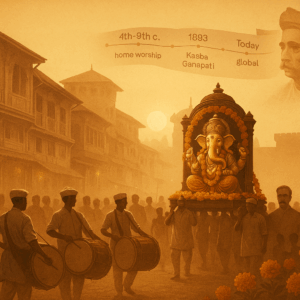
History and rise of Ganeshotsav in Pune Ganesh Chaturthi began at home. Families shaped a small clay image, placed it on a simple altar, offered
Krishna Janmashtami 2025 — celebrating the midnight appearance of Bhagavan Krishna. The sacred account from the Bhagavata Purana, puja vidhi, Dahi Handi, and the deeper teaching of divine love.
Nag Panchami 2025 — the sacred worship of the Naga Devatas. Puranic significance, the connection to Bhagavan Shiva and Bhagavan Vishnu, puja vidhi, and the ecological wisdom of serpent reverence.
Devshayani Ekadashi 2025 — the day Bhagavan Vishnu enters Yoga Nidra and the sacred Chaturmas period begins. Complete vrat vidhi, the Puranic account, and the spiritual discipline of Chaturmas.


Bhadrapada begins today in North India, opening a lunar month that moves from the midnight

The 12 Jyotirlingas of Lord Shiva — where each stands, its sacred story, and how to make the Dwadasha Jyotirlinga pilgrimage in person or in spirit this Shravan.

The Rudrabhishek is the abhishekam said to please Lord Shiva fastest. What it is, the meaning of each sacred substance, the Sri Rudram, and how it is performed at home this Shravan.

Shravan runs July 30–Aug 27 in 2026, with four Sawan Somwars (Aug 3, 10, 17, 24). Why the whole month belongs to Mahadeva — the churning of the ocean, the poison He drank, and how to keep the Sawan vrat.

Thiruvonam 2026 falls on Wednesday, August 26 — the crown of Kerala’s ten-day festival. The Bhagavata story of King Mahabali and the Vamana avatar, and why Onam is a homecoming, not a defeat.

