IndianSanskriti

Book Review: You’ve Got This, Arjuna!

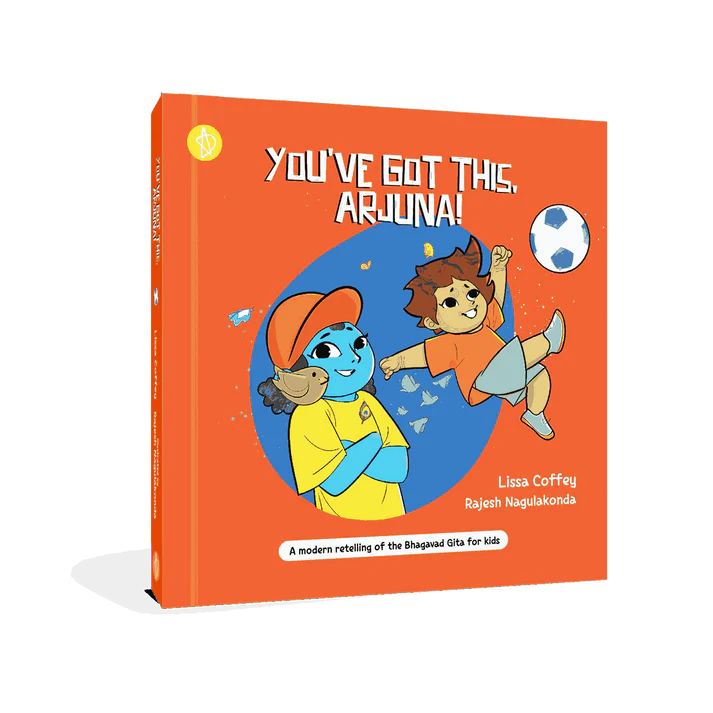
“You’ve Got This, Arjuna!” is a delightful children’s book that creatively introduces the teachings of the Bhagavad Gita through a relatable modern story. Authored by Lissa Coffey and illustrated by Rajesh Nagulakonda, this book uses the character of Arjuna, a young boy facing a big match, to convey timeless lessons about duty, perseverance, and understanding the bigger picture in life.

Content and Structure: The story is set on the eve of an important game where Arjuna, the protagonist, is filled with doubt about his participation. A conversation with his friend Krishna—an allusion to the divine guide in the Bhagavad Gita—helps him realize the true essence of the game and his role in it. This engaging narrative serves as an accessible entry point for young readers to explore the profound teachings of the Gita.

Interactive and Educational Elements: The book is designed to make complex spiritual concepts accessible to children. Through a modern-day scenario, it presents the key messages of the Bhagavad Gita in a way that is easy to understand and relatable. The dialogue between Arjuna and Krishna is simplified but retains the essence of the original teachings, making it a valuable educational tool.

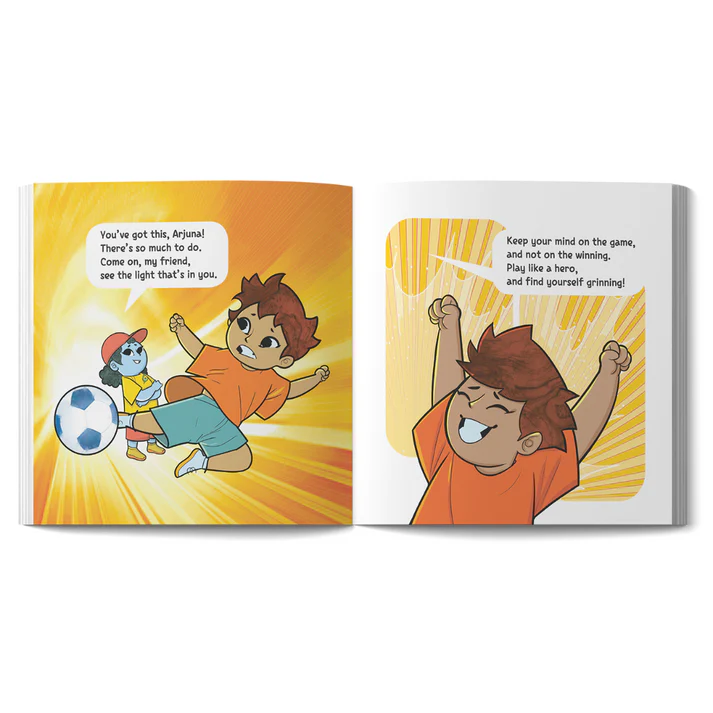
Illustrations and Visual Appeal: Rajesh Nagulakonda’s illustrations are colorful and expressive, perfectly capturing the emotions and themes of the story. The visual style is appealing to children, with characters and scenes that are both engaging and meaningful. The artwork complements the text, making the book not just a read but a visual journey.

Themes and Moral Lessons: The primary themes of the book revolve around duty, courage, and self-awareness. Arjuna’s journey in understanding his role in the game mirrors the spiritual journey of understanding one’s duty (dharma) in life. These lessons are conveyed in a way that resonates with children, helping them to grasp important moral values in a contemporary context.

Audience and Accessibility: This book is suitable for all age groups, making it a versatile addition to any library. Its language is simple enough for young readers, while the depth of its themes makes it appealing to older children and even adults. The book’s message is universal, making it a perfect gift for families looking to introduce their children to the teachings of the Bhagavad Gita in an enjoyable and modern format.

“You’ve Got This, Arjuna!” is a charming and thoughtful book that brings the wisdom of the Bhagavad Gita to life in a way that is both fun and educational. With its engaging storyline, beautiful illustrations, and profound messages, it’s a must-read for young readers and a valuable resource for parents and educators alike.

Rating: ⭐⭐⭐⭐⭐
A beautifully crafted book that makes the timeless lessons of the Bhagavad Gita accessible to children, encouraging them to find strength and purpose in their own lives.

You can learn more about the book here.
You may also like

Search the website

Like us on Facebook

Get daily updates via Email

Enter your email address:

Recent Posts

Yogini Ekadashi 2026 — The Yaksha Who Missed the Morning Flowers, and the Ekadashi That Undid His Curse

On Friday, July 10, 2026, the rare Krishna Paksha Ekadashi of Nija Ashadha arrives. The Padma Purana tells the story of Hemamali — the Yaksha gardener of Bhagavan Kubera in Alaka, whose single morning of distraction with his wife Vishalakshi cost him his form, his wife, and his celestial city. Cursed to wander the earth of Bharata as a leper for a long time, he was at last shown the way back by Sage Markandeya — a single sincere keeping of Yogini Ekadashi.

Jamai Shashthi 2026 — The Story of Maa Shashthi, the Cat, and the Wife Who Was Forgiven

Jamai Shashthi 2026 — The Story of Maa Shashthi, the Cat, and the Wife Who Was Forgiven

On Saturday, June 20, 2026, Bengali households across Bharata will welcome their married daughters and sons-in-law home for the legendary jamai-aador feast and perform the Shashthi Vrata. But behind the warmth lies a story most Bengalis know by heart and most non-Bengalis have never heard — the wife who stole the hilsa, blamed the cat, lost six sons to Maa Shashthi’s wrath, and was finally forgiven. The Vrat Katha, the vidhi, the mantras, and the deeper teaching.

Vat Purnima 2026 — The Wife Who Argued Yama Into Returning Her Husband’s Life

On Monday, June 29, 2026, women across Maharashtra, Gujarat, and southern Bharata will tie red thread around banyan trees and hear the story of Savitri — the wife who walked behind Yamaraja Himself when He came for her husband, and out-argued the Lord of Dharma into returning Satyavan’s life. The Mahabharata’s Pativrata Mahatmya Parva, the vrat vidhi, and why the banyan witnessed everything.

Nija Jyeshtha 2026 — The Real Jyeshtha Begins, and the Calendar Resumes

Nija Jyeshtha 2026 — The Real Jyeshtha Begins, and the Calendar Resumes

With Adhik Maas now closed on the Somvati Amavasya of June 15, the long-postponed festivals of Jyeshtha return — Vat Purnima (June 29, the Savitri-Yamaraja katha), Jamai Shashthi (June 20, the Bengali festival of Maa Shashthi), Sankashti Chaturthi (June 28), Yogini Ekadashi (July 10), and Devshayani Ekadashi (July 16, opening the four-month Chaturmas of Bhagavan Vishnu’s yoga-nidra). A guide to what the next four weeks hold and what the household that kept Purushottam Maas now carries forward.

The Closing of Purushottam Maas 2026 — Adhik Amavasya and the Sealing of the Month-Long Vrat

On Monday, June 15, 2026 — a rare Somvati Amavasya — the intercalary month that bears Bhagavan Vishnu’s own name comes to its close. The Acharyas teach that a vrat is not measured by its duration but by its closing. Here are the Padma Purana’s instructions for sealing the month-long Purushottam Maas vrat: the morning snan, the closing puja with the Vishnu Sahasranama, the day of dana, the Somvati Amavasya gift, and the final sarva-arpana — the offering of all merit at the feet of the Lord.

css.php