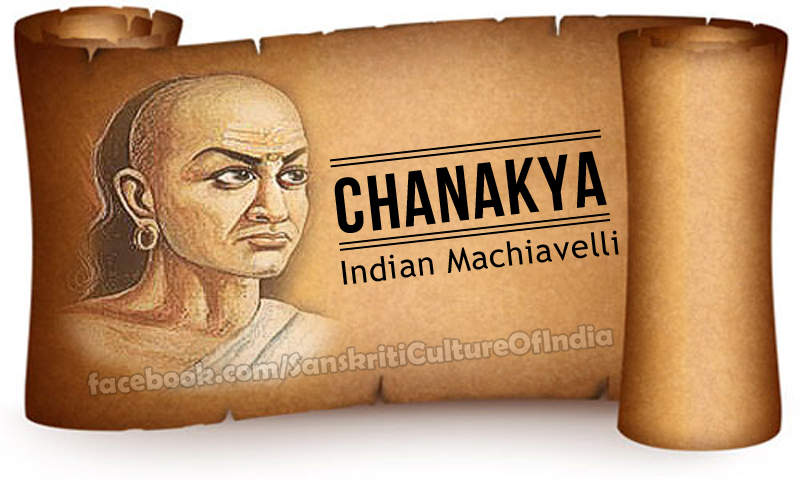
One of the greatest figures of wisdom and knowledge in the Indian history is Chanakya. Chanakya (c. 350-283 BCE) was an adviser and a prime minister to the first Maurya Emperor Chandragupta (c. 340-293 BCE), and architect of his rise to power.
Chanakya, also known as Kautilya or Vishnugupta, was born in Pataliputra, Magadh (modern Bihar), and later moved to Taxila, in Gandhar province(now in Pakistan). He was a professor (acharya) of political science at the Takshashila University and later the Prime Minister of the Emperor Chandragupta Maurya. He is widely believed to be responsible for the creation of Mauryan empire, the first of its kind on the Indian subcontinent.
He is regarded as one of the earliest known political thinkers, economists and king-makers. He was the man to envision the first Indian empire by unification of the then numerous kingdoms in the Indian sub-continent and provide the impetus for fights against the Greek conqueror Alexander. In Jawaharlal Nehru’s Discovery of India, Chanakya has been called the Indian Machiavelli.
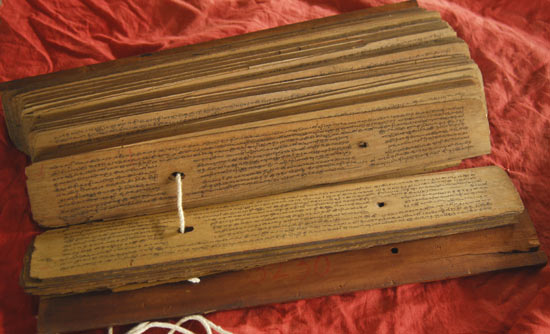 His famous work called Arthashastra is a classic example of statecraft and politics and is read in Europe even today. It is arguably the first systematic book on economics. It discusses monetary and fiscal policies, welfare, international relations and war strategies in detail. It basically consists of the principles of politics and how the state works. An able ruler has to be a ruthless leader to make sure that the state works smoothly and efficiently. He believed in four ways Enticement, Sowing dession, Punishment or war. He was the master of shrewd act of diplomacy.
Another book attributed to Chanakya was Nitishastra which is also known as Chankya Niti. Many of his nitis or policies have been compiled under this book. Nitishastra is a treatise on the ideal way of life, and shows Chanakya’s in depth study of the Indian way of life.
The legends associated with Chanakya are very interesting and provide a testimony of his greatness.
Legends:
• When Chanakya was born he had a full set of teeth, which is a sign that he would become a king or an emperor. But since he was born in a Brahmin family, it was considered inappropriate. Thus, his teeth were broken and it was predicted that he would make another person a king and rule through him.
• Even as a child, Chanakya had the qualities of a born leader. His level of knowledge was beyond children of his age.
• Chanakya was thrown out of the court of King Nanda as he was a blunt man and spoke his mind clearly. Chanakya swore he would take revenge.
• Chanakya comes across Chandragupta as a young child. Even at that age, he was a born leader and showed the qualities of an able Emperor. He was the guiding force behind Chandragupta and the vital person who made him an able Emperor.
• Chanakya adds poison in little amounts daily in Chandragupta’s food in order to make him immune to poison, lest some enemy tries to poison him.
• However Chandragupta was unaware about this and once gave a little food to his wife who was in the ninth month of pregnancy. She didn’t survive but Chanakya cut open her belly and took out the baby.
• This baby grew up to become an able emperor named Bindusara. He had a minister named Subandhu who did not like Chanakya. He told Bindusara that Chanakya had killed his mother.
• Without assessing facts, Bindusara confronted Chanakya. On knowing the whole story, he felt ashamed at his hasty actions and begged for forgiveness. He asked Subandhu to go and apologize and make Chanakya come back.
• Subandhu was very cunning and on the pretext of going to apologize to Chanakya, he killed him. Thus, ended the life of a great person like Chanakya just because of political rivalry.
His main philosophy was “A debt should be paid off till the last penny; An enemy should be destroyed without a trace”. He seemed to have lived – and died – by his philosopy.