While at yoga class or watching a yoga video, you may have noticed certain hand movements that are held while in a pose or during meditation. These are called Hand Mudras, and they have a specific and deliberate purpose. In this post, I’ll demonstrate various mudras and explain their meanings and benefits.
What is a Mudra?
Mudra is Sanskrit for seal, mark, or gesture. Typically, mudras are used during meditation or pranayama as a way to direct energy flow in the body. According to yoga, different areas of the hand stimulate specific areas of the brain. By applying light pressure to these areas of the hand, you will “activate” the corresponding region of the brain.
In addition to the “reflexology” aspect of hand mudras, these positions symbolize various feelings, emotions, and states of being. Hand positions play a part in many societies and religions. The Christian church uses many hand movements during mass – all of which symbolize various important ideas. Even in modern Western culture we have hand movements that are associated with a meaning: clapping, flipping the bird, or holding the hands up and palms open to signify surrender.
The mudras described below are an ancient part of the Buddhist and Hindu traditions. Although they were developed thousands of years ago – their meaning is still understood and relevant today.
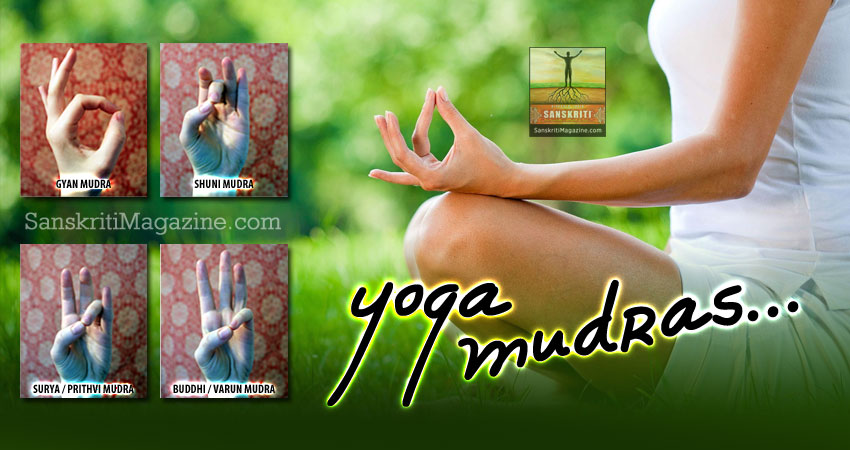
Gyan Mudra
Description: The index finger and thumb are lightly touching at the tips. The remaining three fingers are held out gently (not ridged). This is one of the most recognized and commonly used mudras. In many depictions of the Buddha, you will notice he holds this mudra.
Meaning: This hand mudra is also known as the “seal of knowledge.” The thumb represents fire and divine nature and the index finger represents air and individual human consciousness. When the two fingers are placed together in Gyan Mudra, it is meant to symbolize and encourage Wisdom and Expansion.
Benefits: When used during meditation or pranayama, Gyan mudra can help ease drowsiness, inspire creativity, and increase concentration.
Shuni Mudra
Description: The middle finger and thumb are lightly touching at the tips. The remaining three fingers are held out gently (not ridged).
Meaning: This hand mudra is also known as the “seal of patience.” The middle finger represents Aakash and courage to hold duty and responsibility. The thumb represents fire and divine nature. When the two fingers are placed together in Shuni Mudra, it is meant to symbolize and encourage Patience, Discernment, Focus and Discipline.
Benefits: When used during meditation or pranayama, Shuni Mudra can help encourage patience and the courage to fulfill one’s responsibilities. It also helps to develop noble thoughts and turn negative emotions into positive ones.
Surya Ravi Mudra or Prithvi Mudra
Description: The ring finger and thumb are lightly touching at the tips. The remaining three fingers are held out gently (not ridged).
Meaning: This hand mudra is also known as the “seal of life” or “seal of the sun.” The ring finger represents earth, energy, strength and endurance. The thumb represents fire and divine nature. When the two fingers are placed together in Surya Ravi Mudra, it is meant to symbolize and encourage energy, balance, health, and vitality.
Benefits: When used during meditation or pranayama, Surya Ravi Mudra can give you energy, positivity, intuition, and help encourage positive change in your life. It also helps to build and invigorate the bodily tissues.
Buddhi Mudra or Varun Mudra
Description: The little finger and thumb are lightly touching at the tips. The remaining three fingers are held out gently (not ridged).
Meaning: This hand mudra is also known as the “seal of mental clarity.” The little finger represents water and communication. The thumb represents fire and divine nature. When the two fingers are placed together in Buddhi Mudra, it is meant to symbolize and encourage openness and fluid communication.
Benefits: When used during meditation or pranayama, Buddhi Mudra can encourage clear and effective communication. It also helps balance the water element in the body, activating the salivary glands and moistening dry eyes and skin.
~ By Claire Austen