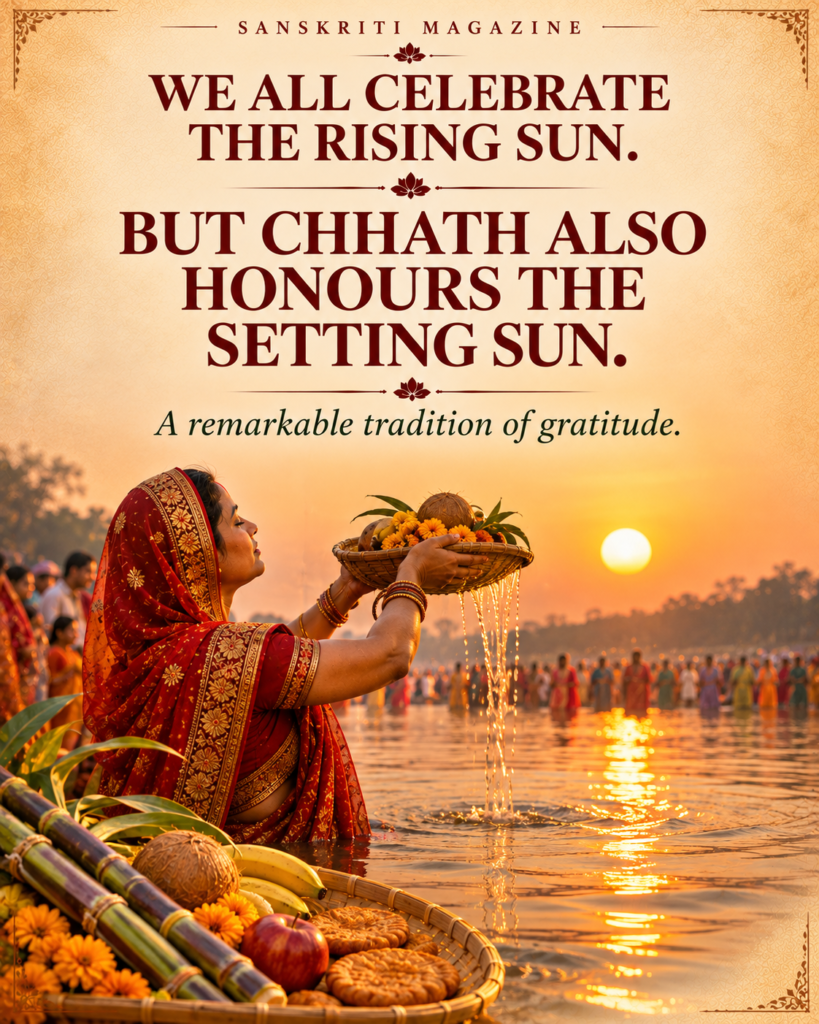
We are familiar with celebrating sunrise. A rising sun suggests energy, renewal and the beginning of a new day. Yet Chhath Puja includes a remarkable counterpart: devotees honour the setting sun before returning to worship the rising sun the next morning. It is one of the most recognisable features of the festival, and one that deserves to be understood on its own terms.
Two offerings, two moments of the same devotion
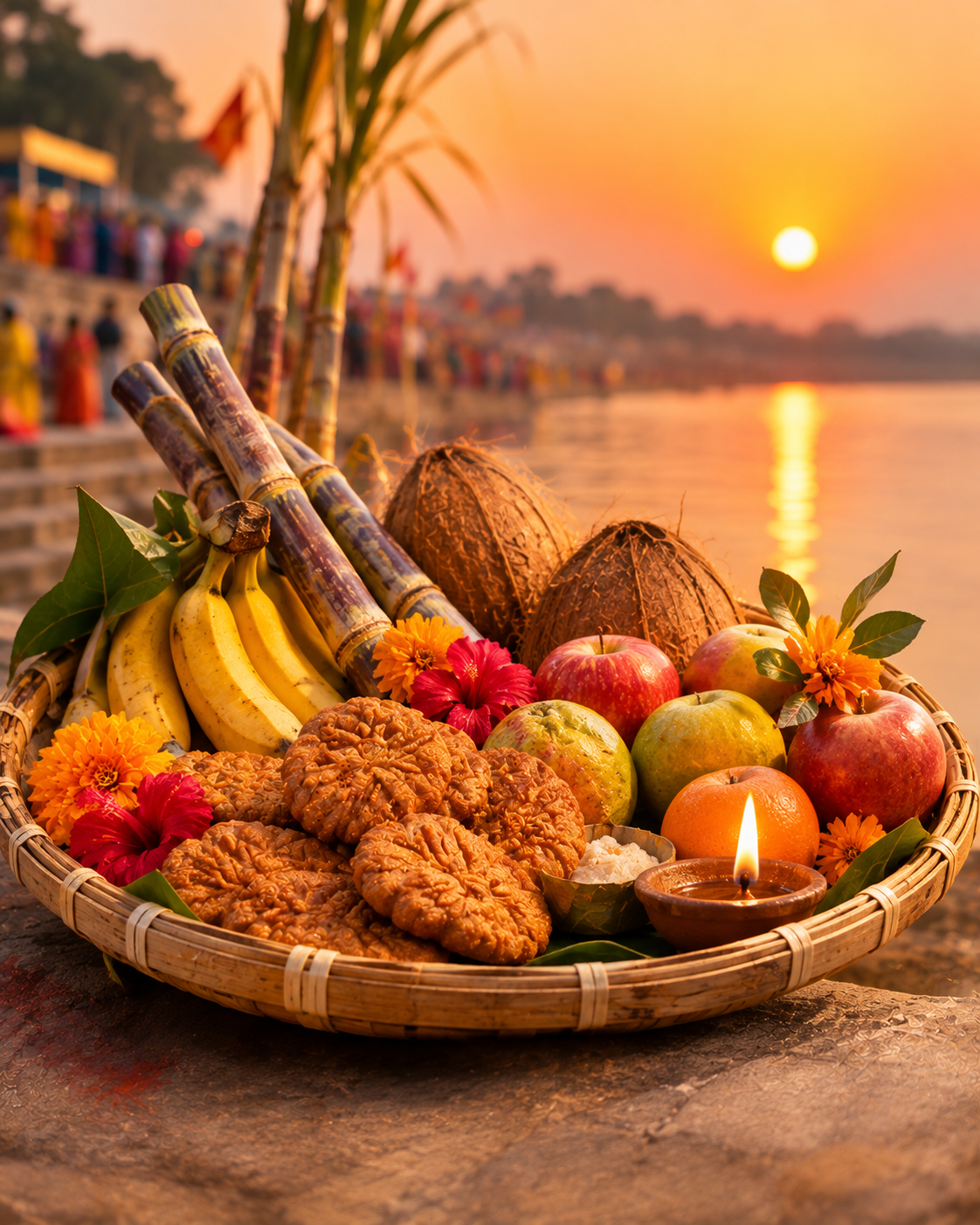
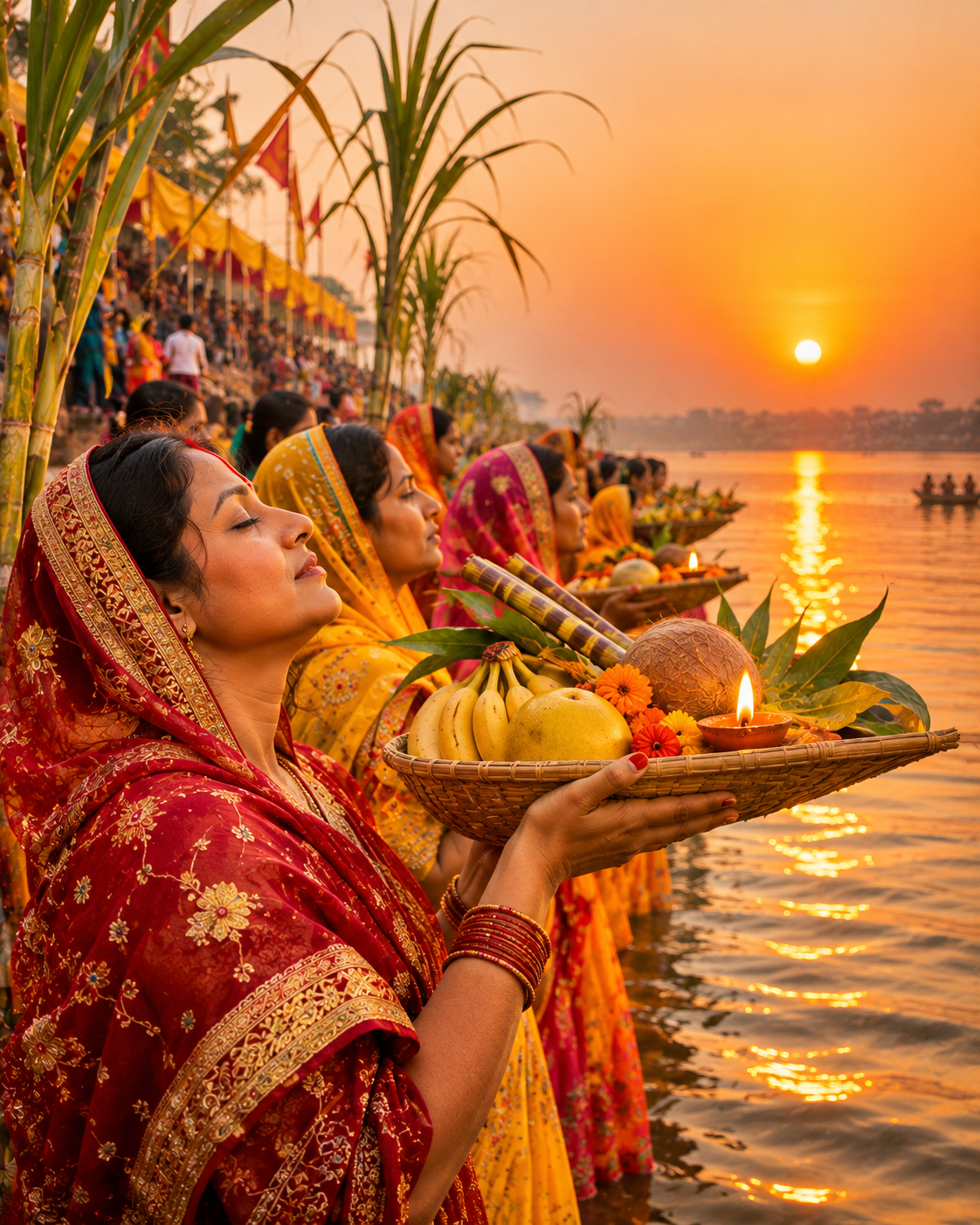
During Chhath, Sandhya Arghya is offered as the sun sets on the festival’s third day. The next morning, Usha Arghya is offered at sunrise. Families gather with traditional offerings at rivers, ponds or other appropriate water bodies, while the fasting devotee offers prayers to Surya Dev and Chhathi Maiya.
Bihar Tourism specifically describes Chhath as distinctive for honouring the setting sun alongside the rising sun. The ritual is not a modern addition invented to create a memorable festival scene; it is integral to the observance as practised by generations of devotees.
What does the setting sun signify?
The traditional offering is an act of worship. It also permits a thoughtful reflection: we tend to praise the arrival of good things and overlook the work that sustains them. The sun that sets has illuminated and nourished life throughout the day. Offering arghya at dusk can invite us to remember what has already been received, rather than only what we hope will come.
This is a contemporary reflection on the ritual, not a single scriptural definition that all Chhath families would use. The tradition carries layered meanings shaped by region, songs, family histories and lived devotion.
Why return at sunrise?
Usha Arghya completes the paired observance. The family returns before dawn, offerings are presented as daylight appears, and the fasting devotee concludes the vrat after the final worship. The change from dusk to dawn creates a natural rhythm: care and restraint through the night, followed by the shared relief and celebration of the final morning.
The two offerings belong together. One should not be treated as secondary simply because photographs of the other are more familiar.
The 2026 dates
- Sunday, 15 November 2026: Sandhya Arghya to the setting sun.
- Monday, 16 November 2026: Usha Arghya to the rising sun, followed by parana.
For New Delhi, Drik Panchang lists sunset on 15 November at about 5:28 PM and sunrise on 16 November at about 6:44 AM. Timings vary across India, so check a local calendar rather than forwarding a Delhi time to friends and relatives in other cities.
For the preparations on the preceding two days, see our complete Chhath Puja 2026 four-day guide.
What the ghat reveals about the festival
At a Chhath ghat, the scene is often collective but not uniform. One family may arrange offerings in an inherited pattern, another may sing a song learned from a grandmother, and another may quietly help the fasting devotee reach the water. Bamboo soop and daura are carried carefully; fruits, thekua and seasonal produce are prepared in advance. Together they make the offering more than a fleeting gesture.
Chhath is closely connected to Bihar, Jharkhand and eastern Uttar Pradesh, but the devotion travels with families who have moved to other parts of India and the world. Across changing settings, the central image remains: worship at dusk and worship again at dawn.
A lesson in gratitude, without claiming science that is not there
It is tempting to turn every old ritual into a claim about modern astronomy or medicine. Chhath does not need exaggerated scientific claims to be meaningful. Its history, discipline, music, craftsmanship and devotion are significant in their own right.
The rising and setting sun offer a powerful image for our lives: appreciate beginnings, but do not forget what has supported you along the way. That is a reflection worth carrying from the ghat into everyday life.
Questions readers often ask
Does Chhath Puja worship the moon?
Chhath is primarily associated with Surya Dev and Chhathi Maiya. Its principal arghya offerings are to the setting and rising sun.
Is Sandhya Arghya on the last day?
No. Sandhya Arghya is on the third day; Usha Arghya and the conclusion of the fast are on the fourth.
Why are bamboo baskets and thekua used?
They are part of traditional offerings and preparations. Explore the ingredients, containers and customs in our guide to Chhath offerings and their meanings.
Sources: Bihar Tourism: Chhath Puja and Drik Panchang: Chhath Puja 2026.