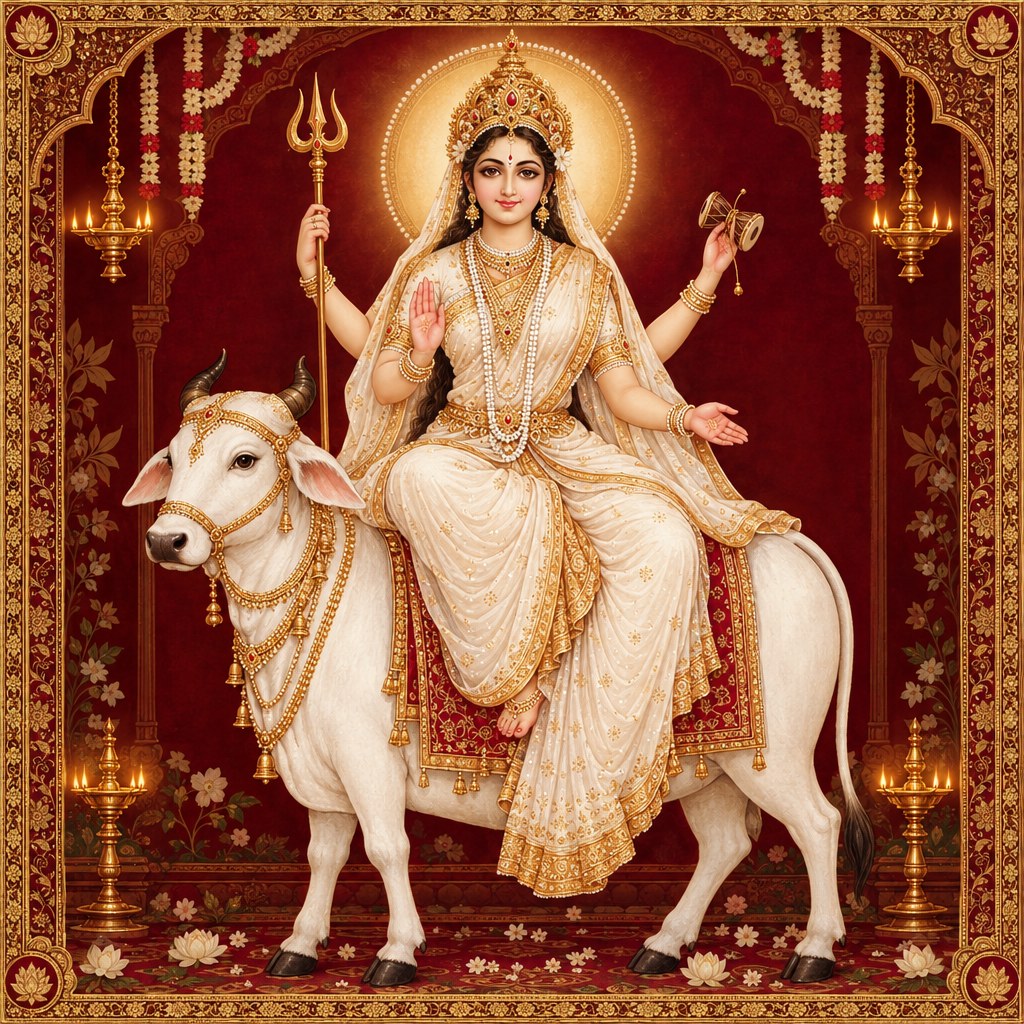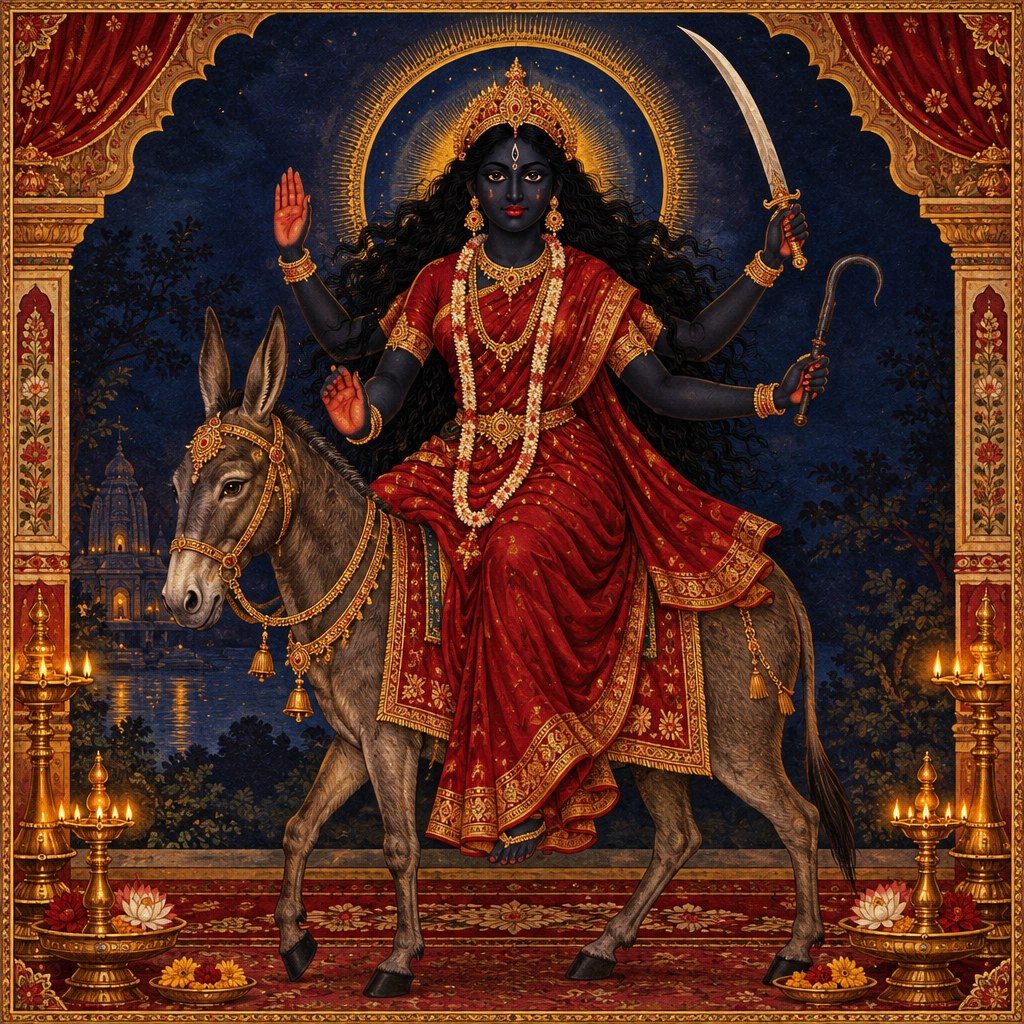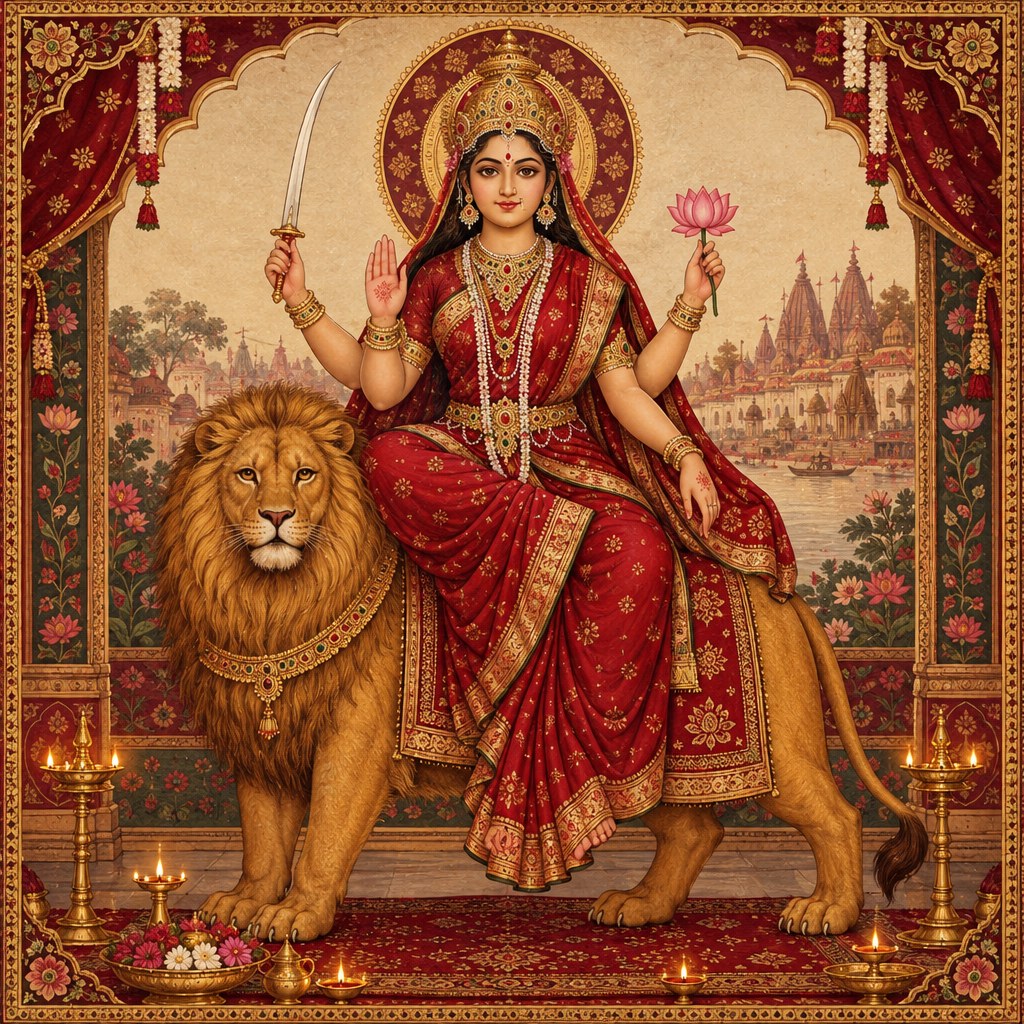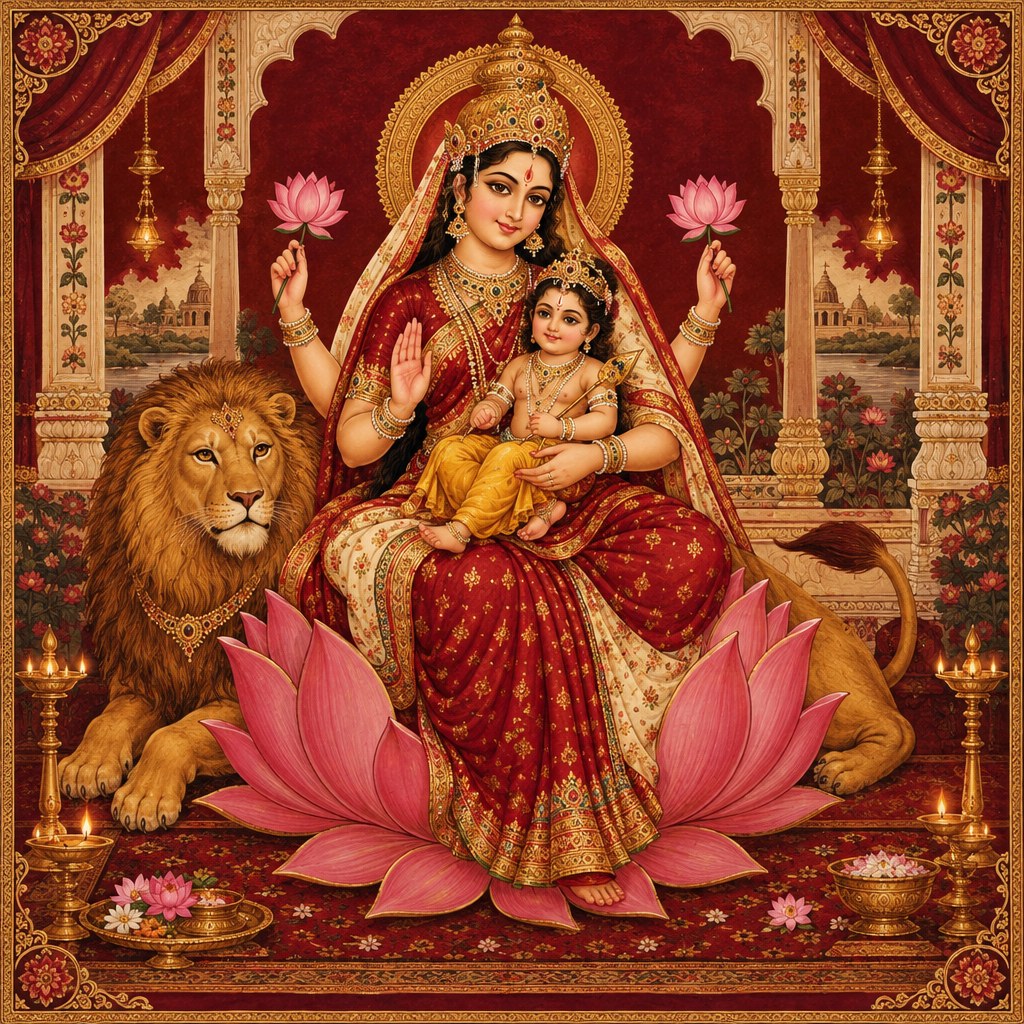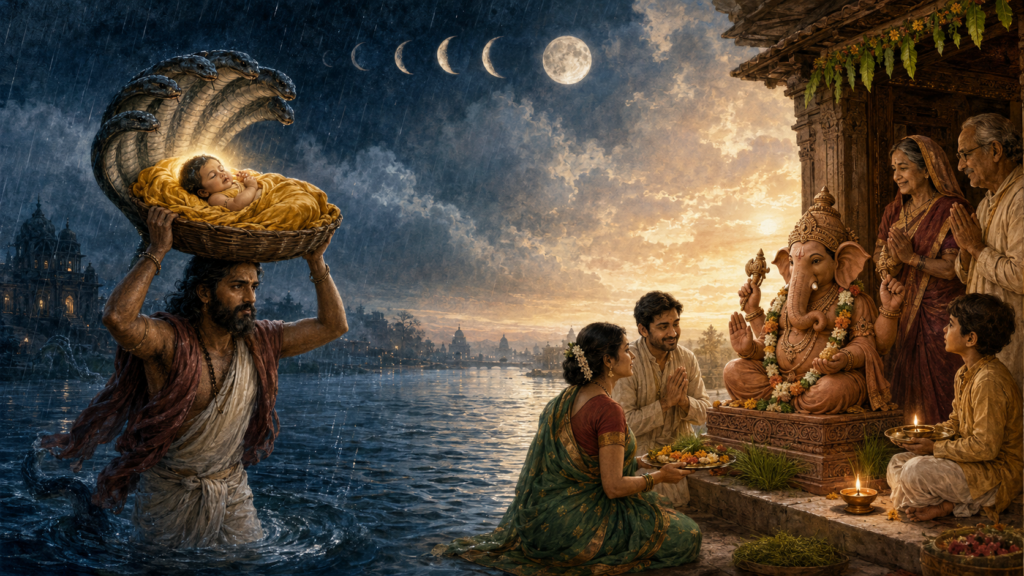
Bhadrapada begins today in North India, opening a lunar month that moves from the midnight birth of Bhagavan Krishna to the arrival of Ganesha and the farewell of Anant Chaturdashi.
Yesterday, homes across India marked Raksha Bandhan with sacred threads, family promises and prayers for protection.
Today, the lunar calendar turns.
In the North Indian Purnimanta tradition, Saturday, August 29, 2026 marks the beginning of Bhadrapada, the month that follows Shravana. It begins quietly, during Krishna Paksha, as the moon starts to wane. Yet within a few days comes one of the most loved nights in the Hindu calendar: Krishna Janmashtami.
After Amavasya, the month changes character. The moon begins to grow. Hartalika Teej and Gowri Habba arrive. Ganesha is welcomed into homes and community pandals. Rishi Panchami honours the Saptarishis. Radha Ashtami fills Braj with devotion. The month reaches its final public moment with Anant Chaturdashi and Ganesh Visarjan.
Bhadrapada is not built around one festival. It carries a complete movement: from birth to homecoming, from private prayer to shared celebration, and from welcome to farewell.
When Does Bhadrapada Begin in 2026?
For Delhi, Noida and regions following the North Indian Purnimanta calendar, Bhadrapada begins on Saturday, August 29, 2026 and concludes with Bhadrapada Purnima on Saturday, September 26, 2026.
The month begins on Krishna Paksha Pratipada, the first day after Shravana Purnima.
Readers may see a different month name in calendars from Maharashtra, Gujarat, Karnataka, Andhra Pradesh, Tamil Nadu and other regions that follow the Amanta system. In that system, a lunar month ends on Amavasya rather than Purnima. The same tithis and festivals remain, but the naming of the waning fortnight may differ.
This article follows the North Indian Purnimanta calendar for Delhi and Noida. Festival observance can also vary by sampradaya and local panchang, especially for Janmashtami and Hartalika Teej.
Bhadrapada 2026: Important Dates
| Date | Day | Observance |
|---|---|---|
| August 29 | Saturday | Bhadrapada begins in the North Indian calendar |
| August 30 | Sunday | Kajari Teej |
| September 3 | Thursday | Smarta Krishna Janmashtami |
| September 4 | Friday | ISKCON and Vaishnava Krishna Janmashtami |
| September 6 | Sunday | Aja Ekadashi |
| September 10 | Thursday | Bhadrapada Amavasya and Pithori Amavasya |
| September 13 | Sunday | Hartalika Teej, Gowri Habba and Varaha Jayanti |
| September 14 | Monday | Ganesh Chaturthi |
| September 15 | Tuesday | Rishi Panchami |
| September 18 | Friday | Radha Ashtami |
| September 22 | Tuesday | Parsva Ekadashi and Vamana Jayanti |
| September 25 | Friday | Anant Chaturdashi and Ganesh Visarjan |
| September 26 | Saturday | Bhadrapada Purnima and the beginning of Pitru Paksha |
The dates above follow a Delhi-based panchang. Families should follow their local tradition for vrat and puja timings.
Why Is the Month Called Bhadrapada?
Traditional lunar months are connected to the nakshatra near which the full moon appears. The name Bhadrapada is associated with the Purva Bhadrapada and Uttara Bhadrapada nakshatras.
The month usually falls across August and September, during Varsha Ritu, when much of India is still receiving the monsoon. The season is visible in the festivals themselves: green leaves, clay images, flowers, grain, curd, sacred grass and water all become part of worship and community life.
This is one reason Bhadrapada feels grounded in the living world. Its observances are not separated from the season. They enter the courtyard, the kitchen, the riverbank, the village field and the neighbourhood street.
Krishna Paksha: The Month Begins in Darkness
Bhadrapada begins with the waning moon in the Purnimanta calendar. The nights grow darker until Amavasya.
At the centre of this fortnight is Krishna Janmashtami, observed on the Ashtami tithi of Krishna Paksha.
The setting of Krishna’s birth is itself a movement through darkness. He is born at midnight in Mathura, while Devaki and Vasudeva remain imprisoned under Kamsa. Vasudeva then carries the newborn Krishna across the Yamuna to Gokul.
The sacred account does not deny fear, danger or uncertainty. It places divine birth within them.
That may be why Janmashtami continues to speak so powerfully across generations. The night is not presented as empty or defeated. It becomes the very moment in which hope is born.
In 2026, calendars distinguish between Smarta Janmashtami on September 3 and ISKCON or Vaishnava Janmashtami on September 4. Families should follow the practice of their temple, sampradaya or local panchang.
From Amavasya to the Growing Moon
The new moon forms a natural threshold within Bhadrapada.
The first half carries the mystery of birth, fasting and inward reflection. The bright fortnight that follows becomes more visible and communal. Homes are prepared. Clay is shaped. Flowers and durva grass are gathered. Women come together for vrat and puja. Public spaces begin to fill with music.
The calendar does not simply move from one date to another. Its mood changes with the moon.
Hartalika Teej and Gowri Habba: The Resolve of Devi Parvati
On Bhadrapada Shukla Tritiya, many families observe Hartalika Teej or Gowri Habba.
The tradition remembers Devi Parvati’s unwavering tapas and her determination to unite with Bhagavan Shiva. Women in different regions observe the day through fasting, prayer, songs, mehendi and worship of Parvati or Gowri.
Customs vary widely. Some women keep a strict fast, while others adapt the observance according to health, age and family tradition. The heart of the day lies in sankalpa: a clear and devoted intention.
In 2026, Delhi-based calendars place Hartalika Teej on September 13, while some published calendars list September 14 because Tritiya spans the two civil dates. Readers observing the vrat should confirm the date followed by their family or local temple.
Ganesh Chaturthi: Ganesha Comes Home
If Janmashtami belongs to midnight, Ganesh Chaturthi belongs to the prepared home.
On Monday, September 14, 2026, families welcome Ganesha with clay murtis, flowers, durva grass, lamps and offerings such as modak. In Maharashtra, Goa, Karnataka, Telangana, Andhra Pradesh and many other regions, the celebration extends beyond individual homes into neighbourhood pandals and community gatherings.
The arrival is joyful, but it is never permanent.
The murti is welcomed, worshipped and eventually carried for visarjan. This rhythm gives Ganeshotsav its deeper emotional force. We prepare with love even while knowing that the visible form must return to the elements.
Choosing an unpainted natural-clay murti, limiting plastic decoration and using safe immersion arrangements allow the celebration to remain closer to that principle.
Rishi Panchami: Remembering the Saptarishis
The day after Ganesh Chaturthi is Rishi Panchami, observed on Bhadrapada Shukla Panchami.
The day honours the Saptarishis, the seven Rishis remembered as carriers of wisdom, discipline and sacred knowledge. Practices differ by region and family, but commonly include purification, fasting, prayer and remembrance of the Rishi tradition.
Rishi Panchami also asks a question that feels relevant beyond ritual: what knowledge have we inherited, and how responsibly are we carrying it forward?
Radha Ashtami: Devotion Without Possession
Fifteen days after Krishna Janmashtami comes Radha Ashtami, celebrated on Bhadrapada Shukla Ashtami.
In 2026, it falls on Friday, September 18.
The day is observed with special devotion in Barsana, Vrindavan and across the Braj region. Shri Radha is remembered not merely as a figure beside Krishna, but as the highest expression of bhakti: love that does not seek ownership or reward.
Janmashtami and Radha Ashtami form a meaningful pair within Bhadrapada. One remembers the arrival of Krishna. The other turns attention towards the nature of devotion itself.
Vamana Jayanti and Parsva Ekadashi
Bhadrapada Shukla Paksha also carries Vamana Jayanti and Parsva Ekadashi, also known in many traditions as Parivartini Ekadashi.
Vamana, the dwarf Brahmin form of Bhagavan Vishnu, approaches Mahabali and asks for three steps of land. The sacred account is remembered in different ways across India, including within Kerala’s Onam tradition.
The story turns on the meaning of measure. A request that appears small reveals a cosmic scale. Power meets humility. Possession meets surrender. Mahabali loses a kingdom, yet becomes remembered for the dignity with which he keeps his word.
Anant Chaturdashi: The Farewell That Completes the Month
On Friday, September 25, 2026, Bhadrapada reaches Anant Chaturdashi.
The day is dedicated to Bhagavan Vishnu in his Anant, or infinite, form. In several traditions, devotees worship Vishnu, Yamuna and Sheshanaga and tie the Anant Sutra, a sacred thread with fourteen knots.
The same day commonly marks the final Ganesh Visarjan.
Streets that welcomed Ganesha now gather to say farewell. The chants are celebratory, yet the moment carries tenderness. The murti returns to water or earth, while the blessing is carried back into the home.
The farewell is not treated as an ending without return. It is accompanied by the hope that Ganesha will come again.
How to Observe Bhadrapada at Home
Bhadrapada does not require every family to observe every vrat. A meaningful month can be built through a few simple practices:
- Mark the major tithis on your family calendar.
- Read the Krishna Janma account with children before Janmashtami.
- Prepare one traditional offering at home and explain why it is made.
- Welcome Ganesha with a natural-clay murti or a reusable family murti.
- Learn the names of the Saptarishis on Rishi Panchami.
- Read about Shri Radha’s place in the bhakti traditions of Braj.
- Reduce plastic, chemical colour and waste during Ganeshotsav.
- Ask older family members how these days were observed in their childhood.
The aim is not to make the calendar heavier. It is to make it more meaningful.
A Month of Arrival, Devotion and Return
Bhadrapada begins in the darkness of the waning moon and grows towards some of the year’s most visible celebrations.
Krishna is born at midnight.
Ganesha is brought home.
Radha teaches the nature of devotion.
Anant reminds us of what has no end.
Then the murti is carried away, the crowds disperse and the calendar turns towards the remembrance of ancestors.
What remains is not only the festival we celebrated, but the value we chose to carry forward.
What will Bhadrapada bring into your home this year?