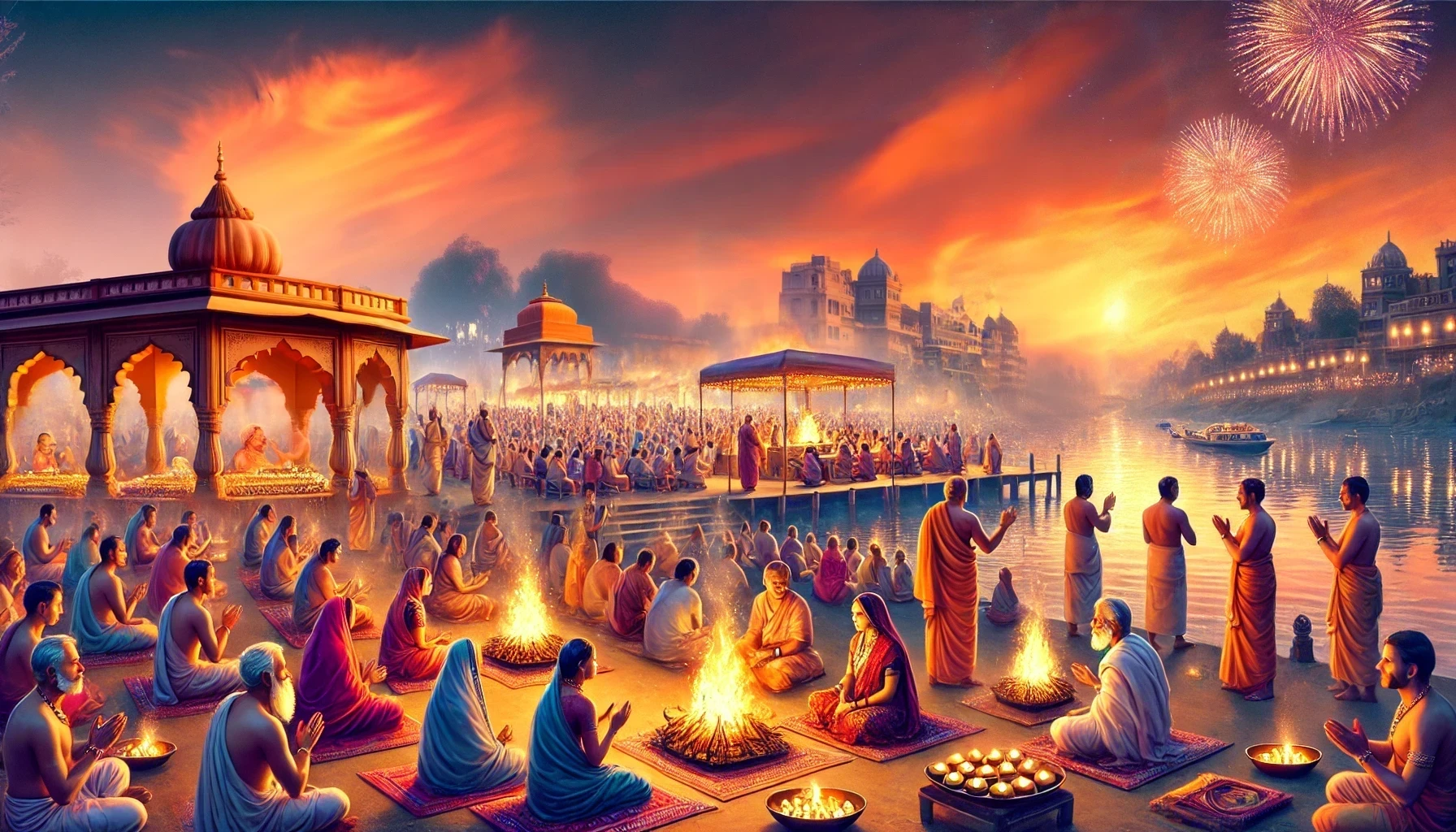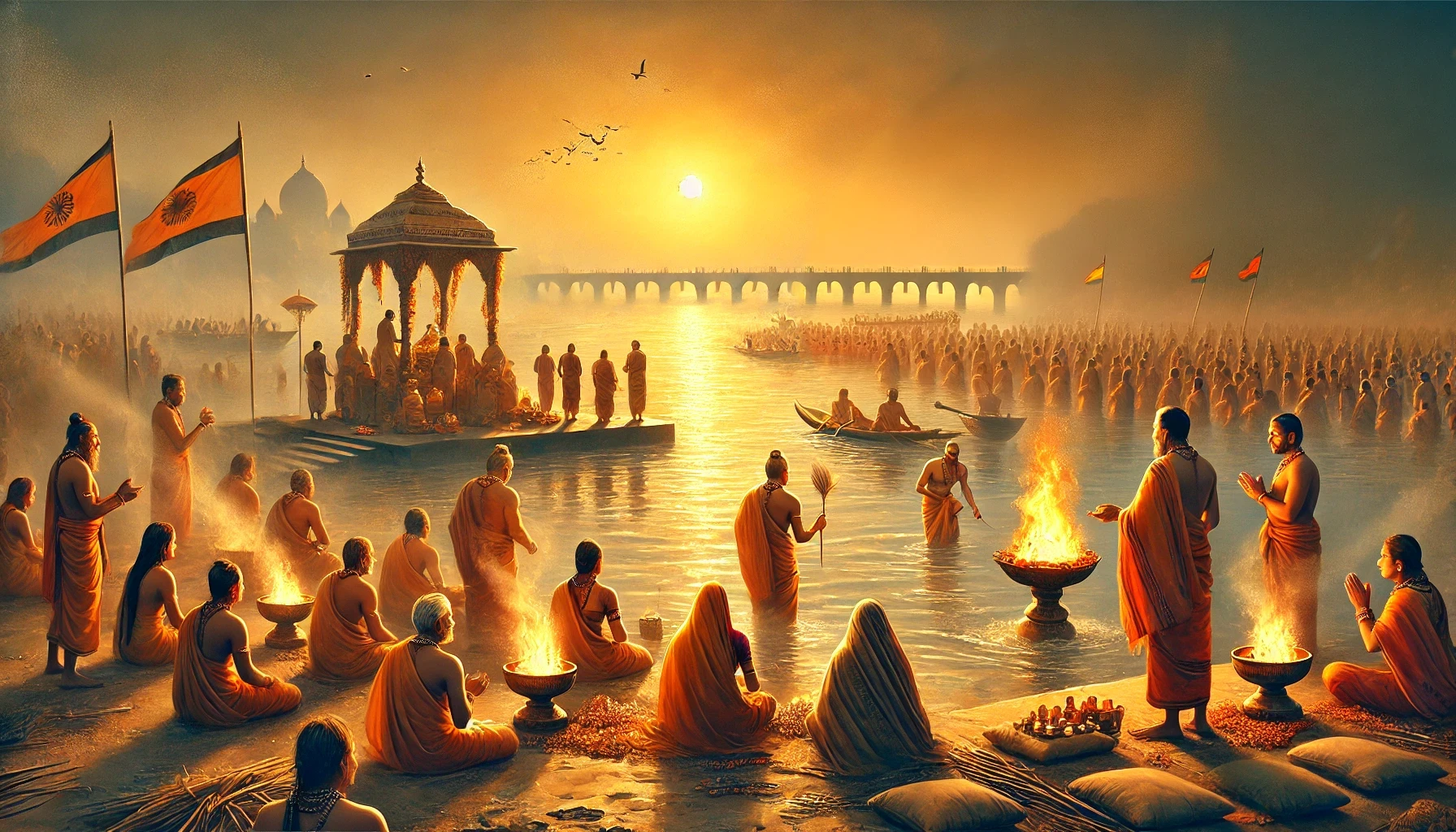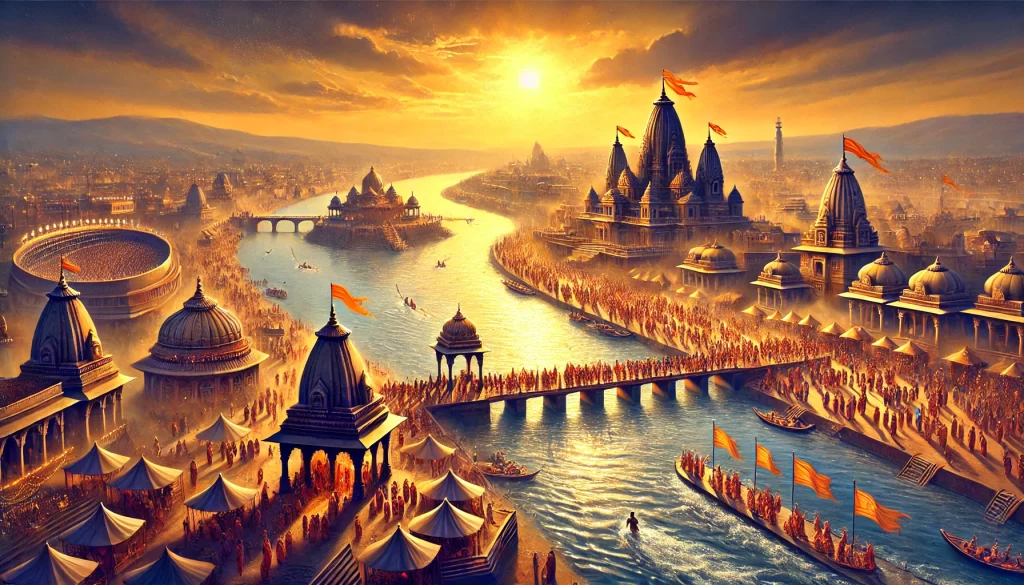
Prayagraj, formerly known as Allahabad, is one of the holiest cities in India and the sacred site of the Maha Kumbh Mela 2025. Revered as Tirtharaj (the King of Pilgrimage Sites), this ancient city holds immense spiritual, historical, and cultural significance.
At the heart of Prayagraj lies the Triveni Sangam, the confluence of three sacred rivers—Ganga, Yamuna, and Saraswati. This celestial meeting point is believed to be charged with divine energy, making it a gateway to spiritual purification, liberation (moksha), and eternal blessings.
But what makes Prayagraj so special? Why is the Triveni Sangam considered one of the most auspicious places in Hinduism? Let’s explore the sacred geography, historical significance, and spiritual importance of this divine city.
Why is Prayagraj Called “Tirtharaj” (King of Pilgrimages)?
In Hindu traditions, Prayagraj is regarded as the most sacred of all pilgrimage sites. According to ancient scriptures, a visit to Prayagraj and a dip at the Triveni Sangam grants more spiritual merit (punya) than visiting any other tirtha (holy place).
Key Reasons for Prayagraj’s Supreme Status:
- It is the only place where three sacred rivers unite.
- The site is mentioned in Vedic texts, Puranas, and the Mahabharata as a spiritual epicenter.
- It is believed to be the place where Lord Brahma performed the first yajna (sacrificial ritual) after creating the universe.
- It hosts the grandest Kumbh Mela, a once-in-12-year event where millions seek spiritual liberation.
This is why saints, sages, and seekers have journeyed to Prayagraj for thousands of years to experience its divine energy and seek moksha.
The Triveni Sangam: The Meeting of Three Sacred Rivers
The Triveni Sangam is where the Ganga, Yamuna, and Saraswati rivers merge into one.
- Ganga (The Giver of Liberation): Flowing from the Himalayas, she is the embodiment of purity and moksha.
- Yamuna (The Symbol of Devotion): Associated with Lord Krishna, her waters represent spiritual wisdom and love.
- Saraswati (The Hidden River of Knowledge): Although invisible today, she is said to flow underground, carrying divine wisdom.
Why is a Bath at Triveni Sangam So Special?
Taking a holy dip at Sangam is believed to:
✅ Cleanse past sins (paap mukti)
✅ Free the soul from the cycle of birth and death (moksha)
✅ Bring spiritual blessings and good fortune
During Maha Kumbh Mela, the Sangam waters are said to be infused with Amrit (nectar of immortality), making them even more powerful.
Prayagraj in Ancient Scriptures
The sanctity of Prayagraj is mentioned in many ancient texts, including:
- Rigveda & Atharvaveda – Describes Prayagraj as the divine land of yajnas (rituals) and rishis (sages).
- Matsya Purana – States that bathing at the Sangam during Kumbh Mela grants the same merit as performing 100 Ashwamedha Yajnas (horse sacrifices).
- Mahabharata – Records how Yudhishthira and the Pandavas visited Prayagraj and took a dip in the holy confluence.
- Ramayana – Mentions Lord Rama’s visit to Prayagraj, where he met Sage Bharadwaj before proceeding to exile.
These historical references affirm that Prayagraj has been a sacred site for millennia, drawing devotees, kings, and sages alike.
The Role of Prayagraj in Kumbh Mela
Why Was Prayagraj Chosen for the Grandest Kumbh?
The origins of Kumbh Mela are tied to the legend of the Samudra Manthan (churning of the ocean), when drops of Amrit (nectar of immortality) fell in four locations—Prayagraj, Haridwar, Ujjain, and Nashik.
Significance of Kumbh in Prayagraj:
- It hosts the Maha Kumbh – The largest and most auspicious Kumbh, occurring once every 144 years.
- It is the holiest bathing site – The Shahi Snan (Royal Bath) by Naga Sadhus and saints at the Sangam marks the spiritual high point of the festival.
- It attracts millions of devotees seeking moksha – A dip in the Sangam during Kumbh is said to guarantee spiritual liberation.
This makes Prayagraj the spiritual epicenter of Kumbh Mela.
Sacred Temples & Ashrams in Prayagraj
Apart from the Triveni Sangam, Prayagraj is home to several ancient temples and ashrams, including:
- Bade Hanuman Mandir – Houses a unique reclining idol of Lord Hanuman.
- Akshayavat (The Immortal Banyan Tree) – Believed to have existed since the time of Lord Rama.
- Alopi Devi Temple – Dedicated to Goddess Sati, where her body is believed to have vanished.
- Swaraj Bhawan & Anand Bhawan – The historical homes of Mahatma Gandhi and Jawaharlal Nehru, adding to the city’s legacy.
These spiritual landmarks add to the rich cultural and religious significance of Prayagraj.
Prayagraj is more than just a city; it is a spiritual powerhouse, a divine pilgrimage, and the heart of Kumbh Mela. The Triveni Sangam remains one of the holiest places in India, where millions gather to experience divine purification, enlightenment, and liberation.
As Maha Kumbh Mela 2025 unfolds, Prayagraj will once again witness the largest spiritual gathering in human history, reaffirming its status as the Tirtharaj, the King of Holy Sites.