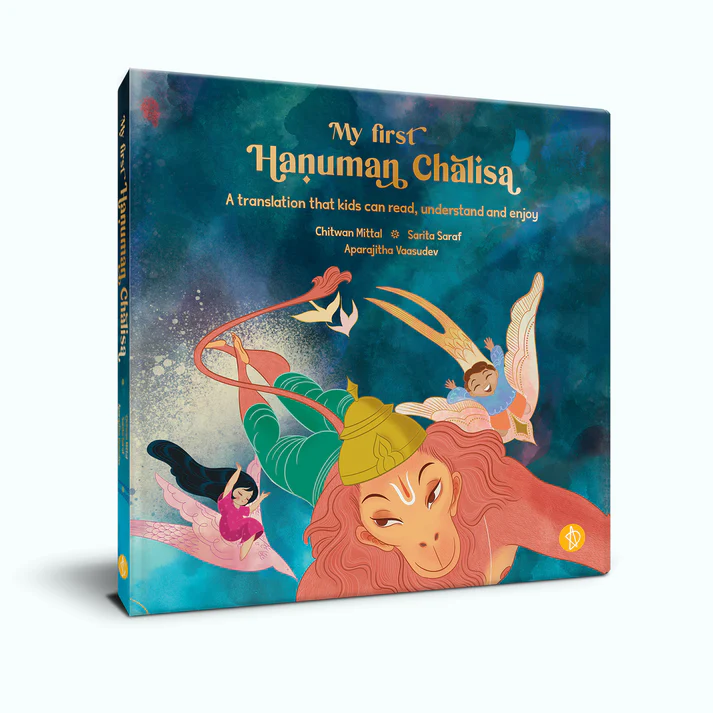
“My First Hanuman Chalisa – Second Edition” is a remarkable book that brings the essence of one of Hinduism’s most cherished prayers into the lives of young readers. Authored by Chitwan Mittal, with vibrant illustrations by Aparajitha Vaasudev, and expertly translated by Sarita Saraf, this book is designed to make the Hanuman Chalisa accessible to children while preserving its spiritual depth. It’s more than just a book; it’s a cultural bridge that connects generations through the timeless words of Tulsidas.
Content and Structure: The book presents a simplified translation of the Hanuman Chalisa, breaking down the original Awadhi verses into language that is easy for children to understand. Each verse is accompanied by word meanings that provide context and clarity, making it easier for young readers to grasp the significance of the prayer. The thoughtful structure ensures that readers not only recite the words but also understand the stories and virtues embodied in them, such as devotion, strength, and humility.
Interactive Elements: A standout feature of this edition is the inclusion of a QR code that links to an audio recording of the Hanuman Chalisa. This allows readers to hear the verses as they were traditionally sung, offering an immersive auditory experience that complements the text. This interactive element is particularly valuable for children who may benefit from hearing the pronunciation and rhythm of the prayer as they learn.
Illustrations and Design: The illustrations by Aparajitha Vaasudev are a visual treat, bringing the stories of Hanuman to life with vibrant colors and dynamic compositions. Each page is designed to engage young readers, with imagery that is both culturally rich and visually appealing. The 9″x9″ hardback format gives the book a substantial feel, making it a durable and cherished addition to any child’s bookshelf.
Educational Value: Beyond its spiritual teachings, “My First Hanuman Chalisa” serves as an educational tool that introduces children to important aspects of Hindu culture and language. The bilingual presentation in both English and Hindi allows for linguistic development, making it an excellent resource for parents and educators who wish to teach children about Indian heritage.
Themes and Moral Lessons: At its core, the Hanuman Chalisa is a hymn of devotion and strength, and this book distills these themes into lessons that resonate with young readers. Through the verses, children learn about the virtues of loyalty, courage, and unwavering faith, embodied by Lord Hanuman. These timeless values are presented in a way that is both accessible and inspiring for readers of all ages.
Audience and Accessibility: While the book is designed for young readers, its appeal spans all age groups. The simple yet profound translation ensures that even those unfamiliar with the Hanuman Chalisa can appreciate its spiritual depth. It’s a perfect introduction for children aged 0-99, making it an ideal gift for families looking to instill a sense of spirituality and cultural pride in their children.
Conclusion: “My First Hanuman Chalisa – Second Edition” is more than just a book; it’s an experience that blends spirituality, culture, and education into a beautiful package. Whether you’re a parent, educator, or simply someone looking to introduce the younger generation to the rich spiritual heritage of India, this book is an invaluable resource. With its engaging content, interactive elements, and stunning illustrations, it is sure to become a beloved classic in any household.
Rating: ⭐⭐⭐⭐⭐
A highly recommended read that beautifully bridges the gap between tradition and modernity, making the Hanuman Chalisa accessible and meaningful to young readers.
You can explore more about the book here.