IndianSanskriti
Significance of Mahaveer Jayanti

Significance of Mahaveer Jayanti

There is no simple answer to the question as to why we celebrate birth anniversaries. A hundred different answers could be thrown in. But rather than getting carried away by all the hype associated with the occasion, it would be more useful to try and understand and also follow, what the individual stood for and achieved in his lifetime.

The principal Jaina festivals are all connected with the pancha kalyanks or five auspicious events in the life of each tirthankara (teachers). These mark special occasions — garbhadharana or descent into the mother’s womb, janma or birth, diksa or renunciation, kevala jnana or attainment of omniscience and nirvana, the final emancipation of the Jina.

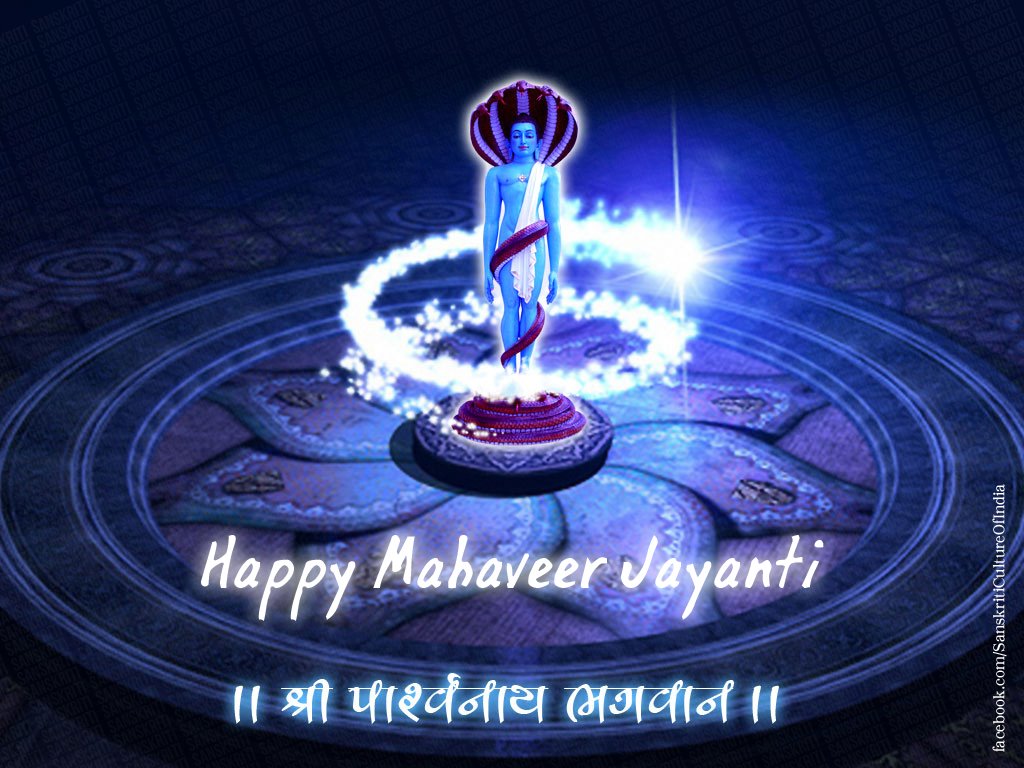
People belonging to Jain community celebrate Mahavir Jayanti every year which falls on the 13th day of the Chaitra month. Today would mark the 2,613 years of the birth of Lord Mahavir who was born in 599 BC and was the 24th Jain Tirthankar.

On this day, various sects of Jains including Digambars, Shwetambars, Sthanak Vaasis and Tera Panthis come together to mark the occasion. The day is marked by organising mass celebration with elephants, horse-carts, camel-carts, a tableau on the life of Lord Mahavir, forming the main attraction.

Mahavira was born at a place called Kundagrama in Vaisali and spread the message of peace and non-violence. According to Mahavira, to live a righteous life one should follow the following principles, which are the main pillars of Jainism

Nonviolence (Ahimsa) causing no harm to living beings; truthfulness (Satya) to speak the truth, non-stealing (Asteya) not to possess things that does not belong to you; Chastity (Bramacharya) not to indulge in sensual pleasures and non-attachment (Aparigraha) not to get attached to material things.

According to Mahavira, one should not accumulate bad karmas (deeds) which are the main cause of human delusion and suffering and lead to vicious cycle of life and death and continues till one is liberated.

Four kinds of donations (daan) are recommended for every Jain on this day. These are:

Gyan daan: Sharing of knowledge
Abhay daan: Protecting people from bad actions
Aushad daan: Donating medicines
Ahaar daan: Giving food

You may also like

Search the website

Like us on Facebook

Get daily updates via Email

Enter your email address:

Recent Posts

Purushottam Maas — The Month No Deity Would Claim, and the Lord Who Made It Supreme

Every month of the Hindu calendar has a lord — except the rare thirteenth, the Adhika Maas, born an orphan and shunned as the “impure month.” The Puranas tell how this rejected month went in grief to Bhagavan Vishnu, who claimed it, gave it His own name — Purushottam — and made it the most fruitful month of all. The origin story, the teaching, and what it means for Purushottam Maas 2026 (May 17 – June 14).

Padmini Ekadashi 2026 — The Ekadashi Even the Devas Descend to Keep

Padmini Ekadashi 2026 — The Ekadashi Even the Devas Descend to Keep

The rarest Ekadashi of the entire Hindu calendar is three days away. The Padma Purana preserves a conversation between Bhagavan Krishna and Yudhishthira about a single Ekadashi the great Rishis spend lifetimes waiting for — Padmini. The Vrat Katha of Queen Padmini of Mahishmati, the lotus teaching, and why May 27, 2026 is the morning Vaishnavas across Bharata are preparing for.

Varada Chaturthi 2026 — The Rare Ganesha Day of Purushottam Maas

Varada Chaturthi 2026 — The Rare Ganesha Day of Purushottam Maas

Once every 2.5–3 years — when the rare 13th month of Adhika Maas opens — a thirteenth Vinayaka Chaturthi appears. The Mudgala Purana calls it Varada Chaturthi, the “boon-giving” Chaturthi, and holds it as the most fruit-bearing Ganesha day of the entire calendar. Today, Wednesday May 20, 2026, is that day.

Padmini Ekadashi 2026 — The Rare Ekadashi That Comes Only in Purushottam Maas

Padmini Ekadashi 2026 — The Rare Ekadashi That Comes Only in Purushottam Maas

Padmini Ekadashi 2026 falls on Wednesday, May 27 — the Shukla Paksha Ekadashi of Adhika Maas, the rarest Ekadashi in the entire Hindu calendar (it appears only every 2.5–3 years). The Padma Purana conversation between Bhagavan Krishna and Yudhishthira, the Vrat Katha of Queen Padmini, complete vrat vidhi with jagrana, mantras, and the lotus symbolism that gives the Ekadashi its name.

Ganga Dussehra 2026 — The Day Maa Ganga Came Down to Bhagiratha

Ganga Dussehra falls on Monday, May 25, 2026 — commemorating the day Maa Ganga descended from Vaikuntha to the earth through the millennia-long tapasya of King Bhagiratha. The full account from the Valmiki Ramayana, snan vidhi, dana traditions, mantras, and the teaching of sustained sincerity.

css.php