IndianSanskriti
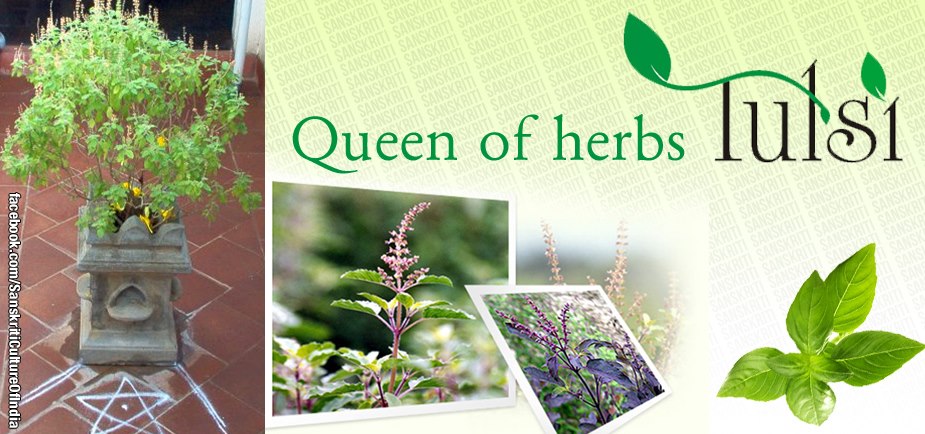
Tulsi - The Queen of Herbs!!

Tulsi – The Queen of Herbs

Referred as the “Queen of Herbs” and a symbol of purity, Tulsi or better known as Basil, is a popular household name in India. Worshipped in the morning and evening, many Hindu families grow Tulsi in their courtyard as it is believed to bring longevity, happiness, purify the environment and bring peace in the home.

From seasoning food to herbal remedies, each and every part of this plant can be used in one way or another. Of the two main species readily available in India, the darker form of Tulsi known as Shyama has more medicinal values than the lighter one called Rama.

Following are some benefits of Tulsi:
– Increases mental health
– High in anti-oxidants, preventing premature aging
– Flavonoids protect cells from radiation and its harmful side effects
– Effective on acne and psoriasis
– As an anti-inflammatory, it helps reduce arthritic symptoms, decreasing pain and swelling
– Reduces anxiety, depression and stress
– Relieves constipation, stomach cramps, indigestion and flatulence
– Enhances immunity in babies
– Helps reduce symptoms of cold, cough, influenza, bronchitis, asthma, sinus infections
– Prevents nausea
– Provides relief from menstrual cramps
– Reduces chances of food poisoning
– Enhances the flavour of food
– Chewing fresh Tulsi leaves or boiling them with tea reduces the effects of fever and common cold
– Heals infections of the mouth
– Used as a paste, it relieves the effects of insect bites
– Regulates blood sugar

There is interest in using Tulsi seed oil for curing cancer as research shows the oil can slow progression and improve survival rate in animals with certain types of cancer.

Considered to be a divine plant in Ayurveda, Tulsi not only has medicinal properties but also carries spiritual significance for practitioners of this ancient system of medicine. It is considered to be a reincarnation of the goddess Tulsi, who offers divine protection from all ills.

You may also like

Search the website

Like us on Facebook

Get daily updates via Email

Enter your email address:

Recent Posts

Padmini Ekadashi 2026 — The Ekadashi Even the Devas Descend to Keep

Padmini Ekadashi 2026 — The Ekadashi Even the Devas Descend to Keep

The rarest Ekadashi of the entire Hindu calendar is three days away. The Padma Purana preserves a conversation between Bhagavan Krishna and Yudhishthira about a single Ekadashi the great Rishis spend lifetimes waiting for — Padmini. The Vrat Katha of Queen Padmini of Mahishmati, the lotus teaching, and why May 27, 2026 is the morning Vaishnavas across Bharata are preparing for.

Varada Chaturthi 2026 — The Rare Ganesha Day of Purushottam Maas

Varada Chaturthi 2026 — The Rare Ganesha Day of Purushottam Maas

Once every 2.5–3 years — when the rare 13th month of Adhika Maas opens — a thirteenth Vinayaka Chaturthi appears. The Mudgala Purana calls it Varada Chaturthi, the “boon-giving” Chaturthi, and holds it as the most fruit-bearing Ganesha day of the entire calendar. Today, Wednesday May 20, 2026, is that day.

Padmini Ekadashi 2026 — The Rare Ekadashi That Comes Only in Purushottam Maas

Padmini Ekadashi 2026 — The Rare Ekadashi That Comes Only in Purushottam Maas

Padmini Ekadashi 2026 falls on Wednesday, May 27 — the Shukla Paksha Ekadashi of Adhika Maas, the rarest Ekadashi in the entire Hindu calendar (it appears only every 2.5–3 years). The Padma Purana conversation between Bhagavan Krishna and Yudhishthira, the Vrat Katha of Queen Padmini, complete vrat vidhi with jagrana, mantras, and the lotus symbolism that gives the Ekadashi its name.

Ganga Dussehra 2026 — The Day Maa Ganga Came Down to Bhagiratha

Ganga Dussehra falls on Monday, May 25, 2026 — commemorating the day Maa Ganga descended from Vaikuntha to the earth through the millennia-long tapasya of King Bhagiratha. The full account from the Valmiki Ramayana, snan vidhi, dana traditions, mantras, and the teaching of sustained sincerity.

Adhik Jyeshtha Maas 2026 — The Hidden Month That Belongs to Lord Vishnu

Once every 2.5–3 years, the Hindu calendar opens a quiet thirteenth chamber — the intercalary month Lord Vishnu took for His own. A Puranic look at Adhik Jyeshtha Maas 2026 (May 2–31), the Padma Purana account of how it became Purushottam Maas, and a complete householder’s guide for its closing days.

css.php