
IndianSanskriti
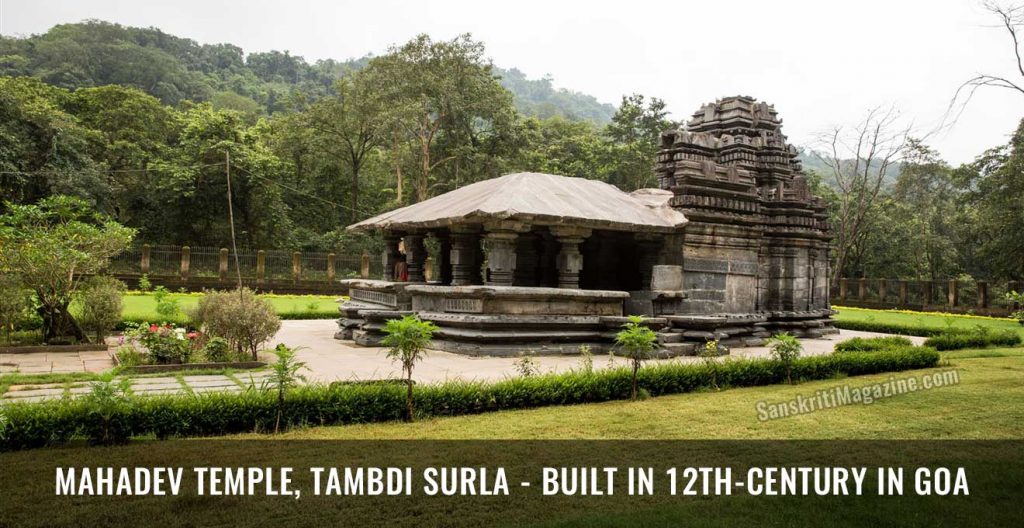
Mahadev Temple, Tambdi Surla - Built in 12th-century in Goa

Mahadev Temple, Tambdi Surla – Built in 12th-century in Goa

Mahadev Temple, Tambdi Surla is a 12th-century Shaivite temple of the Lord Mahadeva and an active place of Hindu worship. It is notable as the oldest temple in Goa, India.

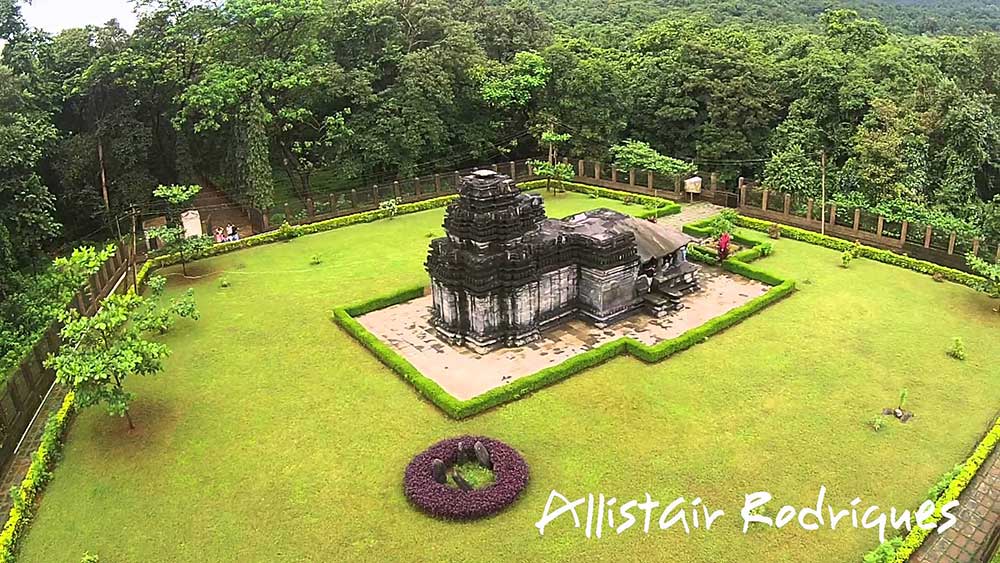
The temple was built by Hemadri, the minister of the Yadava King Ramachandra. The Jain style construction has led to debates about the origins of the temple, since the Kadamba Dynasty ruled Goa between the tenth and fourteenth centuries. The temple is built in the Hemadpanthi style from basalt, carried across the mountains from the Deccan plateau and carved craftsmen. It is considered to be the only specimen of Kadamba-Yadava architecture in basalt stone preserved and available in Goa. The temple survived invasions and the Goa Inquisition due to its remote location in a clearing deep in the forest at the foot of the Western Ghats which surround the site.
Mahadev Temple, Tambdi Surla - Built in 12th-century in Goa

The temple is dedicated to Lord Shiva and is reminiscent of the temples at Aihole in neighbouring Karnataka. There is a linga (symbol of Lord Shiva) mounted on a pedestal inside the inner sanctum, and local legend has it that a huge king cobra is in permanent residence in the dimly lit interior.
Mahadev Temple, Tambdi Surla - Built in 12th-century in Goa

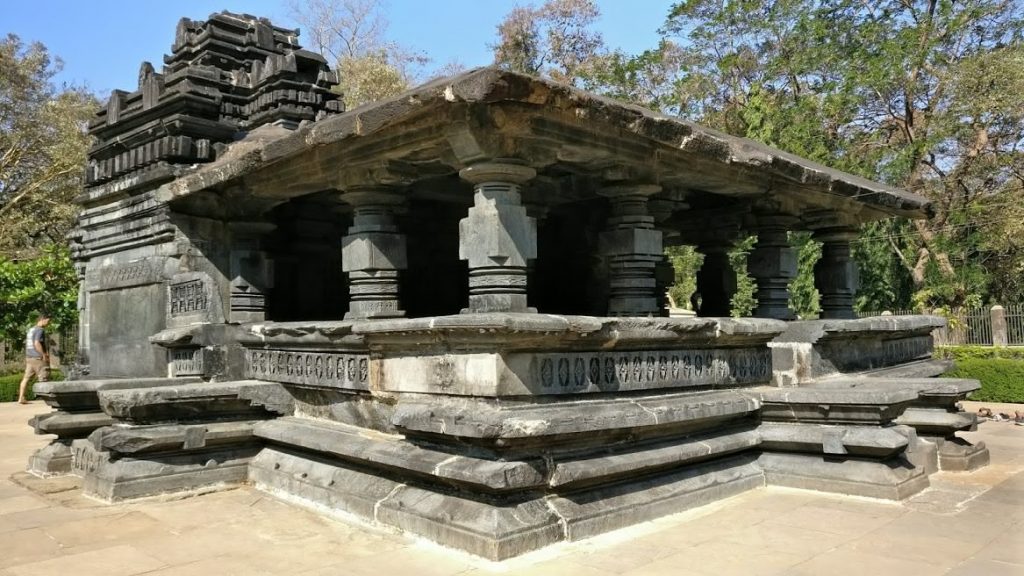
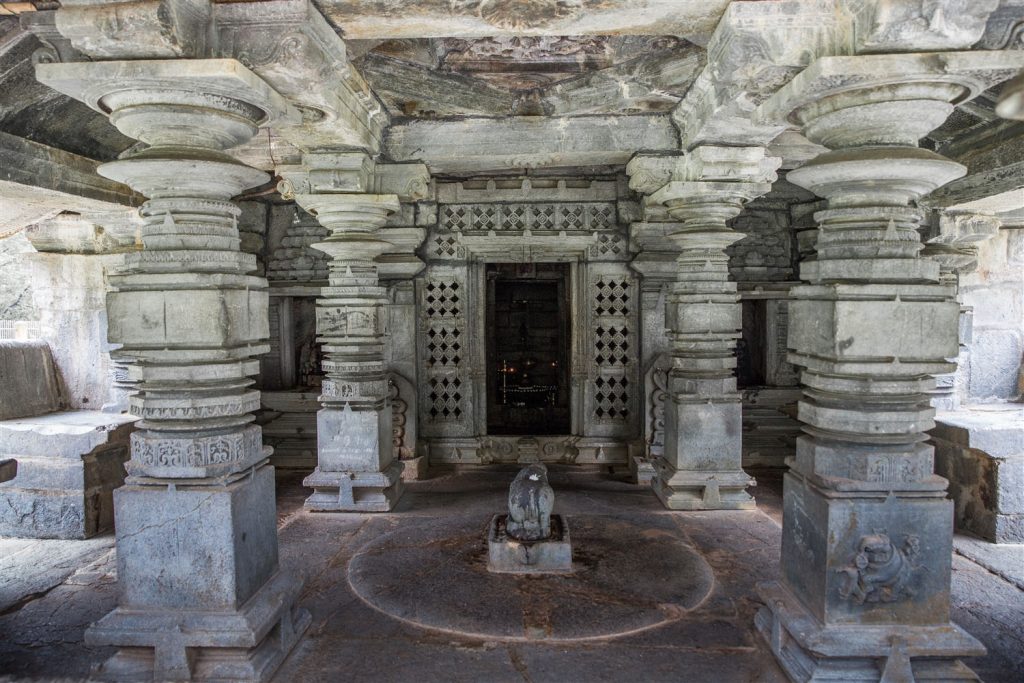
The temple consists of garbhagriha, antarala and a pillared Nandi mandapa built of basalt. The four pillars, embellished with intricate carvings of elephants and chains support a stone ceiling decorated with finely carved Ashtoken lotus flowers.

The intricate carvings created by skilled craftsmen adorn the interior and the sides of the building. Bas-relief figures of Lord Shiva, Lord Vishnu and Lord Brahma, with their respective consorts appear on panels at the sides of the temple. Unusually, the mandap (pillared hall) is covered with a roof of plain grey sloping slabs. The temple faces east so that the first rays of the rising sun shine on the deity. There is a small mandap and the inner sanctum is surmounted by a three-tired tower whose top is incomplete or has been dismantled sometime in the distant past.
Mahadev Temple, Tambdi Surla - Built in 12th-century in Goa

There is a headless Nandi (bull, Shiva’s vehicle) in the centre of the mandap, surrounded by four matching columns. The symbol of the Kadamba kingdom, an elephant trampling a horse is carved on the base of one of the columns. The river Surla flows nearby and is reachable for ritual bathing by a flight of stone steps.

The festival of Mahashivratri is celebrated with pomp and gaiety at the temple by local people residing in surrounding villages. The temple is built in a place which is quite inaccessible and away from the main settlements of the time. The temple is small compared to the average Goan temple.


You may also like

Search the website

Like us on Facebook

Get daily updates via Email

Enter your email address:

Recent Posts

Padmini Ekadashi 2026 — The Ekadashi Even the Devas Descend to Keep

Padmini Ekadashi 2026 — The Ekadashi Even the Devas Descend to Keep

The rarest Ekadashi of the entire Hindu calendar is three days away. The Padma Purana preserves a conversation between Bhagavan Krishna and Yudhishthira about a single Ekadashi the great Rishis spend lifetimes waiting for — Padmini. The Vrat Katha of Queen Padmini of Mahishmati, the lotus teaching, and why May 27, 2026 is the morning Vaishnavas across Bharata are preparing for.

Varada Chaturthi 2026 — The Rare Ganesha Day of Purushottam Maas

Varada Chaturthi 2026 — The Rare Ganesha Day of Purushottam Maas

Once every 2.5–3 years — when the rare 13th month of Adhika Maas opens — a thirteenth Vinayaka Chaturthi appears. The Mudgala Purana calls it Varada Chaturthi, the “boon-giving” Chaturthi, and holds it as the most fruit-bearing Ganesha day of the entire calendar. Today, Wednesday May 20, 2026, is that day.

Padmini Ekadashi 2026 — The Rare Ekadashi That Comes Only in Purushottam Maas

Padmini Ekadashi 2026 — The Rare Ekadashi That Comes Only in Purushottam Maas

Padmini Ekadashi 2026 falls on Wednesday, May 27 — the Shukla Paksha Ekadashi of Adhika Maas, the rarest Ekadashi in the entire Hindu calendar (it appears only every 2.5–3 years). The Padma Purana conversation between Bhagavan Krishna and Yudhishthira, the Vrat Katha of Queen Padmini, complete vrat vidhi with jagrana, mantras, and the lotus symbolism that gives the Ekadashi its name.

Ganga Dussehra 2026 — The Day Maa Ganga Came Down to Bhagiratha

Ganga Dussehra falls on Monday, May 25, 2026 — commemorating the day Maa Ganga descended from Vaikuntha to the earth through the millennia-long tapasya of King Bhagiratha. The full account from the Valmiki Ramayana, snan vidhi, dana traditions, mantras, and the teaching of sustained sincerity.

Adhik Jyeshtha Maas 2026 — The Hidden Month That Belongs to Lord Vishnu

Once every 2.5–3 years, the Hindu calendar opens a quiet thirteenth chamber — the intercalary month Lord Vishnu took for His own. A Puranic look at Adhik Jyeshtha Maas 2026 (May 2–31), the Padma Purana account of how it became Purushottam Maas, and a complete householder’s guide for its closing days.

css.php





