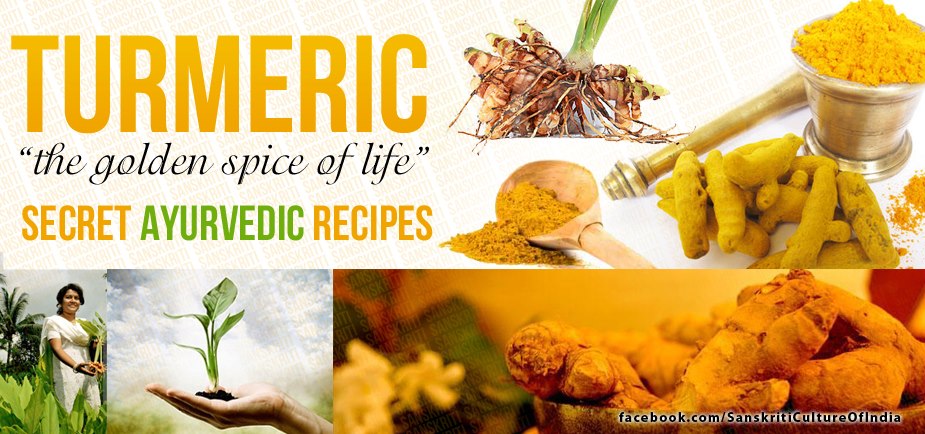
Turmeric, also known as Haridra in Sanskrit and Haldi in Hindi, is a powerful healing herb that has been used in Indian Ayurvedic system of medicine since ancient times. Used both for treating several ailments as well beauty care treatment, turmeric is an integral part of Indian cooking and culture.Traces of cultivation of turmeric have been found in Harappan civilization, dating back to around 3,000 BC. India currently produces about 90% of the world’s turmeric powder. Almost identical to ginger in appearance and hailing from the same family, “curcuma longa” (botanical name of turmeric) can be identified by its bright golden orange colour. Peppery, warm and bitter in flavour with a mild fragrance, it is either used fresh or as dried powder.
In ancient times, turmeric was used in Ayurveda either as paste to apply on the body externally or as juice to be ingested orally, attending to both internal and external physical health. Taken as juice, it is considered to be a blood purifier and said to be beneficial in stomach ailments and other chronic illnesses. As a paste, it is used for treatment of various skin ailments like eczema, cuts and burns due to its antiseptic effect.
Research conducted on turmeric has scientists now realizing the importance of turmeric in treating modern diseases, especially for its effects on cancer. In countries such as India and Pakistan, where turmeric is incorporated in the staple diet, cancer is much less rampant than other countries where it is rarely consumed.
Turmeric is considered to destroy cancer in three ways:
- Neutralizing substances and conditions that cause cancer
- Helps a cell retain its integrity if threatened by carcinogens
- If a tumour does grow, the curcumin in turmeric destroy it
Synopsis of Turmeric’s Healing Properties
Besides flavoring food, to purify the blood and skin conditions remedy is probably the most common use of Turmeric in Ayurveda.
- The main organs that turmeric treats are the skin, heart, liver and lungs.

- Turmeric is used for epilepsy and bleeding disorders, skin diseases, to purify the body-mind, and to help the lungs expel Kapha.
- Activities of Turmeric include: Alterative, analgesic, antibacterial, anti-inflammatory, anti-tumor, anti-allergic, antioxidant, antiseptic, antispasmodic, appetizer, astringent, cardiovascular, carminative, cholagogue, digestive, diuretic, stimulant, and vulnerary.
- Therapeutic uses of Turmeric: Anemia, cancer, diabetes, digestion, food poisoning, gallstones, indigestion, IBS, parasites, poor circulation, staph infections, and wounds.
- Turmeric helps to regulate the female reproductive system and purifies the uterus and breast milk, and in men it purifies and builds semen, which is counterintuitive for a pungent bitter.
- Turmeric reduces fevers, diarrhea, urinary disorders, insanity, poisoning, cough, and lactation problems in general.
- Turmeric is used to treat external ulcers that respond to nothing else. Turmeric decreases Kapha and so is used to remove mucus in the throat, watery discharges like leucorrhea, and any pus in the eyes, ears, or in wounds, etc.
- In Ayurvedic cooking, turmeric is everywhere, this multifaceted wonder spice helps
- Detoxify the liver
- Balance cholesterol levels
- Fight allergies
- Stimulate digestion
- Boost immunity
- Enhance the complexion
It is also an antioxidant Ayurveda recognizes turmeric as a heating spice, contributing bitter, pungent and astringent tastes.
Remedies
Anemia
Everyday take a dose of 1 tsp of turmeric juice mixed with honey.
Asthma
Boil 1 cup of milk with 1 tsp of turmeric powder. Drink warm.
Burns
Mix 1 tsp of turmeric with 1 tsp of aloe gel and apply to burnt area.
Conjunctivitis
Mix 1 tbsp of crushed, raw turmeric in 1/3 cup of water. Boil and sieve. 2–3 drops of this mixture may be used in each eye up to 3 times per day.
Complexion
Apply a paste of turmeric on the skin before bed, and wash off after a few minutes. In the morning, remove any remaining yellow tinge with a paste of chickpea flour (besan) and oil.
Dental problems
Mix 1 tsp of turmeric with ½ tsp of salt. Add mustard oil to make a paste. Rub the teeth and gums with this paste twice daily.
Diabetes
½–1 tsp of turmeric should be taken 3 times a day.
Diarrhea
Take ½ tsp of turmeric powder or juice in water, 3 times per day.
Pain
Mix 1 tsp of turmeric and 2 tsp of ginger with water to make a paste. Spread over a cloth, place on the affected area and bandage.
Add 1 tsp of turmeric to 1 cup of warm milk and drink before bed.
Other uses
In cooking, turmeric acts as a yellow coloring agent. It is an important herb in Hindu rituals. It is also a ingredient in cosmetics as it is beneficial for the skin. Burning turmeric can repel insects. Inhaling the smoke can assist in coughs, asthma and congested nasal passages.
Ears, Eyes, Nose and Mouth
Turmeric dust, with alum 1:20, is blown into the ear to treat chronic otorrhea.
Mix a pinch of Turmeric with organic ghee and apply it to the mucus lining of nose to stop the sniffles. It also stops nosebleeds, helps to clear the sinuses, restore a more acute sense of smell, and helps to purify the mind and brain.
Turmeric helps to maintain the shape and integrity of our eyes.
A Turmeric/water decoction, 1:20, is used to treat conjunctivitis and eye disease in general. Soak a cloth in the decoction and then cover the eye with it. This helps to relieve the pain as well.
Turmeric for Stomach and Intestines
Turmeric treats the whole Gastro – Intestinal system.
In general turmeric is used for
- Weak stomachs
- Poor digestion
- Dyspepsia
- To normalize metabolism
- To help digest protein
- To increase the bio-availability of food and the ability of the stomach to withstand digestive acids.
Turmeric is a great carminative, able to calm an upset digestive system by getting rid of gas and distention. Carminatives also tend to increase absorption and nurture the intestinal flora.
Taking Turmeric will work fine to balance an upset digestion. Just take a small spoonful of Turmeric and stir it in a cup of yogurt right after lunch.
Remedy for ‘piles’ is to directly apply a mixture of mustard oil, turmeric, and onion juice. To stop rectal bleeding take a 2 or 3 tablespoons of Turmeric every half hour until the bleeding stops, usually in an hour.