In 1994, a five-judge SC bench had considered the question of acquisition of a religious place by the state and upheld the constitutional validity of the Acquisition of Certain Areas at Ayodhya Act, 1993.
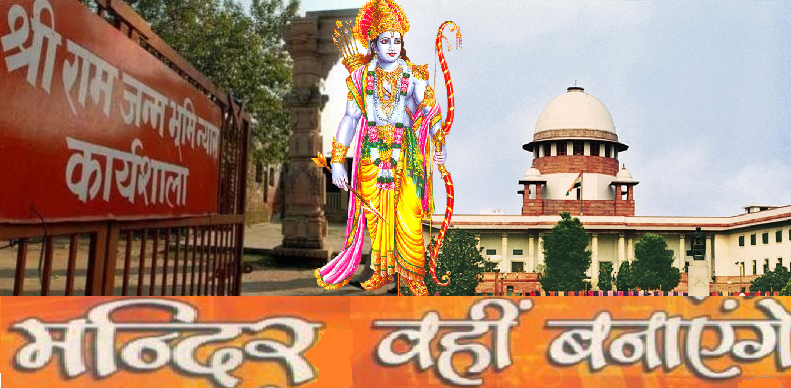
Assailing the 1994 Ismail Faruqui judgment during the final hearing of the Babri Masjid-Ram Janmabhoomi case, senior advocate Rajeev Dhavan told Supreme Court on Friday that it is not for the courts to decide if the mosque is of significance for the practice of Islam.
Dhavan, appearing for Muslim petitioners, sought a review of the verdict. Countering the reasons given in the Faruqui verdict, he impressed upon the court that “a mosque is forever and just because it has been destroyed it does not lose its significance”.
In 1994, a five-judge SC bench had considered the question of acquisition of a religious place by the state and upheld the constitutional validity of the Acquisition of Certain Areas at Ayodhya Act, 1993. The court had also concluded that while offering prayer or worship is a religious practice, its offering at every location where such prayers can be offered would not be an essential or integral part of such religious practice unless the place has a particular significance for that religion, so as to form an essential or integral part thereof.
It is this conclusion that came under attack during the final hearing in the case. Dhavan also made a strong argument that the 2010 Allahabad High court verdict, which ruled a three-way division of the disputed 2.77 acres among parties, was under the shadow of the Faruqui verdict.
Referring to a part of the Faruqui verdict, which held that a mosque, temple, or a place of worship can be acquired in national interest, Dhavan asked, “What was the larger national purpose in acquiring the 2.77 acre dispute area? Was it Ram Janmabhoomi or Ram Temple or the thing stated in the BJP’s white paper?”
Moreover, the court cannot decide if the disputed site is the exact birthplace of lord Ram, said Dhavan. “The people who destroyed the mosque were not miscreants but BJP leaders and what led to the demolition was not the proper political attitude the problem,” he said. “There is a fear in the Muslim community that what happened to Babri can happen elsewhere too.”
The three-judge bench led by the Chief Justice of India said they will consider the plea to refer the matter at a later date and the case will now be heard on April 6.