BY: DR. KRISHNA R.S.
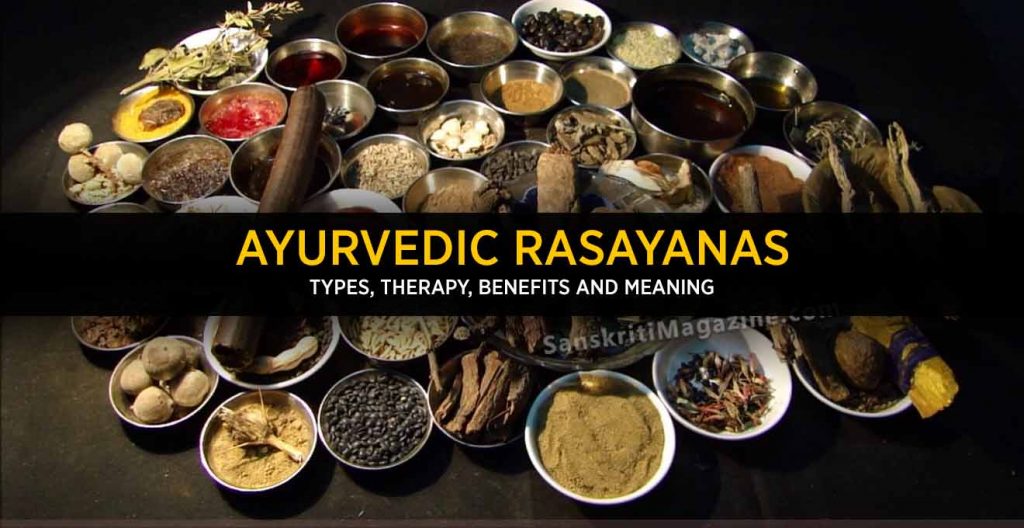
Ayurveda has eight branches, and Rasayana (rejuvenation) is one of them. ‘Rasa’ has different meanings, like ”juice”, “taste“, “essence”, “flavor”, or “emotion”, but is not limited to any of these in itself. In therapeutic process Rasa is concerned with the conservation, transformation, and revitalization of energy. Rasa nourishes our body, boosts immunity and helps to keep the body and mind in best of health.
What is Rasayana
Rasayana is a Sanskrit word that translates to “path of essence.” The term is derived from the root words, rasa, meaning “essence,” and ayana meaning “path.”
In Ayurveda, rasayana refers to both the science of promoting longevity and the herbal remedies used to maintain optimal health as well as to reverse the effects of aging. Ayurveda and rasayana go hand-in-hand with yoga to maintain physical, mental and spiritual health. In fact, yoga asanas are considered a type of rasayana.
Rasayana can be behavioral or herbal. When defined as the science of promoting longevity, rasayana includes nourishing foods, meditation, yogic practices and other positive behaviors such as kindness and honesty.
In alchemy, rasayana therapy refers to herbal remedies that, among other things, fight disease, promote long life, improve memory and improve complexion. A typical herbal preparation includes 10 to 20 different herbs mixed with fruits or minerals. It can be administered in a variety of forms from pastes, tinctures, powders, teas and pills.
Types of Rasayana
1. Types of rasayana preparations which can be consumed according to one’s needs:
A . Kamya Rasayanas – Kamya rasayanas are promoters of normal health. These boost body energy levels, immunity and general health.
Pranakamya – Promoter of vitality and longevity
Medhakamya – Promoter of intelligence
Srikamya – – Promoter of complexion
B .Naimittika Rasayana – Naimittika rasayanas help to fight a specific disease
2. Types of Rasayanas on the basis of place of therapy:
A. Kuti Praveshika Rasayana – Indoor Rasayana Therapy
B. Vatatapika Rasayana – Outdoor Rasayana Therapy
3. Types of Rasayanas On the basis of diet and lifestyles:
A. Aushdha Rasayana – Drug Based Rasayana
B. Ahara Rasayana – Dietary Rasayana
C. Achara Rasayana – Lifestyle Rasayana
Preparation for Rasayana Therapy
It is very essential for a person who wishes to undergo rasayana therapy to undergo samshodhana (detoxification) as a preparatory procedure. The samshodhana process detoxifies both body and mind. A detoxified body and mind is a like a clean cloth which readily absorbs the color in which it has been dipped, unlike a soiled cloth which looks soiled even after coloring with best colors.
But when a person is not eligible for samshodhana or is not able to get samshodhana, then he can also consume rasayana preparations which still boost the qualities of rasa in his body.
Benefits of Rasayana
Rasayana therapy enriches nutritional quality of Rasa, enhances digestion and metabolism by normalizing agni or body fire, and promoting the competence of channels. The main purpose of Rasayana therapy is to rejuvenate the body and delay degenerative processes.
It enhances the intelligence, memory, body strength, luster of the skin, and modulation of voice
It nourishes the blood, lymph, muscles, tissues, semen, and thus prevents chronic degenerative disorders like Arthritis
Improves metabolic process and quality of body tissues and eradicates diseases of old age
Helps to attain optimal physical strength and sharpness of sense organs
Rasayana has marked action on reproductive organs and also nourishes shukra dhatu (semen).
Rasayana nourishes the whole body and improves the immune system, hence the natural resistance to infection is increased
By following Achara Rasayana, one can be more satvik and surge ahead in the spiritual field by his pure daily routines like speaking truth, not getting angry, having control over his sense organs, and calmness.
Natural foods which act as Rasayanas
Haritaki (Terminalia Chebula): It is called as Haritaki because it cures all the diseases. It has been alternatively named as Abhaya with appreciation for its action, since it bestows permanent long life to those who use it always. It is also known as Vijaya, since it is a conqueror of all the diseases.
Fresh, round and heavy fruits of Haritaki are always best. The fruits should sink in water and also be devoid of any diseases. Such fruits are rich in taste and potency. The fruit should be slit into two or three pieces and the seed should be removed. Such fruit pieces are cooked with four parts of water till they soften. Then they should be removed and allowed to cool. One part of ghee and one part of honey is added to this and kept aside for three days. It should be consumed later taking care of digestion power. After this rasayana is digested shstika sahli rice with cow’s milk is consumed. This gives very good memory power and eyesight.
Ghee (Clarified butter): It is the best known Rasayana which is a very good rejuvenator and longevity promoter. It also improves digestion, has soothing effects on the nervous system, improves the glow of skin, enhances memory power, helps to retain the grasped matters and increases ojus. Ghee has a very good rate of absorption and it is a very good medium for transporting the nutrients of the food to the tissue. Using a spoon of ghee in your daily food is very easy. (This is not applicable to people who have high blood cholesterol).
Lemons: These are very rich source of Vitamin C and are known for there unique action, like improving the resistance to cold, controlling the bleeding of gums, healing wounds and formation of scar tissue. The lemon acts as purifier and nourishing agent. Squeeze half a lemon or lime in a glass of lukewarm water and add two teaspoons of honey to it. This helps to reduce weight when consumed on an empty stomach at early hours of the day.
Ginger: Ginger improves digestion and removes ama (body toxin which causes diseases), hence it is accepted worldwide as medicine. Always use dry ground ginger, which is more concentrated in its effects and flavor. Sprinkle a little dry ginger powder on a spoon of lemon juice and add a little salt. This should be consumed forty-five minutes before meals to give a very good appetite and digestion.
Cumin Seeds: Cumin seeds helps in digestion, digests and expels ama and balances doshas. To expel body toxins start the day with drinking lukewarm water with powdered cumin and ginger.
Green Gram: Green gram is very light to digest and is excellent for people who have digestion problems. They are among the best legumes, for their supreme digestibility and health giving qualities. Those who prefer light food can opt for this food.
Dates and Figs: These are known as an excellent source of energy. They also help to build the body tissues and improve the hemoglobin percentage. Hence, eat two to three dates or figs a day.
Almonds: These are nourishing and life-supporting. Eat five to six almonds a day to build energy and strength. It is proved that almonds help in reducing the blood cholesterol levels. Almonds are also known to help in improving memory.
Lassi: This beverage, prepared by mixing two parts of water and one part of yogurt, can be made as a sweet beverage by adding a little sugar or honey and a little ground cardamom. For people who do not like sweet taste, it can be made as a delicious salt and sour beverage by adding roasted cumin seeds and little salt. It is an excellent nutritive, digestive beverage and can be used during meals or taken as a desert after meal.
Seasonal Fruits: Always use the juicy fresh fruits which are available in the season. They are of high nutritive value and are body purifiers, also.
Along with all these food and medicinal Rasayana, one should follow Achara Rasayana to have very good effects of rasayana practices.
Disclaimer: The above article is educational in nature, and is not intended to diagnose, treat, cure or prevent any disease. If you have a medical condition, please consult your physician. Dr. Krishna. R.S has been an Ayurvedic Practitioner since 19 yrs, after getting a graduation degree in Ayurveda (Bachelor of Ayurvedic Medicine and Surgery) in 1986 from University of Mysore, India.