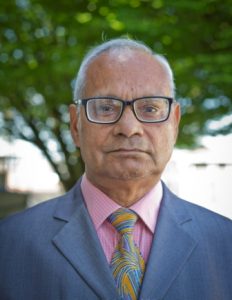
By Zile Singh
“Science has made the world a great neighbourhood, but religion must make it a great brotherhood.”
The United Nations General Assembly on October 20, 2010 proclaimed the first week of February each year as the “World Interfaith Harmony Week”. The Assembly encourages all States to support the initiative so that there could be mutual understanding, harmony and cooperation among the people of different faiths. In Vancouver the following organizations came forward to celebrate the week in different ways: Sri Guru Singh Sabha Gurdwara, Surrey; Surrey Inter-faith Council; The Church of Jesus Christ of Latter-day Saints; The Thien Ton Buddhist Temple; Sri Guru Nanak Sikh Gurdwara; Surrey’s Baha’i Community; Colibri Learning Centre; KPU Grassroots Cafe; and the Northwood United Church.
First of all we have to understand what Faith is and what is Religion. Faith is a personal belief in something which may or may not exist. This something can be a living, non-living, logical or illogical. One can have faith even in some assumptions. The Bible interprets faith like this; “ Now faith is the assurance of things hoped for, the conviction of things not seen.” “Faith is, also, the willingness to risk anything on God.”
The religion, on the other hand, is an organized faith. A group of people with similar faith that in some manner share the it is a religion. The UN General Assembly must have, inherently, meant the faith as the religion. Otherwise, the General Assembly is not concerned that a husband and a wife should be faithful to one another and also that one should be faithful to one’s duty. The faith is involved in both these cases. No doubt, the Assembly, complicitly, emphasized that there is a need for an Inter-Religious Harmony. “Science has made the world a great neighbourhood, but religion must make it a great brotherhood.”
Interfaith (Inter-religious) harmony is to understand the reality of all faiths and then act upon developing a cordial relationship . The cardinal principle of all faiths(religions) is to create an atmosphere of love, peace and well-being of all individuals in the society. In theory, all religions propagate a standard ethical code, but in practice, it is not so. Instead of Talking Shops and Entertainment Events, all the efforts for a harmonious relationship among the different faiths/religions must be with honesty and sincerity from the core. One should be ready at least to understand his own faith with a scientific temper beyond the usual customs and rituals.
Inter-faith or Inter-religious dialogue should not be only on ideas but on practice as well. The theory and the practice should match. One should not try to teach each other of his faith’s superiority. Dialogue should be for learning things of the other faith and if possible to practise it on a day to day basis. But it is not. Have we bowed to each other’s deities in their places of worship, or have we shared each others food in their homes? Have we allowed our children to meet and have good relationships? For a truly faithful and religious person, all tags of Christian, Hindu, Muslim, Buddha, Sikh, Jain etc., dissolve as soon as he starts dwelling in the universal eternity. A truly religious person knows that ‘ all roads lead to Rome’.
If anyone thinks that he is religious and does not bridle his tongue, this man’s religion is vain. True religion is the quest for the ideal life. This involves the quest of seeking truth and not developing theories and then asserting them as facts. To cite an example, recently an Indo-Canadian, who is also one of the proponents of the inter-faith, uttered some words in the Indian Consulate which tantamount to hateful, racial and casteist slur.
All the saintly people of faith (religion) like Christ, Buddha, Mahavira, Prophet Mohammad, Zoroaster, Nanak and others preached the practice of humanity and nonviolence and emphasized the need for a moral code of conduct that gives due status to all living beings.
What we see today that a Bomb hidden in an Ambulance killed hundreds of people and injured other hundreds in the Afghan capital city, Kabul. Taliban, another group of the same religion took the responsibility. Multiple mass graves have been unearthed in Myanmar as a result of atrocities on Rohingya Muslims by the Buddhist majority regime. There is an influx of refugees to developed and stable countries from Syria, Iran, Iraq, Mexico, Myanmar, Colombia, El Salvador, Haiti, Eritrea etc., owing to ethnic and religious turmoils. Countries like India and the United States have also not remained unaffected by the “rise of conservative religious ideologies, increase in vigilantism and violence against minorities” and “the dissenting voice and white supremacy” respectively. On an annual Global Democracy Index conducted recently by the Economist Intelligence Unit, India slipped 10 ranks to 42 and the United States ranked 21. Both are in the category of “flawed democracies”. In Canada also we observed the first anniversary of the massacre in a Mosque in Quebec City. Everywhere we see hatred, exploitation, suppression and violence. Most of the incidents which have happened are of Intra-religious and of Inter-religious nature. It is the duty of all of us to promote inter-faith as well as intra-faith harmony in its right perspective.
Zile Singh is a former Ambassador(Retd.) of India and a Vipassana Meditator. He can be reached at zsnirwal@yahoo.ca .