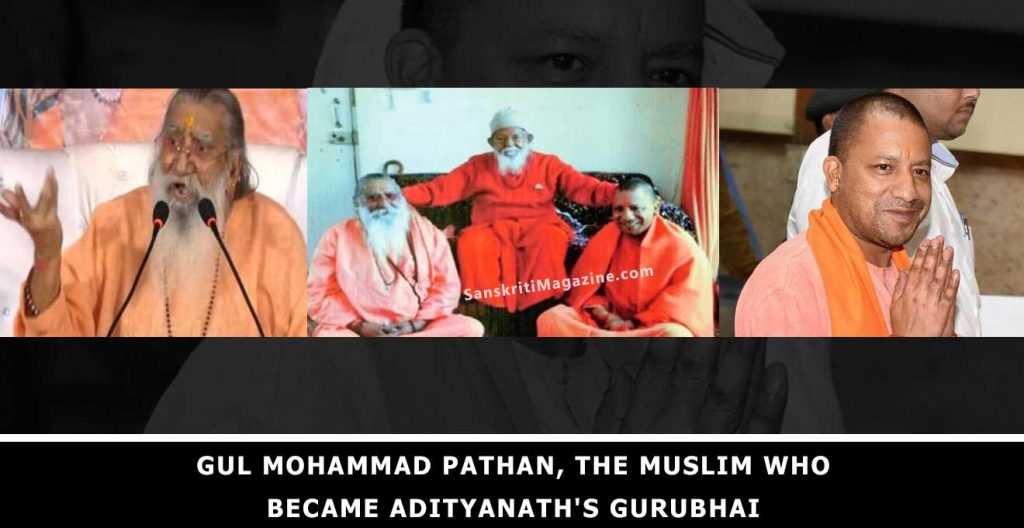
AHMEDABAD: Aditya Nath Yogi, recently appointed chief minister of Uttar Pradesh , has a close Gujarat connection apart from his ties with PM Narendra Modi. The erstwhile mahant of a math (ashram) of Nath sampradaya in Visnagar, Mahant Gulabnath Bapu, who was born as a Muslim with the name Gul Mohammad Pathan, was the ‘gurubhai’ of today’s UP CM, considered a Hindu hardliner.
Mahant Avaidyanath , the guru of Aditya Nath, was also the guru of Gulabnath Bapu. Their relation was so strong that when Gulabnath, 86, breathed his last, Aditya Nath came to Visnagar, Gujarat, to perform his last rites on December 6, 2016, and he also appointed the new mahant of the math, Sankarnath. The math runs temples and annakshetra (place providing free meals) in Visnagar and Vadgam.
Gulabnath had taken diksha at the age of 18 from Mahant Balaknath at Vadgam.
“Bapu was the sixth generation in guru-shishya lineage. His association with Mahant Avaidyanath of Gorakhpur math and guru of Aditya Nath Yogi was very old due to the dynamics of Nath sampradaya.” said Sankarnath, the newly appointed mahant of the Visnagar math.
“Bapu also considered Avaidyanath his guru and thus he considered Aditya Nath as his gurubhai,” Sankarnath said.
“Bapu was invited to Gorakhpur for every major event. When he went there last year, Aditya Nath had him felicitated by PM Narendra Modi,” said Shankarnath.
Aditya Nath visits the math at Visnagar at least 2-3 times annually, said Shankarnath, adding that any Gujarat visit by the yogi starts from Visnagar.
“Yogi used to phone regularly to get updates on Bapu’s health. It is not just about the Nath sampradaya connection as there are other places in Gujarat with presence of the sampradaya, but he feels connected to this place,” Sankarnath added.
Mahant Sankarnath has high hopes about the UP CM.
“We know him for the past 25 years. He is energetic, has new ideas and is a just person. He will not tolerate anything against tradition,” said Sankarnath.
Gulabnath Bapu was born in a Muslim family that traces its roots to Jhalod. The family, associated with farming and labour activities, first settled in Dehvasan village and later shifted to nearby Vadgam in Banaskantha district.
He came across Mahant Balaknath at the age of 18 years. After witnessing the mahant’s activities, young Gul got attracted towards him and the sect, and decided to take diksha.
Dilawar Khan Pathan, Balaknath’s nephew, said that the roots of his transformation can be found in Bapu’s upbringing.
“My grandmother had died when her children were very young and thus they grew up with their grandfather, Hafi Khan. A follower of Sufi tradition, Hafi Khan used to recite bhajans and respect all religions,” said Pathan, adding, “These early memories might have played an important role when the 18-year-old Gul decided to take diksha.”
Pathan says he is not surprised by people reacting to the fact that a Muslim man not only became a Hindu, but also a revered mahant.
“There were no such watertight compartments of religion when the incident took place, both for Nath sampraday and my family. All religions show the way to reach God and everyone would have his or her calling for the same,” said Pathan.