IndianSanskriti
Hindu migrants: Officials in 7 Indian states can now grant citizenship to minority migrants

Hindu migrants: Officials in 7 Indian states can now grant citizenship to minority migrants

Written by Rahul Tripathi


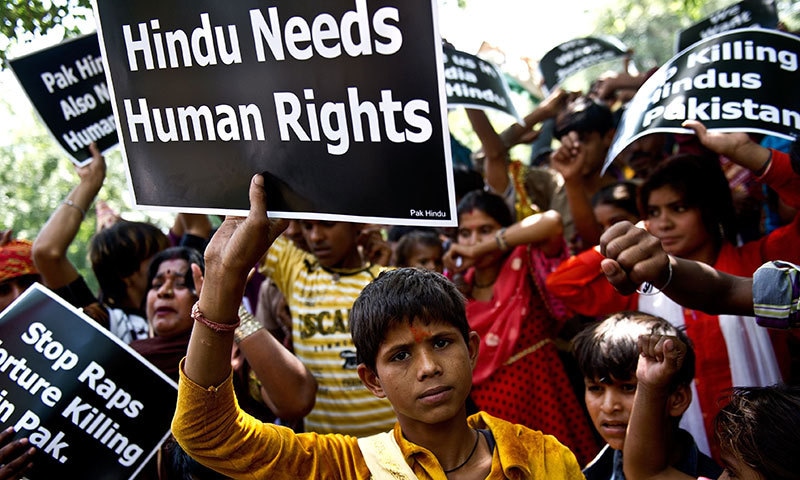
In its bid to swiftly grant citizenship to Hindu minorities, who fled from Pakistan, Bangladesh and Afghanistan due to religious persecution, the Union Home Ministry has given powers to district magistrates and state home secretaries of seven states for “grant of certificate of naturalisation under Section 6 of the Citizenship Act”.

Since citizenship is in the Union list, only the central government enjoys the power to grant citizenship unless delegated, said officials. The states to which these powers have been extended are Gujarat, Madhya Pradesh, Maharashtra, Rajasthan, Uttar Pradesh, Chhattisgarh and Delhi. Except Uttar Pradesh and Delhi, all other states have BJP governments, making it easier to implement the Centre’s roadmap.

According to the orders issued last week, “The central government hereby directs that powers exercisable by it, for registration as a citizen of India under Section 5 or for grant of certificate of naturalisation under Section 6 of the Citizenship Act, 1955 in respect of any person belonging to minority community in Pakistan, Afghanistan, and Bangladesh namely Hindus, Sikhs, Buddhists, Jains, Parsis and Christians…shall also be exercisable by the collector and the secretary of the department of home of the state or the UT.”

The powers will be valid for two years during which the government plans to finish the process of granting citizenship to nearly three lakh such people, residing in these states. As per data available with the Pakistan Hindu Council, Pakistan has the highest number of Hindus, nearly 69 lakh at the end of 2015.

A similar notification empowering collectors in Gujarat and Rajasthan was issued in 2003-04 during the tenure of then PM Atal Bihari Vajpayee with a validity of one year. However, it had to be withdrawn prematurely as intelligence agencies pointed alleged misuse by some officials of the state government, said an official.

The Home Ministry had earlier relaxed norms for those staying on Long Term Visa (LTV), allowing them to buy property, open bank accounts and obtain PAN as well as Aadhaar cards. However, the Bill to amend the Citizenship Act for minority Hindus introduced this year is pending before Parliament.

After the Narendra Modi government came to power in 2014, several steps have been taken to simplify LTV and citizenship for Hindu minorities from neighboring countries. There is also a provision to allow free movement of LTV holders within the states and UTs wherever they are staying instead of restricting their movement to the place of stay, said officials. Last year, the Home Ministry issued two notifications exempting Bangladesh and Pakistan nationals from minority communities, who entered India before December 31, 2014, from the provisions of Passport Act and the Foreigners Act.
You may also like

Search the website

Like us on Facebook

Get daily updates via Email

Enter your email address:

Recent Posts

Yogini Ekadashi 2026 — The Yaksha Who Missed the Morning Flowers, and the Ekadashi That Undid His Curse

On Friday, July 10, 2026, the rare Krishna Paksha Ekadashi of Nija Ashadha arrives. The Padma Purana tells the story of Hemamali — the Yaksha gardener of Bhagavan Kubera in Alaka, whose single morning of distraction with his wife Vishalakshi cost him his form, his wife, and his celestial city. Cursed to wander the earth of Bharata as a leper for a long time, he was at last shown the way back by Sage Markandeya — a single sincere keeping of Yogini Ekadashi.

Jamai Shashthi 2026 — The Story of Maa Shashthi, the Cat, and the Wife Who Was Forgiven

Jamai Shashthi 2026 — The Story of Maa Shashthi, the Cat, and the Wife Who Was Forgiven

On Saturday, June 20, 2026, Bengali households across Bharata will welcome their married daughters and sons-in-law home for the legendary jamai-aador feast and perform the Shashthi Vrata. But behind the warmth lies a story most Bengalis know by heart and most non-Bengalis have never heard — the wife who stole the hilsa, blamed the cat, lost six sons to Maa Shashthi’s wrath, and was finally forgiven. The Vrat Katha, the vidhi, the mantras, and the deeper teaching.

Vat Purnima 2026 — The Wife Who Argued Yama Into Returning Her Husband’s Life

On Monday, June 29, 2026, women across Maharashtra, Gujarat, and southern Bharata will tie red thread around banyan trees and hear the story of Savitri — the wife who walked behind Yamaraja Himself when He came for her husband, and out-argued the Lord of Dharma into returning Satyavan’s life. The Mahabharata’s Pativrata Mahatmya Parva, the vrat vidhi, and why the banyan witnessed everything.

Nija Jyeshtha 2026 — The Real Jyeshtha Begins, and the Calendar Resumes

Nija Jyeshtha 2026 — The Real Jyeshtha Begins, and the Calendar Resumes

With Adhik Maas now closed on the Somvati Amavasya of June 15, the long-postponed festivals of Jyeshtha return — Vat Purnima (June 29, the Savitri-Yamaraja katha), Jamai Shashthi (June 20, the Bengali festival of Maa Shashthi), Sankashti Chaturthi (June 28), Yogini Ekadashi (July 10), and Devshayani Ekadashi (July 16, opening the four-month Chaturmas of Bhagavan Vishnu’s yoga-nidra). A guide to what the next four weeks hold and what the household that kept Purushottam Maas now carries forward.

The Closing of Purushottam Maas 2026 — Adhik Amavasya and the Sealing of the Month-Long Vrat

On Monday, June 15, 2026 — a rare Somvati Amavasya — the intercalary month that bears Bhagavan Vishnu’s own name comes to its close. The Acharyas teach that a vrat is not measured by its duration but by its closing. Here are the Padma Purana’s instructions for sealing the month-long Purushottam Maas vrat: the morning snan, the closing puja with the Vishnu Sahasranama, the day of dana, the Somvati Amavasya gift, and the final sarva-arpana — the offering of all merit at the feet of the Lord.

css.php